
The regulatory decoder
What makes a hyperbaric chamber medical-grade?
"Medical-grade" is not a regulated label: no agency issues it. What exists is an FDA 510(k) clearance (Class II, product code CBF), an ASME PVHO-1 pressure-vessel standard, and NFPA 99 facility rules. Registration is not clearance, and clearance is not approval. Here is how to read each claim, and where Superhuman stands.
The direct answer
Is "medical-grade" a real certification?
No. It is a marketing phrase with no regulator behind it, and understanding that one fact is worth more than any badge on a product page.
"Medical grade" isn't a formal FDA category. No agency defines it, no standard body certifies it, and no database lists it. A vendor can print it on a $5,000 fabric zipper bag or a $2 million hospital multiplace system with equal legal ease. That is why the phrase tells you nothing by itself, and why two chambers both sold as "medical grade" can sit decades of engineering apart.
What actually exists are three independent layers, each with its own authority and its own paperwork. The device layer: the FDA, which classifies hyperbaric chambers as Class II medical devices and clears them through the 510(k) process. The vessel layer: ASME, whose PVHO-1 standard governs the pressure vessel a human being sits inside. The facility layer: NFPA 99 for the room, and UHMS accreditation for the clinic operating it. A fourth layer, the training of the people running the chamber, completes the chain; our chamber safety guide walks all four layers in full, so we keep this page to the decoder and the scale.
Because the term is unregulated, every vendor gets to define it for themselves, and the market's definitions are conveniently shaped like whatever that vendor sells. A soft-shell brand defines medical-grade around FDA paperwork; a clinic defines it around the stamp on the vessel; an import listing defines it as a keyword. The only defense is to stop asking "is it medical grade?" and start asking which layers it holds, and where the documents are. The rest of this page is that question, answered layer by layer.
Three words, three meanings
The FDA decoder: registered vs cleared vs approved
These three terms are not synonyms, they are three different universes of scrutiny. Most of the confusion in this market lives in the gaps between them.
| Term | What it actually is | What it proves | What it does not mean |
|---|---|---|---|
| FDA registered / listed | An annual bookkeeping duty. Every establishment that makes or distributes medical devices for the U.S. registers with the FDA each year under 21 CFR Part 807 and lists the devices made there. | That the company told the FDA it exists and listed a product. Nothing more. If a device has marketing authorization, the listing must also carry the premarket submission number; a listing without one has never been evaluated. | Not a review, not a test, not an endorsement. A chamber can be fully "registered and listed" and never have been evaluated by anyone at the FDA. |
| FDA cleared (510(k)) | A premarket submission demonstrating the device is "substantially equivalent" to a legally marketed device, in the FDA's own words. Hyperbaric chambers are Class II (performance standards) under 21 CFR 868.5470, product code CBF. | The FDA reviewed the submission and issued a clearance letter with a K-number, a specific device, and specific indications for use. This is the real regulatory status of clinical hyperbaric chambers. | Not approval, and not blanket permission: clearance covers the device and the indications written in its letter, nothing else. |
| FDA approved (PMA) | Premarket approval, the route for higher-risk Class III devices, requiring clinical evidence of safety and effectiveness. | For hyperbaric chambers, almost nothing: chambers live in Class II and travel the 510(k) route. | When a seller says "FDA approved hyperbaric chamber", they almost always mean a 510(k) clearance, or nothing at all. The phrase is a misnomer in this market. |
The primary sources behind the table: the FDA's Device Registration and Listing page (annual registration under 21 CFR Part 807; a listing must carry the premarket submission number if the device has one), the FDA's 510(k) Premarket Notification database ("a premarket submission made to FDA to demonstrate that the device to be marketed is as safe and effective, that is, substantially equivalent, to a legally marketed device"), and the regulation itself: 21 CFR 868.5470 classifies the hyperbaric chamber as "Class II (performance standards)", filed under product code CBF.
One red-flag rule compresses the whole table: when a seller leans on "FDA registered" as proof of medical legitimacy, treat it as a marketing red flag and ask for the 510(k) number. Registration is the cheapest claim in this market, because it is true of almost everyone and proves almost nothing.
Verify any claim yourself: five steps, two public databases
- 01
Get the legal manufacturer name
Not the brand on the brochure: the legal entity on the device labeling or the contract. Databases index the manufacturer, not the marketing name. Our who-makes guide explains why most brands are not the manufacturer.
- 02
Check establishment registration and listing
The FDA's Device Registration and Listing page explains the system: annual registration under 21 CFR Part 807, plus a device listing that must carry the premarket submission number if one exists. Registration alone proves existence, not evaluation.
- 03
Search the 510(k) database
The FDA's public 510(k) Premarket Notification database is searchable by applicant name and by product code. For hyperbaric chambers the product code is CBF. A real clearance returns records with K-numbers; "we are registered" returns nothing here.
- 04
Read the indications for use in the letter
A clearance letter is specific: one device, one product code, one written list of indications. If the chamber is marketed for uses outside that list, those uses are not cleared, whatever the brochure says.
- 05
Ask for the documents in writing
A seller with a real clearance can produce the K-number and the letter on request. Hesitation, or "FDA registered" offered as the final answer, is itself the answer.
A note on the question this section always drags in: is it legal to own a chamber at home, and do you need a prescription? The honest answer has three axes, and bare yes-or-no answers skip at least one. Cleared Class II chambers are prescription-use devices (the clearance letters say so, in writing). Chambers positioned for non-medical wellness use sit under a different claims regime. And the overlay of state and local rules varies, which is why our own terms of service state that regulatory status, permitted claims, and supervision requirements vary by country, state, and use case, and put licenses, permits, prescriptions, insurance, and supervision on the operator. This page maps the landscape; it is not legal advice, and a local review belongs in any serious purchase. The operator license and certification guide covers the credential side.
Read the letter, not the badge
What FDA clearance actually covers
A clearance is not a blanket blessing. It is a specific document about a specific device for specific uses, and its limits matter as much as its existence.
Clearance is device-specific and use-specific. The letter names one device, one product code, and one written list of indications for use; marketing the same chamber for conditions outside that list is off-label, whatever the website implies. As of July 2021, the FDA has cleared hyperbaric chambers for 13 disorders, from air embolism and carbon monoxide poisoning to problem wounds and thermal burns. The full list, with the UHMS and Medicare lists beside it, lives in our FDA-cleared indications explainer, so we do not repeat it here.
The FDA is equally specific about the other direction. Its consumer update states that "HBOT devices are not proven to cure cancer, Lyme disease, autism or Alzheimer's disease", and that no chamber has been cleared or authorized to treat COVID-19. When a seller markets a cleared chamber for those conditions, the clearance letter does not back them; our HBOT and cancer evidence review walks one of those claims in detail.
The soft-shell corner has its own line in the same document: the FDA cleared the zippered fabric bag "to treat altitude sickness only" and "has not cleared these bags for use with oxygen tanks or oxygen concentrators", which is precisely the configuration most mild-chamber sellers ship. Our soft-shell guide unpacks what that means for buyers.
What does a real clearance look like? In November 2024 the FDA cleared K240569, three multiplace chamber models from Fink Engineering: Class II, product code CBF, regulation 21 CFR 868.5470, prescription use, vessels designed and built to ASME PVHO-1, working pressures of 3.0 to 6.0 ATA, and an indications list that mirrors the UHMS Hyperbaric Oxygen Therapy Committee Report condition by condition. That is the shape of the real thing: specific device, specific pressure engineering, specific medical uses, in a public database anyone can search.
The vessel layer
ASME PVHO-1: the engineering bar behind the words
The most misquoted standard in this market. It certifies no claims and approves no therapy; what it does is decide whether the steel around you was built to be sat in under pressure.
PVHO-1 is ASME's Safety Standard for Pressure Vessels for Human Occupancy. The current edition, PVHO-1-2023, runs 209 pages of "requirements for the design, fabrication, inspection, testing, marking, and stamping of pressure vessels for human occupancy", and its scope names hyperbaric chambers and medical hyperbaric oxygenation facilities explicitly. It covers the things that decide whether a vessel fails: materials, weld procedures, design calculations, viewports, inspection, and pressure testing.
Two clarifications the market avoids. First, PVHO-1 is a vessel standard, not a medical certification: it says nothing about what a chamber may treat, and that is exactly why it is the honest separator between hard-shell and soft-shell construction. Second, ASME certifies factories, not paperwork: earning the certificate means ASME-authorized inspectors review the design process, qualify weld procedures and welders, witness pressure tests, and re-audit the shop on a recurring basis. Most chamber factories never attempt it. Our factory is one of the only hyperbaric chamber factories in China to hold ASME certification, with lead engineers in California overseeing every build; the how we build page documents the process.
The verifiable artifacts of the vessel layer are physical: a stamp and serial number on the vessel, and a test record per vessel. When a clinical vendor asks "is the chamber PVHO-1 stamped and serialized, and can you produce the test documentation?", that is the right question, and any serious seller should welcome it. The standard also carries jurisdictional weight: roughly 11 states require ASME PVHO-1 vessels for clinical chambers (the installation guide maps the permit path).
Our own status, stated with the same precision we ask of others: every Superhuman hard-shell vessel is independently pressure-tested to PVHO-1 standards and documented by a pressure-testing certificate based on those requirements, a pressure-testing certificate, not a PVHO certificate. The certificate package is available during the buyer review process, so your team, insurer, landlord, or local reviewer evaluates paper, not promises.
The room and the clinic
The facility layer: NFPA 99 and UHMS accreditation
No chamber is "NFPA 99 compliant" on a spec sheet, because NFPA 99 governs the facility around the chamber, not the product. Here is what that layer really is.
NFPA 99 is a facility-level code, not a product label. Its hyperbaric chapter (Chapter 14) specifies the room: fire-rated construction, sprinklers and extinguishers, oxygen monitoring, grounding, and what may be brought inside. A chamber can be designed with Chapter 14 in mind, ours are NFPA 99-informed, but compliance is something a facility achieves at review, not something a manufacturer prints on a box. The full Chapter 14 walkthrough, including what the fire marshal will ask, is in the installation guide; the clinic room requirements guide covers the build-out side.
Above the room sits the clinic. The FDA's consumer guidance advises patients to go "to a hospital or facility that has been inspected and is properly accredited by the Undersea and Hyperbaric Medical Society." The UHMS Hyperbaric Facility Accreditation program has run since 2002 and is the only hyperbaric-specific accreditation recognized by The Joint Commission as a Complementary Accreditation; the American Medical Association added its endorsement in 2025. For a buyer evaluating a clinic rather than a chamber, that accreditation is the facility layer's equivalent of the K-number.
For a wellness operator, the practical version of this layer is documentation: we provide NFPA 99-informed site-readiness support and an AHJ/insurer review packet for qualified buyers, so your local authority having jurisdiction starts its review from organized paper. What we do not do is call the chamber itself "NFPA 99 compliant", because the code does not work that way, and precision here is the whole point of this page.
The part nobody publishes
Medical-grade vs wellness-grade: the honest scale
Three real grades of chamber exist. The problem was never the grades; it is marketing that borrows the language of one to sell another. Six engineering criteria separate them.
| Criterion | Hospital clinical | Hard-shell wellness (our class) | Soft-shell (1.3 ATA) |
|---|---|---|---|
| Vessel standard | ASME PVHO-1 stamped and serialized vessel, fabricated in an ASME-certified shop (the Fink clearance states the chambers are designed, built, and certified to PVHO-1) | Steel vessel built in an ASME-certified factory and independently pressure-tested to PVHO-1, documented by a pressure-testing certificate | Inflatable fabric bladder with zippers; no PVHO-1 vessel standard applies |
| Pressure capability | 2.0 to 3.0 ATA monoplace; cleared multiplace systems run 3.0 to 6.0 ATA maximum allowable working pressures (K240569) | Up to 2.0 ATA | About 1.3 ATA |
| Oxygen architecture | 100% oxygen environment (monoplace) or medical-gas plumbing with hood/BIBS circuits (multiplace) | Air-pressurized vessel with concentrator-fed oxygen by mask or BIBS | Concentrator-fed oxygen into an air-pressurized fabric bag |
| Quality system | FDA Quality System regulation (21 CFR Part 820) applies, plus ISO 13485 at serious manufacturers | ISO 13485 and ISO 9001 manufacturing (an ISO 13485 medical-device facility on the T2 and T4) | Varies widely; often nothing published |
| FDA status | 510(k) cleared, Class II, product code CBF, prescription-use device | Not FDA-cleared; positioned for non-medical wellness, recovery, and performance | Cleared for acute mountain sickness only (zippered fabric bags), or not cleared at all |
| Claims allowed | Medical claims inside the cleared indications for use, under physician involvement | Wellness, recovery, and performance language only; no diagnosis, treatment, or disease claims | Altitude sickness where cleared; anything further is off-label marketing |
Read the table as a routing tool, not a ranking. A hospital treating carbon monoxide poisoning needs the left column: cleared device, prescription oversight, 100% oxygen, a facility under NFPA 99 and UHMS accreditation. A recovery studio or a home owner does not, and should not pay hospital economics for a wellness use case. The deception this page exists to prevent is different: a middle-column chamber sold with left-column language, or a right-column bag sold with middle-column pricing.
The right column deserves one sourced sentence of its own. The UHMS position on low-pressure fabric chambers is unambiguous: the Society "does not recommend the use of mHBOT for any medical purpose other than acute mountain sickness", and states it is "not aware of any reliable clinical evidence that mild compression to less than 1.4 ATA has any therapeutic effect". A soft-shell is not a fake product, it is a limited one; the hard-shell vs soft-shell comparison lays out where each construction genuinely belongs.
Our row on the scale
Where Superhuman stands: the argument, not the apology
The sentence most vendors in our segment will not write: our chambers are not FDA-cleared medical devices. Here is what we hold instead, in writing.
Our positioning, verbatim from our published FAQ: "Superhuman chambers are positioned for non-medical wellness, recovery, and performance applications. They are not sold with medical diagnosis, treatment, prescription, or disease-related claims. If your intended use is medical, we'll review that separately." That discipline is not a disclaimer glued on at the end; it is written into our terms of service, which state that nothing on this site is a promise to diagnose, treat, cure, or prevent, and that operators must not make unauthorized medical, disease, or therapeutic claims.
What the chambers hold is the engineering column of the scale. Every Superhuman hard-shell comes from one of the only hyperbaric chamber factories in China to hold ASME certification, a bar most factories worldwide never attempt. Every vessel is independently pressure-tested to PVHO-1 standards (the X, T2, and T4 are tested to 150% of rated pressure), with quality control overseen by our lead engineers in California and final assembly and QC in Texas. Manufacturing runs under ISO 13485 and ISO 9001 (the T2 and T4 are built in an ISO 13485 medical-device facility), with CE and UKCA certification on the hard-shell line. And to keep the scale honest in both directions: the S1 is our soft-shell, CE-certified and built under ISO 9001, ISO 13485, and RoHS, and it carries no ASME or PVHO claims, because it is a fabric chamber and the vessel standard does not apply to it.
Because we make no medical claims, we can do the thing claim-heavy vendors avoid: show the documents. The current ASME Certificate of Authorization is provided under NDA to buyers in an active evaluation (the white-label page explains why we do not publish the number), the PVHO-1 pressure-testing certificate package ships into the buyer review process, and the AHJ/insurer packet goes to qualified buyers for local review. That is what "engineering is the argument" means in practice: not that engineering replaces regulation, but that on the wellness row of the scale, the verifiable build is the difference between us and a catalogue brand. The who makes your chamber guide is the same argument from the buyer's side.
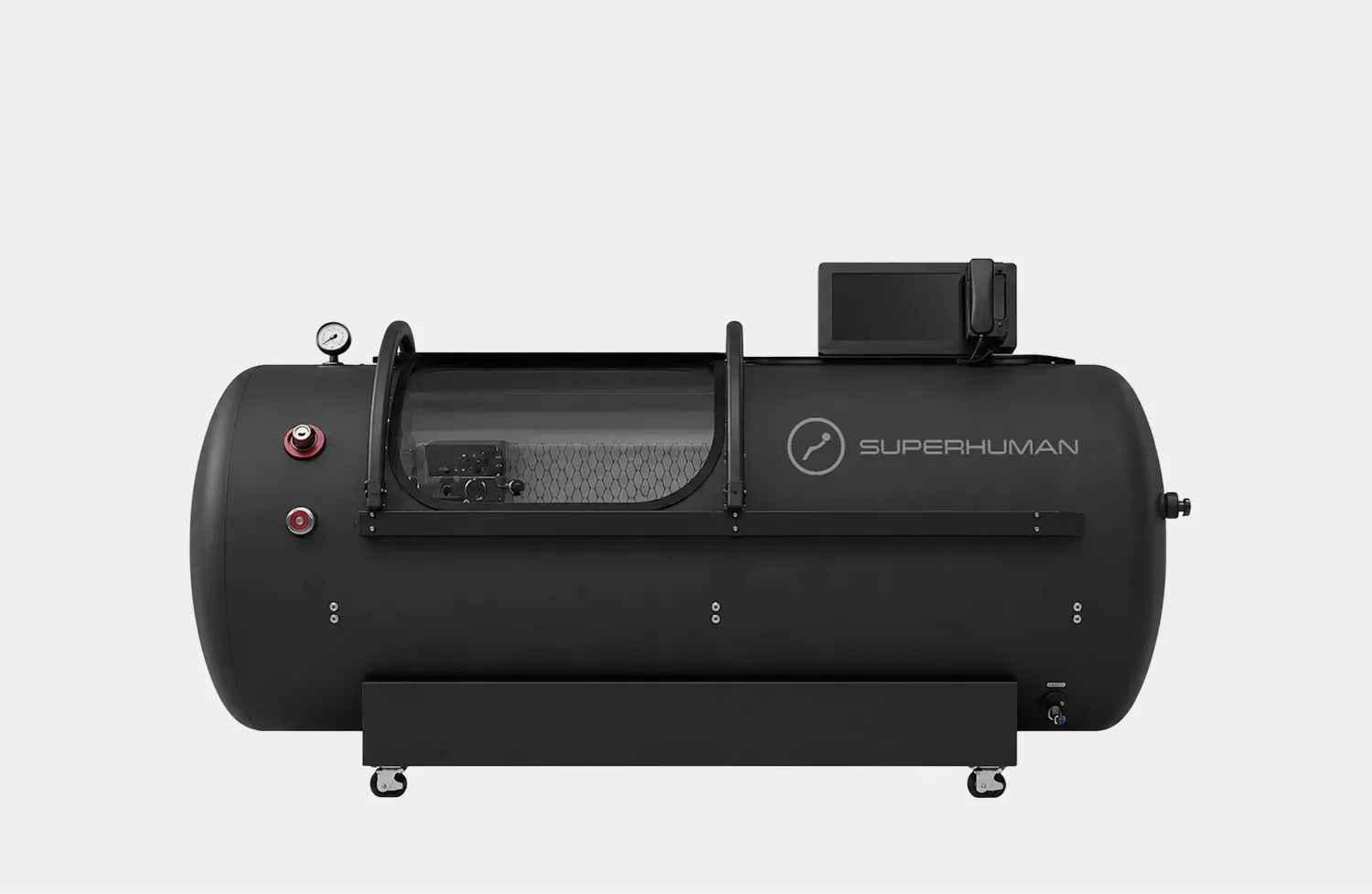
Superhuman L1: 2.0 ATA steel vessel from the ASME-certified factory, CE, ISO 9001 and ISO 13485
Superhuman L1, $49,000 →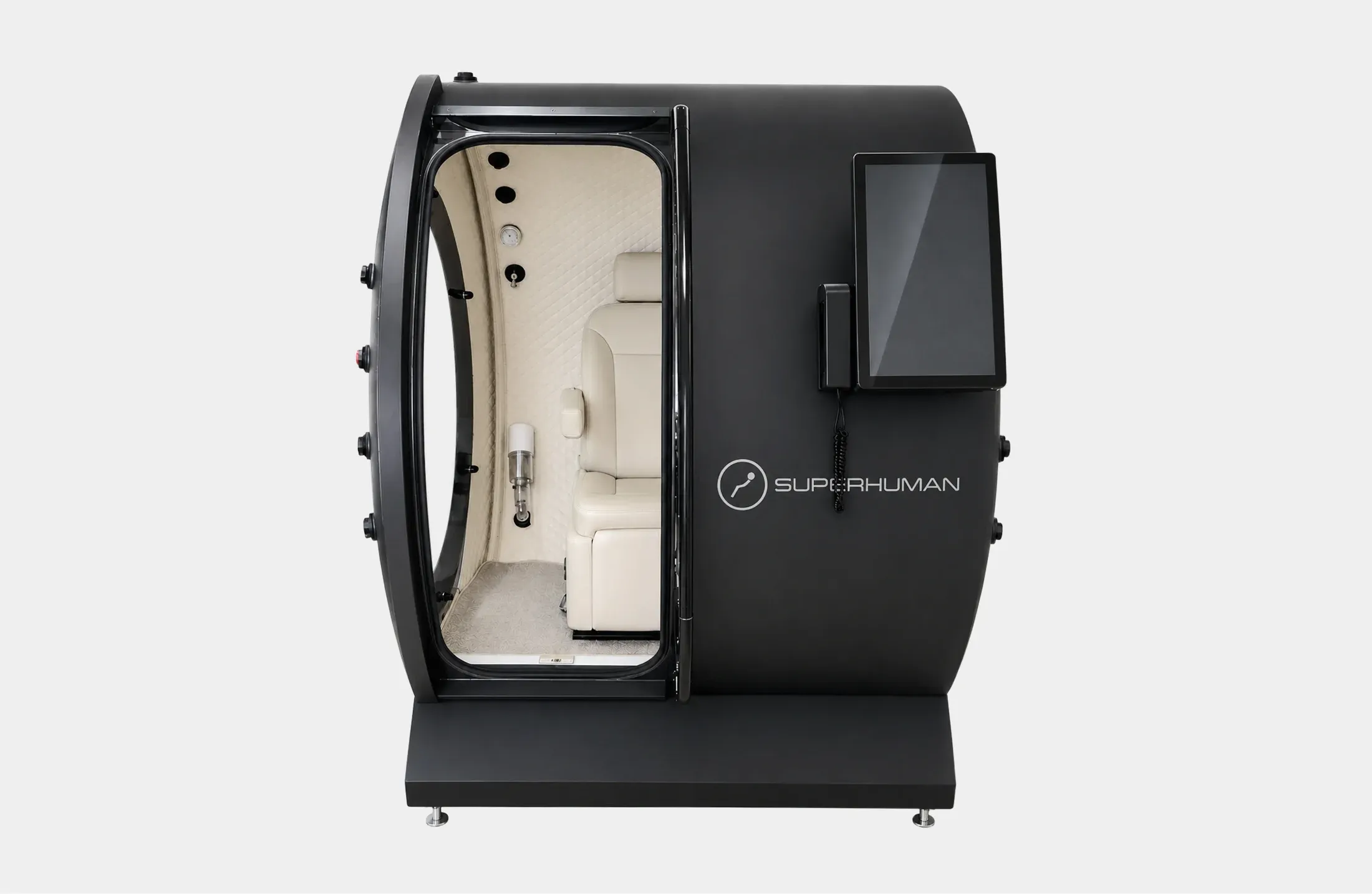
Superhuman X: ASME, PVHO-1 tested to 150% of rating, CE and UKCA, ISO 13485 and ISO 9001 manufacturing
Superhuman X, $110,000 →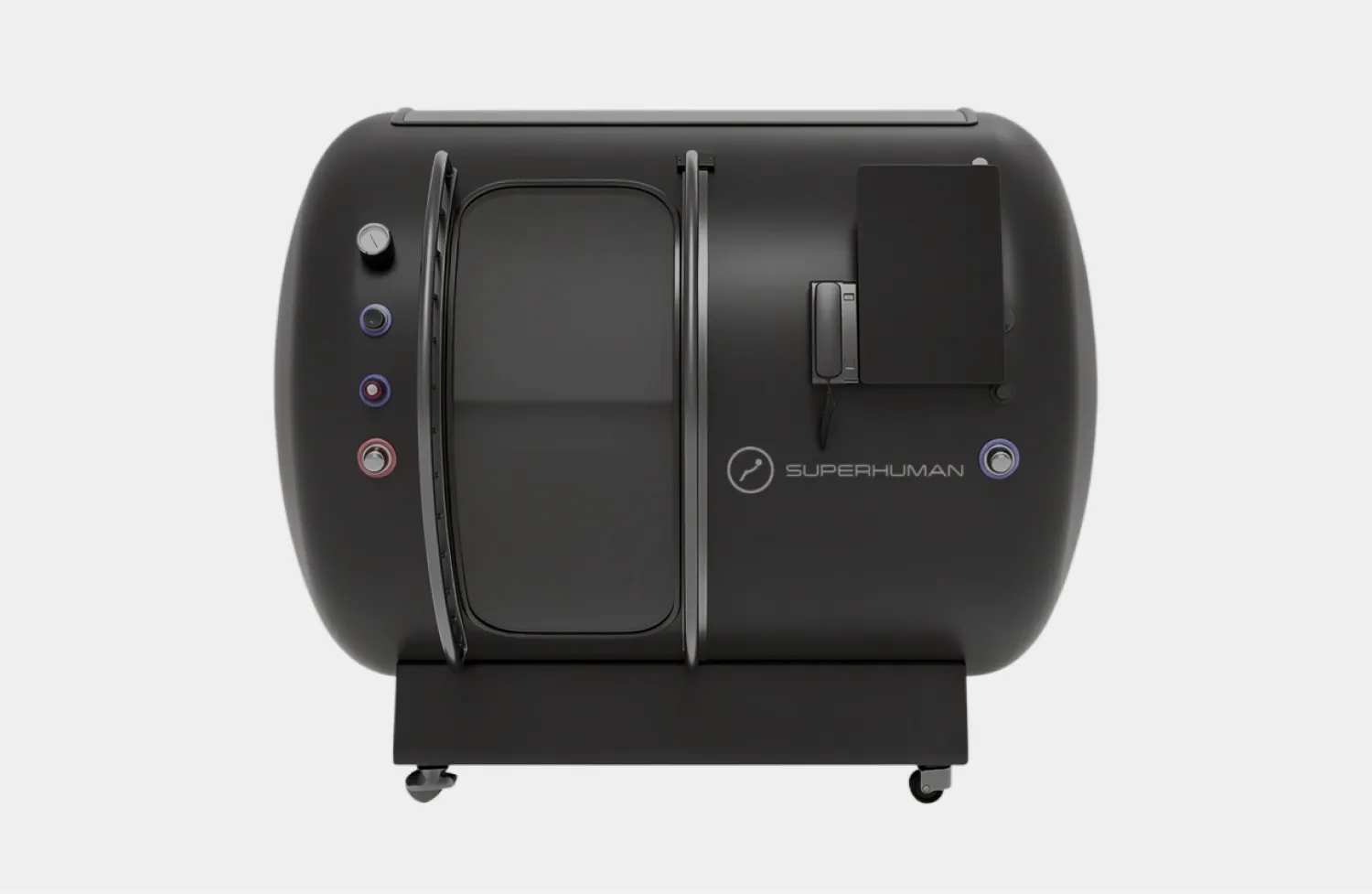
Superhuman T2: two seats, built in an ISO 13485 medical-device facility, ASME and PVHO-1 tested
Superhuman T2, $125,000 →Weighing chambers for a facility or a home? Book a consultation: we will put the certificate package on the table and walk the scale against your actual use case. Browse the full lineup for current pricing.
Ask in writing
The documents that prove it: a buyer checklist
Six documents separate a verifiable chamber from a vocabulary. Every one of them is checkable by you, without trusting us or anyone else.
- 01
The 510(k) letter and K-number (if medical status is claimed)
Verifiable in the FDA's public 510(k) database by applicant name or product code CBF. A letter names one device and one indications list; the K240569 letter in this page's sources shows what a real one looks like.
- 02
The ASME Certificate of Authorization
ASME certifies factories, not paperwork, and publishes a public directory of certificate holders, so a factory claim is checkable by anyone. "ASME certified" without a certificate holder behind it is a brochure phrase.
- 03
The PVHO-1 pressure-test certificate for your specific vessel
The industry artifact is a stamped, serialized test record per vessel (the GR-1 form is the classic example). A certificate for "the model line" is not a certificate for the chamber you are buying.
- 04
The ISO 13485 certificate
ISO 13485 is the quality-management standard for the design, production, installation, and servicing of medical devices. It certifies the quality system, which matters even when the device itself is not FDA-cleared.
- 05
Electrical safety documentation (UL or CE)
The chamber is an electrical device running in an oxygen-enriched environment; the FDA's letter to providers on chamber fires makes electrical and grounding discipline a first-order safety topic.
- 06
Flammability and materials reports
Interior materials are a fire-load question in an oxygen-enriched atmosphere. Serious manufacturers test and document them; the rest ask you not to think about it.
The behavioral rule behind the list: hesitation is information. A seller who answers a document request with "we're FDA registered" as the final word, or with certificates for a different entity than the one on your contract, has answered the question. And the rule cuts toward us too: ask us. Our practice is documented on the white-label and how we build pages: certificates under NDA in an active evaluation, the pressure-testing package in the buyer review, and a named engineer on the call, because a manufacturer can do all three and a reseller cannot.
Choose the row first
Buying for a clinic vs a wellness business: what changes
The same word "chamber" hides two different purchases. Decide which row of the scale you are buying before you compare vendors.
The medical route. If your intended use is treating patients, the purchase is a medical device purchase: a 510(k) cleared chamber with indications that match your program, prescription and physician involvement, a facility built and reviewed under NFPA 99 Chapter 14, and UHMS accreditation as the trust layer the FDA itself points to. Billing enters the picture too: the insurance coverage guide maps the FDA, UHMS, and Medicare indication lists, and the CPT 99183 guide covers the billing mechanics. Our honest routing line applies here: if your intended use is medical, tell us, and we will review it separately rather than sell you the wrong row.
The wellness route. If your use is recovery, performance, and wellness services, the purchase is equipment plus obligations. The equipment side is the engineering column of the scale above. The obligations side is yours as the operator: licenses and permits where required, no unauthorized medical or disease claims, supervision during sessions, and a local review where your jurisdiction asks for one. Our operator license and certification guide and the room requirements guide cover those two halves, and our NFPA 99-informed site-readiness support exists to make the local review boring.
Either way, the order of operations is the same: pick the row, then demand the documents that row requires, then compare vendors. Buyers who start at the vendor comparison tend to discover the row mismatch after the invoice.

FAQ
Medical-grade, FDA, and certification questions
Is "medical grade" a real certification for hyperbaric chambers?
No. "Medical grade" is not a formal FDA category, and no agency issues such a label; any vendor can print it on any chamber. What actually exists are three independent layers: the device layer (an FDA 510(k) clearance as a Class II device, product code CBF), the vessel layer (the ASME PVHO-1 pressure-vessel standard), and the facility layer (NFPA 99 rules and UHMS accreditation for the room and the clinic). A chamber earns real standing inside each layer separately, which is why the honest question is never "is it medical grade?" but "which layers does it hold, and where is the paperwork?"
What is the difference between FDA registered, cleared, and approved?
Registration and listing is an annual bookkeeping duty under 21 CFR Part 807: the company tells the FDA it exists and lists its devices. Clearance is a 510(k) premarket review in which the FDA finds a Class II device substantially equivalent to a legally marketed device and issues a letter with a K-number and specific indications. Approval is premarket approval (PMA), the Class III route that hyperbaric chambers essentially never take. The practical rule: "FDA registered" proves existence, a 510(k) K-number proves clearance for named uses, and "FDA approved hyperbaric chamber" is almost always a misnomer.
Are Superhuman chambers FDA cleared?
No, and we say so plainly. Superhuman chambers are positioned for non-medical wellness, recovery, and performance applications. They are not sold with medical diagnosis, treatment, prescription, or disease-related claims; if your intended use is medical, we review that separately. What the chambers do hold is the engineering bar: an ASME-certified factory (one of the only hyperbaric chamber factories in China to hold ASME certification), independent PVHO-1 pressure testing of every vessel, ISO 13485 and ISO 9001 manufacturing, and CE/UKCA certification. If your intended use is medical, talk to us and we will route the conversation honestly.
Does ASME PVHO-1 make a chamber medical-grade?
No single layer does. ASME PVHO-1 is a pressure-vessel standard: it governs the design, fabrication, inspection, testing, marking, and stamping of pressure vessels for human occupancy, hyperbaric chambers included. It says nothing about medical claims, and the FDA says nothing about weld quality. A chamber can hold one without the other, which is why the who-makes guide tells buyers to ask for both: the FDA status answers "what may it be sold for", and PVHO-1 answers "how well is the vessel built".
Are soft-shell hyperbaric chambers FDA approved?
They are neither approved nor broadly cleared. The FDA has cleared zippered fabric chambers for one indication only: altitude sickness, and it has not cleared those bags for use with oxygen tanks or oxygen concentrators, which is exactly how most are sold. The UHMS goes further: it does not recommend mild hyperbaric therapy for any medical purpose other than acute mountain sickness. Our soft-shell guide covers the category honestly, including where a soft-shell is still the right tool.
Is it legal to own a hyperbaric chamber at home?
It depends on three axes, and anyone answering with a bare yes or no is skipping at least one of them. First, the device status: FDA-cleared Class II chambers are prescription-use devices. Second, the intended use: wellness-positioned chambers are sold for non-medical applications under a different set of claims rules. Third, your jurisdiction: regulatory status, permitted claims, and supervision requirements vary by country, state, and use case, which is why our own terms of service put licenses, permits, prescriptions, insurance, and supervision on the operator. This page describes the landscape; it is not legal advice, and a local review is part of any serious purchase.
What documents should I ask a chamber manufacturer for?
Six: the 510(k) letter and K-number if any medical status is claimed (checkable in the FDA database under product code CBF); the ASME Certificate of Authorization (ASME publishes a public directory of certificate holders); the PVHO-1 pressure-test certificate for your specific serialized vessel; the ISO 13485 certificate; electrical safety documentation (UL or CE); and flammability and materials reports. The full checklist, with why each item is verifiable, is in the documents section above. A seller whose final answer is "we are FDA registered" has told you what they do not have.
What does "ISO 13485 medical-device facility" mean if the chamber itself is not FDA cleared?
It describes the factory's quality system, not the device's regulatory status, and the two are genuinely independent. ISO 13485 certifies that the facility runs the quality-management processes used for medical devices: design controls, traceability, production controls, corrective action. FDA clearance is a per-device marketing authorization for named indications. A wellness-positioned chamber built in an ISO 13485 facility gets the manufacturing discipline without the medical claims, which is exactly the combination our T2 and T4 carry, and exactly why we say the engineering is the argument rather than the apology.
Last updated: September 2026. Regulatory descriptions on this page are anchored to the primary sources listed at right (FDA, eCFR, ASME, UHMS) and were verified against them at publication; regulations and database records change, so confirm current status in the linked databases before purchase. This page is educational: it is not medical or legal advice, and Superhuman chambers are positioned for non-medical wellness, recovery, and performance applications.