
Types, costs, and how to choose
Multiplace hyperbaric chambers
A multiplace hyperbaric chamber is a pressurized room where two or more people receive HBOT together, breathing oxygen through masks or built-in breathing systems. Clinical multiplace installations run $200,000 to $2 million; modern multi-occupant hard chambers deliver a full 2.0 ATA dose from $125,000.
The definition
What is a multiplace hyperbaric chamber?
"Multiplace" simply means more than one person. What the word hides is that two very different products share it.
A multiplace hyperbaric chamber is a room-sized pressure vessel. The room is pressurized with air, and because the cabin air stays close to ordinary air, each occupant breathes oxygen through a mask, hood, or built-in breathing system (BIBS). Capacity runs from 2 to 14 or more. Clinical multiplace chambers reach 3.0 to 6.0 ATA; the multi-occupant hard chambers used in wellness and home settings run 1.5 to 2.0 ATA.
The design descends from diving medicine and hospital wound care, where the point of a large chamber was never comfort: it was getting medical staff inside the pressure environment alongside patients who could not be left alone (Lind, 2015). That heritage explains every feature of a clinical multiplace, from the dual-lock entry to the tender seat.
Two quick orientations. A multiplace chamber is not a monoplace chamber, which treats one person in a tube filled with oxygen. And on the clinical side, monoplace and multiplace chambers share the same FDA-cleared indications (UHMS, FDA): occupancy is a logistics decision, not a different therapy.
The distinction nobody names
Two markets share one name: clinical vs multi-occupant
Search results treat a hospital walk-in chamber and a 2-person hard chamber as the same product. They are not, and buying the wrong mental model is expensive.
| Clinical multiplace (hospital) | Multi-occupant hard chamber | |
|---|---|---|
| Occupants | 6–14 patients | 2–4 people |
| Attendant inside | Yes: a trained tender pressurizes with the patients | No: monitored from outside by a trained operator |
| Oxygen delivery | Hoods or masks from a piped oxygen system | BIBS masks fed by an oxygen concentrator |
| Pressure | 3.0–6.0 ATA | 1.5–2.0 ATA |
| Installation | Crane access, engineered floor loading, dual-lock entry, 1–2 week build | White-glove delivery and setup, single day, no construction |
| Price | $200,000–2,000,000 | $125,000–169,000 (Superhuman T2 / T4, published) |
| Who operates it | Certified hyperbaric technician crew under physician supervision | One trained operator outside the chamber |
We hold ourselves to the same honesty we ask of the SERP: the Superhuman T2 and T4 are multi-occupant hard chambers, in the same hard-shell class as our single-occupant models, extended to two or four seats. They are not clinical multiplace systems with hoods, dual-locks, and a tender inside, and we do not market them as such.
Routing is simple once the split is clear. A hospital program treating critically ill or emergency patients needs a clinical multiplace. A clinic, wellness center, or premium home that wants to treat two to four people per session needs the multi-occupant class, at roughly a tenth of the budget and none of the construction.
The short version
Multiplace vs monoplace, compact
Five rows cover the decision. The dose at equal pressure is the same in both (Mayo Clinic); the full breakdown lives in our monoplace guide.
| Monoplace | Multiplace | |
|---|---|---|
| Occupancy | One person | Two or more in a shared room |
| Oxygen delivery | Whole chamber filled with oxygen, no mask | Room pressurized with air; oxygen via mask, hood, or BIBS |
| On your face | Nothing | A mask or hood for the session |
| Typical setting | Clinics, wellness centers, homes | Hospitals (clinical) or clinics and premium homes (multi-occupant class) |
| Price tier | $15,000–110,000 in our range | $125,000–169,000 multi-occupant; $200K–2M clinical |
| Depressurization | Vent in about 3–5 minutes | Typically 10–20 minutes |
The treatment effects at equal pressure are identical (Mayo Clinic); the choice is logistics and economics. The monoplace guide owns the deep comparison, including the mask experience and which one you actually need.
How many people
Capacity classes: from 2-person to 14-seat
Capacity is the first filter, because each class comes with its own buyer, footprint, and price band.
| Class | Typical buyer | Footprint | Price band | Example |
|---|---|---|---|---|
| 2-person | Home, couple, solo practitioner | Compact: roughly an 8x10 ft floor area | $125,000 (Superhuman T2, published) | Superhuman T2 |
| 4-person | Wellness center, small clinic, recovery facility | One room; the T4 is about 2.3 m long and 1.7 m wide | $169,000 (Superhuman T4, published) | Superhuman T4 |
| 6–10 seats | Outpatient clinic or hyperbaric center | Dedicated room, 200–500 sq ft | $400K–1.5M used; more new | Clinical medium cylinder |
| 12+ seats | Hospital wound-care and emergency program | Engineered room, dual-lock entry, crane install | $1.5M–2M new custom | Clinical large dual-lock |
Inside any class, configuration is the second conversation. Interiors run chairs, lounge, or bed mode, and doors come in shapes that matter: rectangular and wheelchair-accessible doors change who can use the chamber at all. On clinical vessels you will also hear about locks: a single-lock chamber has one pressurized compartment, while a dual-lock adds a pressurized transfer compartment so staff or supplies can enter and exit mid-session without depressurizing the treatment room.
The multi-occupant lineup
The Superhuman multiplace range: T2 and T4
Real specs and published prices, the two things the rest of this SERP withholds. Both are multi-occupant hard chambers: shared air-pressurized cabin, BIBS masks, no attendant inside.
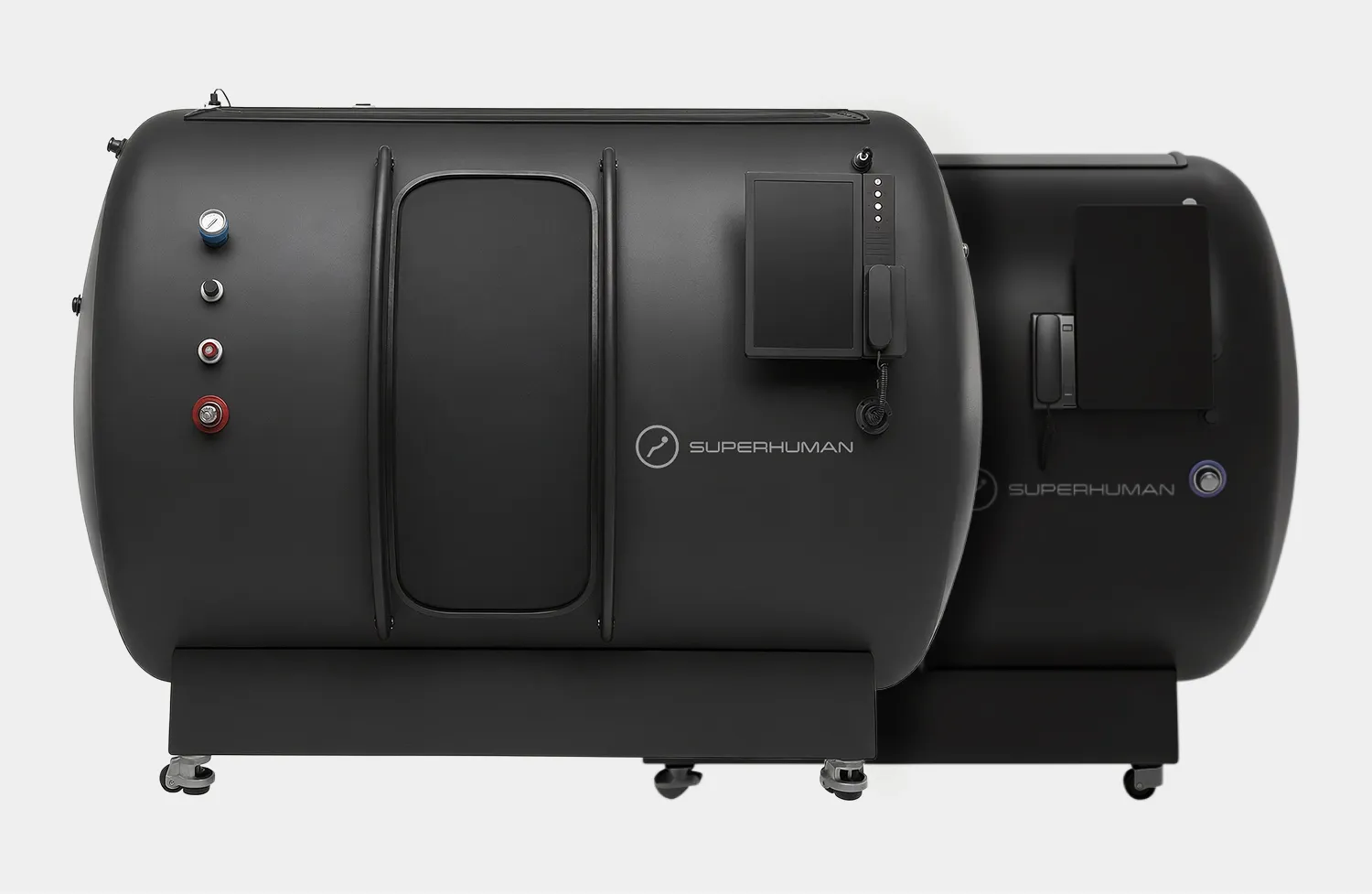
| Superhuman T2 | Superhuman T4 | |
|---|---|---|
| Seats | 2 | 4 |
| Cabin dimensions | About 2.1 m long and 1.7 m wide | About 2.3 m long and 1.7 m wide |
| Weight | Floor loading reviewed during planning | Floor loading reviewed during planning |
| Pressure | 1.5 or 2.0 ATA, selectable | 1.5 or 2.0 ATA, selectable |
| Session length | 30–120 minutes | 30–120 minutes |
| Noise | Quiet operation, conversation level | Quiet operation, conversation level |
| Layouts | Two or three chairs, single lounge, bed mode, or L-shaped bench | Four-seat, bed mode, L-shaped bench, or bench-plus-sofa |
| System | All-in-one: oxygen concentrator + air conditioning, no tanks | All-in-one: oxygen concentrator + air conditioning, no tanks |
| Install | White-glove delivery with same-day operator training | White-glove delivery with same-day operator training |
| Support | 2-year warranty + lifetime support | 2-year warranty + lifetime support |
| Price | $125,000 | $169,000 |
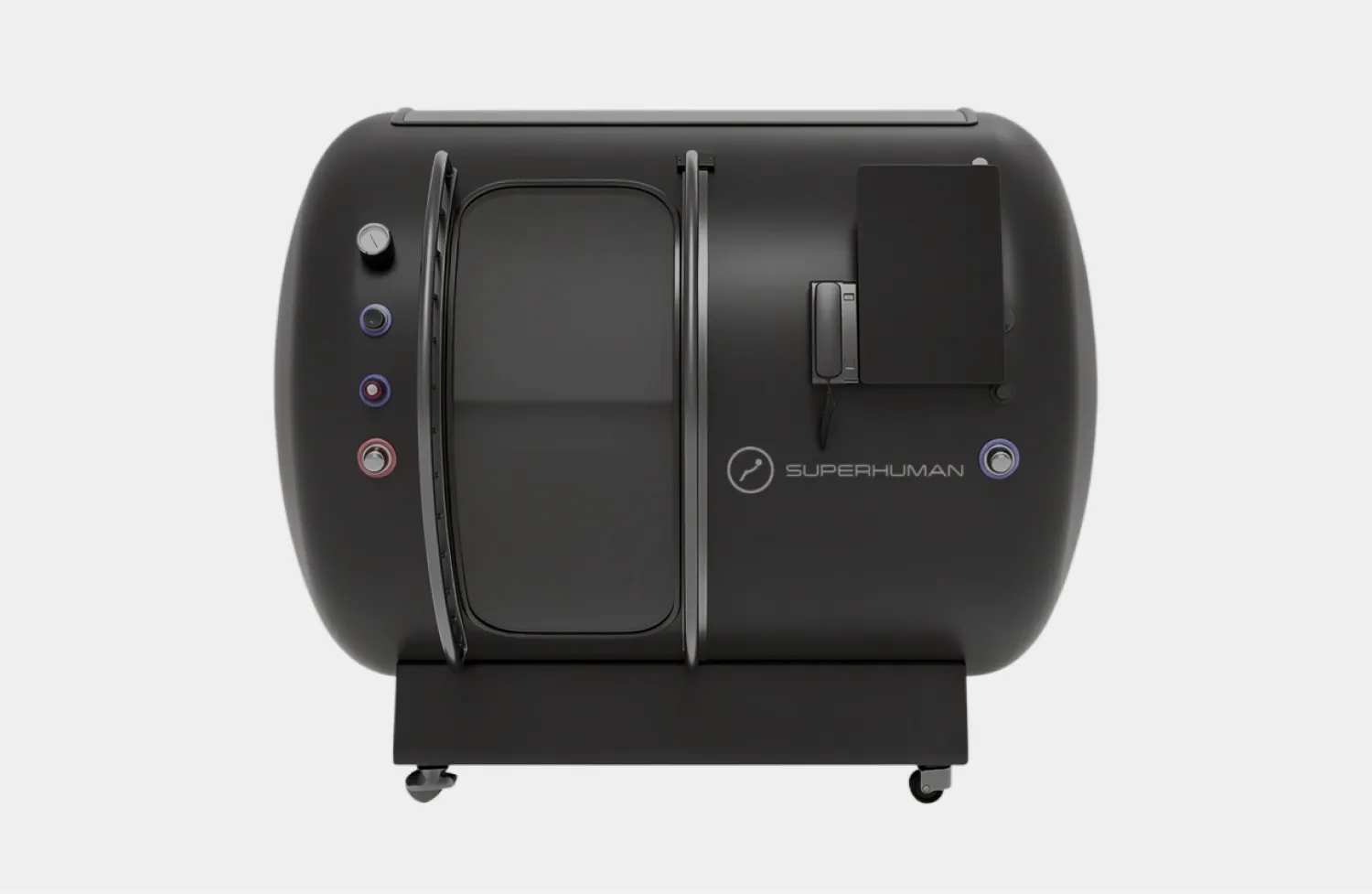
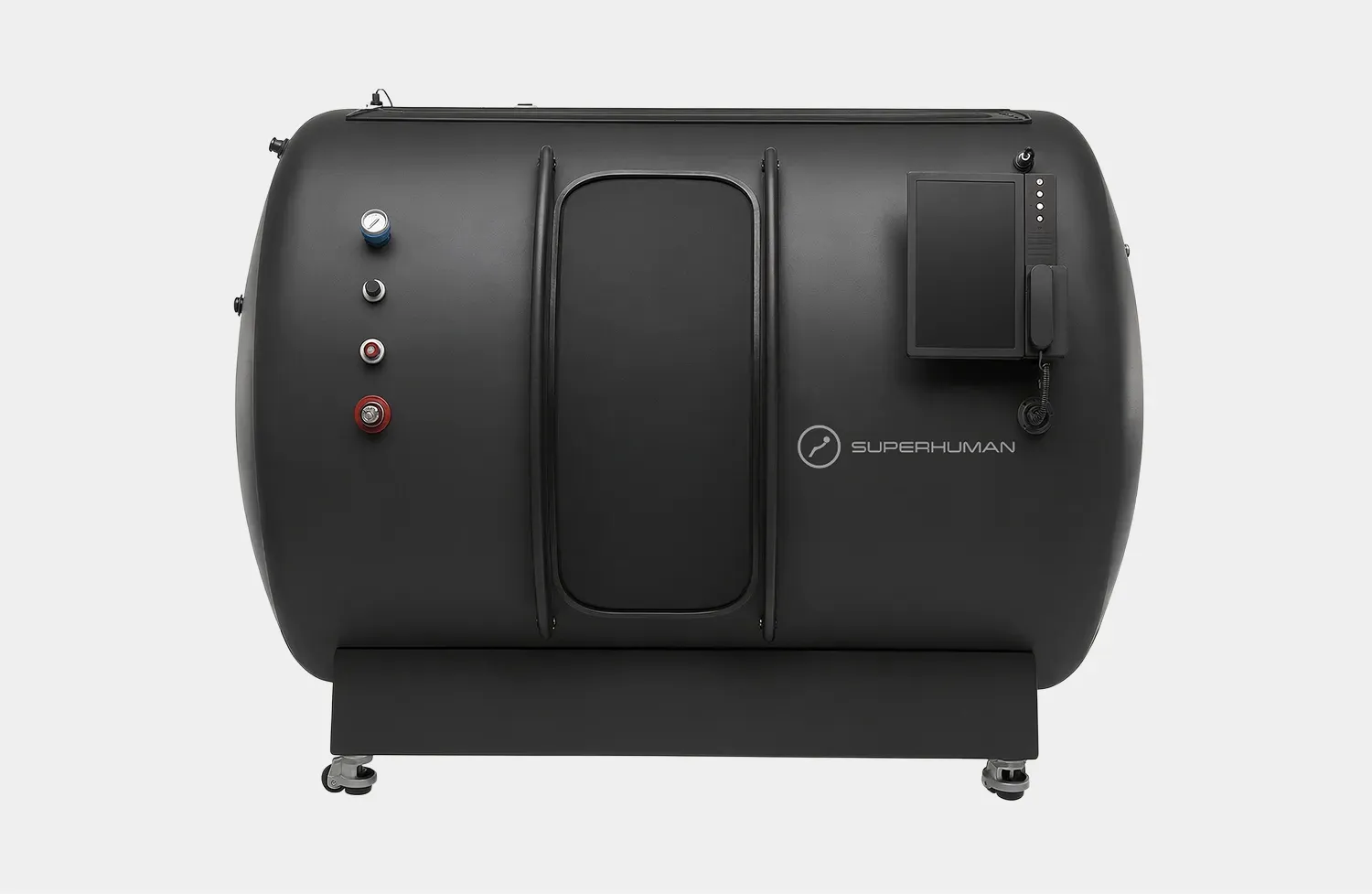
Buying for one person instead? The S1, L1, and X are single-occupant chambers; the monoplace guide maps that lineup. Otherwise browse the full chamber range or book a consultation to spec a T2 or T4 for your space.
The money
How much does a multiplace hyperbaric chamber cost?
The SERP scatters these numbers across dealer pages and blogs. Here they are in one table, with our own prices published rather than "call for a quote".
| Market band | Price | Notes |
|---|---|---|
| Used clinical, small (2–4 patients) | $200,000–450,000 | Age, dive cycles, and entry locks drive the price (dealer market) |
| Used clinical, medium/large (6–12+) | $400,000–1,500,000 | Plus site prep and recommissioning |
| New custom clinical multiplace | $1,500,000–2,000,000 | Hospital capital project: engineering, room, crew |
| Consumer "multiplace" imports | $80,000–170,000 | Wellness-grade builds from import vendors; specs vary widely |
| Superhuman T2 (2 seats) | $125,000 | Published price, white-glove install included |
| Superhuman T4 (4 seats) | $169,000 | Published price, white-glove install included |
The sticker is not the whole bill on the clinical side: site preparation runs $30,000 to $100,000 for a clinical multiplace (floor engineering, crane, ventilation), before the vessel arrives. In the multi-occupant class, white-glove installation is included and there is no construction.
Operating cost moves in the opposite direction from purchase price. Sharing a session drops the per-client operating cost to $20 to $40 in typical models; on our chambers the energy cost is about $2 per session total, with no proprietary consumables. The cost guide covers total ownership, the cost calculator models your own numbers, and financing structures the payment side.
Before delivery day
Space, installation, and site requirements
Clinical manufacturers gate this behind a sales form. Here is the checklist instead, for both classes.
A clinical multiplace is a construction project: a dedicated 200 to 500+ sq ft room, engineered floor loading, crane or hoist access for the vessel, dual-lock entry, dedicated HVAC and ventilation, and a 1 to 2 week installation before commissioning. A multi-occupant hard chamber is a room-fit question instead: the T2 is about 2.1 m long and 1.7 m wide, the T4 about 2.3 m long and 1.7 m wide, both arrive through a standard doorway delivery path, and the all-in-one concentrator and air conditioning mean no oxygen tanks and no gas plumbing. A rough rule of thumb for the 2-person class: an 8x10 ft floor area plus working clearance.
- 01
Floor space: roughly 8x10 ft for a 2-person multi-occupant chamber; 200–500+ sq ft dedicated room for clinical multiplace
- 02
Floor loading: reviewed during planning for a multi-occupant cabin; clinical vessels need engineering approval
- 03
Delivery path: standard doorways and hallways for a multi-occupant chamber; crane or hoist access for a clinical vessel
- 04
Power: standard electrical supply plus the all-in-one concentrator and air conditioning; no special gas plumbing, no oxygen tanks
- 05
Ventilation and HVAC sized to the room and the occupant count
- 06
Door and access: rectangular or wheelchair-accessible doors where mobility users are expected
- 07
Operating staff: one trained operator for multi-occupant; a certified technician crew for clinical multiplace
- 08
Timeline: single-day white-glove install for multi-occupant; 1–2 weeks plus commissioning for clinical
Post-install ownership (cleaning, filters, service intervals, warranty) is covered in the maintenance and service guide.
Operator math
Throughput, staffing, and ROI for clinics and wellness centers
Competitors say a multiplace does the same client count "in a quarter of the time". Here is the actual model behind that claim.
Sessions run 60 to 90 minutes. A single monoplace chamber therefore turns one client per session; a 4-seat chamber at a realistic average occupancy of 2.5 clients moves 2.5 clients per session where each monoplace unit moves one, and does it with one operator monitoring everyone at once instead of four machines to run. That is the entire throughput argument, and it holds even when you discount fantasy full-house occupancy, which you should: seats are not sold seats, and our own ROI calculator defaults to 1.6 to 2.5 clients per session on the multi-seat models.
On revenue, wellness-market session pricing commonly runs $150 to $250 per client, against a per-client operating cost of $20 to $40 in typical models; on Superhuman chambers the direct energy cost is about $2 per session. Staffing is the other half of the ledger: a clinical multiplace requires certified hyperbaric technicians inside the vessel, while the multi-occupant class runs with one trained operator outside (our operator licensing guide maps the credential side).
For the full business case, see the chamber business guide, what wellness operators evaluate before buying, and our playbooks for spas and wellness resorts and gyms and fitness centers. Run your own occupancy and pricing through the ROI calculator.
Standards and fire logic
Safety, standards, and oxygen delivery
Two standards govern this equipment class, and one design decision determines most of the fire risk.
ASME PVHO-1 is the safety standard for pressure vessels for human occupancy: it governs how the vessel itself is designed, built, and tested. NFPA 99, the Health Care Facilities Code, governs the environment around the chamber: electrical, gas, and fire safety in the facility.
The fire logic favors this architecture. An air-pressurized shared room carries a lower fire load than an oxygen-filled monoplace, because the cabin atmosphere stays close to ordinary air. Our chambers go further: concentrator-fed BIBS delivers oxygen only to the occupant's mask, with no oxygen tanks on site and no enrichment of the cabin air.
Concretely, the Superhuman safety suite includes door-leak detection, automatic and manual pressure relief, pressure and power-off alarms, carbon dioxide discharge, humidification, internal and external touchscreens, and an interphone. The chambers are built in an ISO 13485 medical-device facility under ISO 9001, ASME and CE certified, and every vessel is tested to PVHO-1. The full standards chain is in our chamber safety guide.
The buyer nobody serves
Multiplace chambers at home: who actually buys one?
The "2 person hyperbaric chamber" search results are import marketplaces and Instagram posts. The real home buyer exists; here is who they are.
Four use cases come up again and again:
- Couples dosing together on the same schedule, one session instead of two
- A parent supervising a child inside the same cabin
- Buyers who want room to sit up, read, and move rather than a lying-down tube
- Wheelchair and mobility users who need walk-in access rather than slide-in entry
The honest constraints matter as much. A 2.0 ATA hard-shell is the realistic home ceiling: clinical multiplace is not a home product, full stop, because the budget, the engineered room, and the crew belong to a hospital. And the roomier cabin is also the answer for buyers who find a single-occupant tube confining; if that is the deciding factor, our claustrophobia guide covers the comfort side, the home chamber guide covers ownership at home, and the seated and vertical chambers guide covers posture-first single-occupant alternatives. The Superhuman X ($110,000) is our seated single-occupant hard-shell in that class.

FAQ
Multiplace questions
What is a multiplace hyperbaric chamber?
A multiplace hyperbaric chamber is a pressurized room where two or more people receive hyperbaric oxygen therapy together. The room itself is pressurized with air, and each occupant breathes oxygen through a mask, hood, or built-in breathing system (BIBS). Clinical multiplace chambers in hospitals hold 6 to 14 patients with a trained attendant inside; multi-occupant hard chambers seat 2 to 4 people and are monitored from outside.
How many people can a multiplace hyperbaric chamber hold?
Capacity runs from 2 to 14 or more, in distinct classes. Multi-occupant hard chambers seat 2 to 4 people (the Superhuman T2 seats two, the T4 seats four). Clinical multiplace chambers start around 6 patients and run to 12 or more seats plus attendant positions in hospital installations.
How much does a multiplace hyperbaric chamber cost?
It depends which market you mean. Multi-occupant hard chambers for clinics, wellness centers, and homes run $125,000 to $169,000 (Superhuman T2 and T4, published prices, install included). Clinical multiplace systems for hospitals run $200,000 to $450,000 used for small vessels, up to $1.5 to 2 million for new custom installations, before site preparation that can add $30,000 to $100,000 or more.
What is the difference between monoplace and multiplace chambers?
Occupancy and oxygen delivery. A monoplace chamber treats one person in a tube filled entirely with oxygen, so no mask is needed. A multiplace chamber is a room pressurized with air where each occupant breathes oxygen through a mask or hood. Monoplace suits homes, clinics, and wellness centers; clinical multiplace is a hospital-scale installation. Our monoplace guide has the full side-by-side breakdown.
Is a multiplace chamber more effective than a monoplace?
No. Mayo Clinic states the treatment effects of hyperbaric oxygen therapy are the same in monoplace and multiplace chambers. The dose is set by the pressure and the oxygen you breathe, not by how many people share the room. The real reasons to choose multiplace are throughput, the ability to treat together, and (in hospitals) having staff inside with critically ill patients.
Can you put a multiplace hyperbaric chamber in your home?
A multi-occupant hard chamber, yes: models like the Superhuman T2 are designed for it, needing roughly an 8x10 ft floor area, standard power, and a normal delivery path, with white-glove installation included. A clinical multiplace, no: it is a hospital capital project requiring a dedicated engineered room, crane access, and a trained crew, which is not a residential product.
Do you wear a mask in a multiplace chamber?
Yes. Because the room is pressurized with air rather than filled with oxygen, each occupant breathes oxygen through a hood, a mask, or a built-in breathing system. Superhuman chambers use concentrator-fed BIBS masks: oxygen goes only to the person wearing the mask and exhausts outside, with no oxygen tanks and no oxygen enrichment of the cabin air.
What pressure does a multiplace chamber reach?
Multi-occupant hard chambers in the wellness market run 1.5 to 2.0 ATA; Superhuman T2 and T4 are selectable between 1.5 and 2.0 ATA. Clinical multiplace chambers run higher, typically 3.0 ATA and up to 6.0 ATA, which is a pressure class that exists for hospital indications under physician supervision, not for wellness use.
What space do you need for a multiplace chamber?
For a multi-occupant hard chamber, a single room: the Superhuman T2 is about 2.1 m long and 1.7 m wide and the T4 about 2.3 m long and 1.7 m wide, so plan roughly an 8x10 ft floor area for the two-person class plus working clearance. A clinical multiplace needs a dedicated 200 to 500+ sq ft room with engineered floor loading, crane access, and dual-lock entry.
How long is a session, and how many clients per day can an operator run?
Sessions run 60 to 90 minutes (Superhuman chambers support 30 to 120 minute protocols). Throughput is where multi-occupant pays: one 4-seat chamber at a realistic average occupancy of 2.5 clients per session moves 2.5 clients where a monoplace moves one, with a single operator monitoring everyone at once. Session pricing in the wellness market commonly runs $150 to 250 per client.
Last updated: September 2026. This guide is educational and does not replace medical advice. Consult a qualified physician before starting hyperbaric oxygen therapy.