
HBOT as a business
The hyperbaric chamber business
A hyperbaric chamber is a service line: clinics, med spas, gyms, and wellness studios sell sessions at $100 to 250 per client on hardware that costs about $2 of electricity per session to run. At steady utilization the payback lands in months, not years. Here is the revenue math, the equipment criteria that make or break the deal, and which chamber fits which operation.
Why operators add HBOT
The business case, in one paragraph
HBOT is a high-ticket, repeat-visit service that runs on a fixed-cost asset, which is the exact shape of a good add-on business line.
A hyperbaric chamber turns floor space into a premium service. Clients pay $100 to 250 per session, buy in packages and memberships rather than one-offs, and come back on a schedule, because the use-cases that bring them (recovery, wellness, longevity protocols) are inherently repeat-visit. Meanwhile the cost side is fixed: the chamber itself, about $2 of electricity per session, and roughly $400 a year in filters and service. Every incremental session is nearly pure margin, which is why utilization, not price, is the number that decides the business.
It also differentiates. A med spa, gym, or wellness studio with a 2.0 ATA hard-shell chamber offers something the competitor with a massage gun and a smoothie bar cannot copy next quarter, at a session price that sits at the top of the local wellness menu. For the clinical route (billing insurance for recognized indications), the economics are a separate question covered in our insurance coverage guide; this page is about the cash-pay wellness service line most operators actually build.
The revenue math
When does the chamber pay for itself?
Pick a model, set your price and throughput. The calculator estimates monthly revenue, profit, and the payback period on the defaults most operators start from.
- Monthly revenue—
- Monthly operating cost—
- Monthly net profit—
- 5-year net (after chamber cost)—
Ready to price a real unit? Compare all five chambers from $15,000.
Illustrative estimate, not a guarantee. Actual figures vary by usage, location, pricing, utilities, and service model.
Defaults are illustrative and every input is editable: $200 per client, two sessions a day, six days a week, $1,200 a month incremental overhead (marketing, insurance, consumables, not full rent and staff), and 3% card fees. The buyer-side ownership math is in the five-year cost calculator; spreading the purchase into a monthly payment is covered in financing.
Before you buy
The seven criteria that decide the deal
Experienced operators in 2026 evaluate the same seven things, in roughly this order. Pressure comes first because it shapes everything else.
Pressure capability
Evaluated first: it shapes your service menu. 2.0 ATA hard-shell covers research-grade protocols; 1.3–1.5 ATA soft-shell does not.
Safety engineering
Where deals quietly die: valve redundancy, O₂ monitoring, certified build. See the chamber safety guide.
Regulatory fit
Checked earlier than it used to be: wellness positioning vs medical claims, the device regulatory status (FDA clearance where claimed), local rules.
Total cost of ownership
Replaced sticker price in serious deals: running cost is ~$2 electricity per session plus ~$400 a year.
Space, power, installation
The unglamorous veto: room footprint, standard power, no plumbing or construction.
Staffing & training
Determines the experience clients actually get: who operates, who screens, who explains.
Vendor support
The criterion buyers wish they had weighted higher: install, training, and who answers the phone in year three.
The full breakdown, including how operators weight the criteria when they conflict, is in our spoke: what wellness operators evaluate in a hyperbaric chamber in 2026. Safety engineering deserves its own read: hyperbaric chamber safety.
The equipment decision
Which chamber fits which operation
For a paid service line the answer is always a hard-shell at 2.0 ATA; the only real question is seats. Multi-occupant is throughput, not a hospital multiplace.
| Your operation | Model | Why it fits |
|---|---|---|
| Solo practitioner / med spa add-on | L1 | Single-occupant 2.0 ATA, smallest hard-shell footprint, $49,000 entry |
| Premium longevity / concierge practice | X | Seated single at 2.0 ATA, the comfort-first flagship for discerning clients |
| Wellness studio / small clinic | T2 | Two clients per session, 2.0 ATA, the throughput step-up at $125,000 |
| Recovery facility / team / busy clinic | T4 | Four seats at 2.0 ATA, the highest revenue per session hour at $169,000 |
All four are hard-shell chambers at a true 2.0 ATA with 304 stainless-steel vessels rated for a 20 to 30+ year commercial life. One honesty note: the T2 and T4 are multi-occupant chambers (two to four clients share one pressurized cabin, no hoods, no attendant inside), not a clinical multiplace; the distinction matters and our monoplace vs multiplace guide explains it. Compare the full range in best hyperbaric chambers.
The med spa angle
Adding HBOT to a med spa or wellness studio
You do not need to build a hyperbaric clinic. The workable model is an add-on service line on the space, staff, and client base you already have.
The med-spa business-plan searches all land on the same advice: differentiation and recurring revenue decide who survives. HBOT serves both. As an add-on service line, the chamber carries only incremental overhead (the calculator's $1,200 a month covers marketing, insurance, and consumables) because the room, the front desk, and the clients already exist. A single-occupant L1 turns one spare room into a $200-a-session offering with no new department.
Position it honestly and it sells better. Package the chamber as recovery and wellness (post-workout, longevity protocols, premium relaxation), sell packages and memberships instead of drop-ins, and keep every claim inside what the device status supports: the FDA clears chambers for specific medical indications, and wellness marketing that borrows that language invites trouble. Our FDA-cleared indications explainer shows where the line sits. Ready to talk specifics? Browse chambers for sale or contact the team.
The shortlist
Two ways operators usually start
Most buyers land in one of two places: a single-occupant chamber for an add-on service line, or a multi-seat chamber when throughput is the plan from day one.
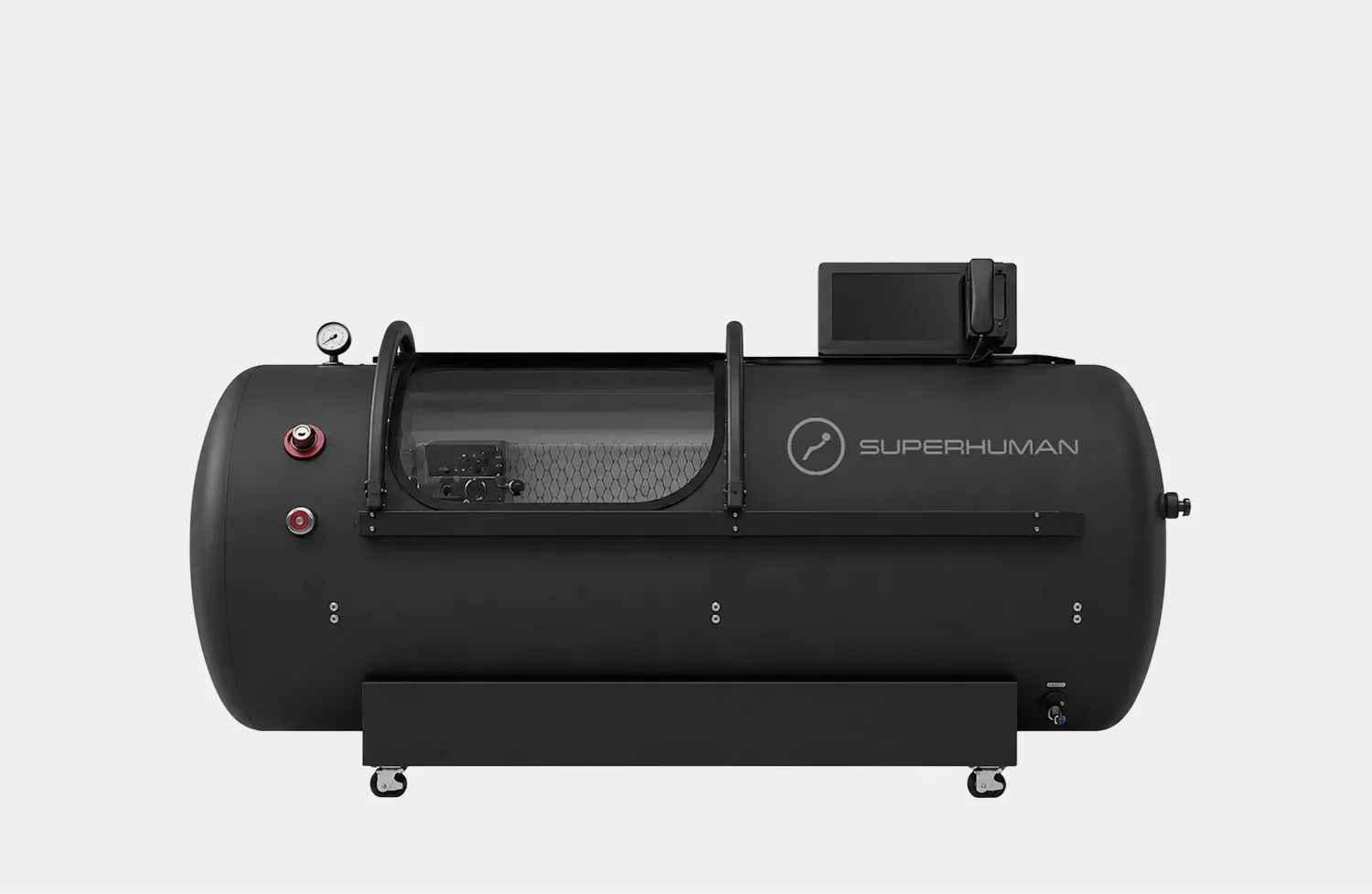
One room, one client at a time
- Med spa, solo practice, or studio testing demand
- L1: 2.0 ATA hard-shell, smallest footprint, $49,000
- About $2 of electricity per session, ~$400 a year to run
- Payback in months at two sessions a day (see the calculator)
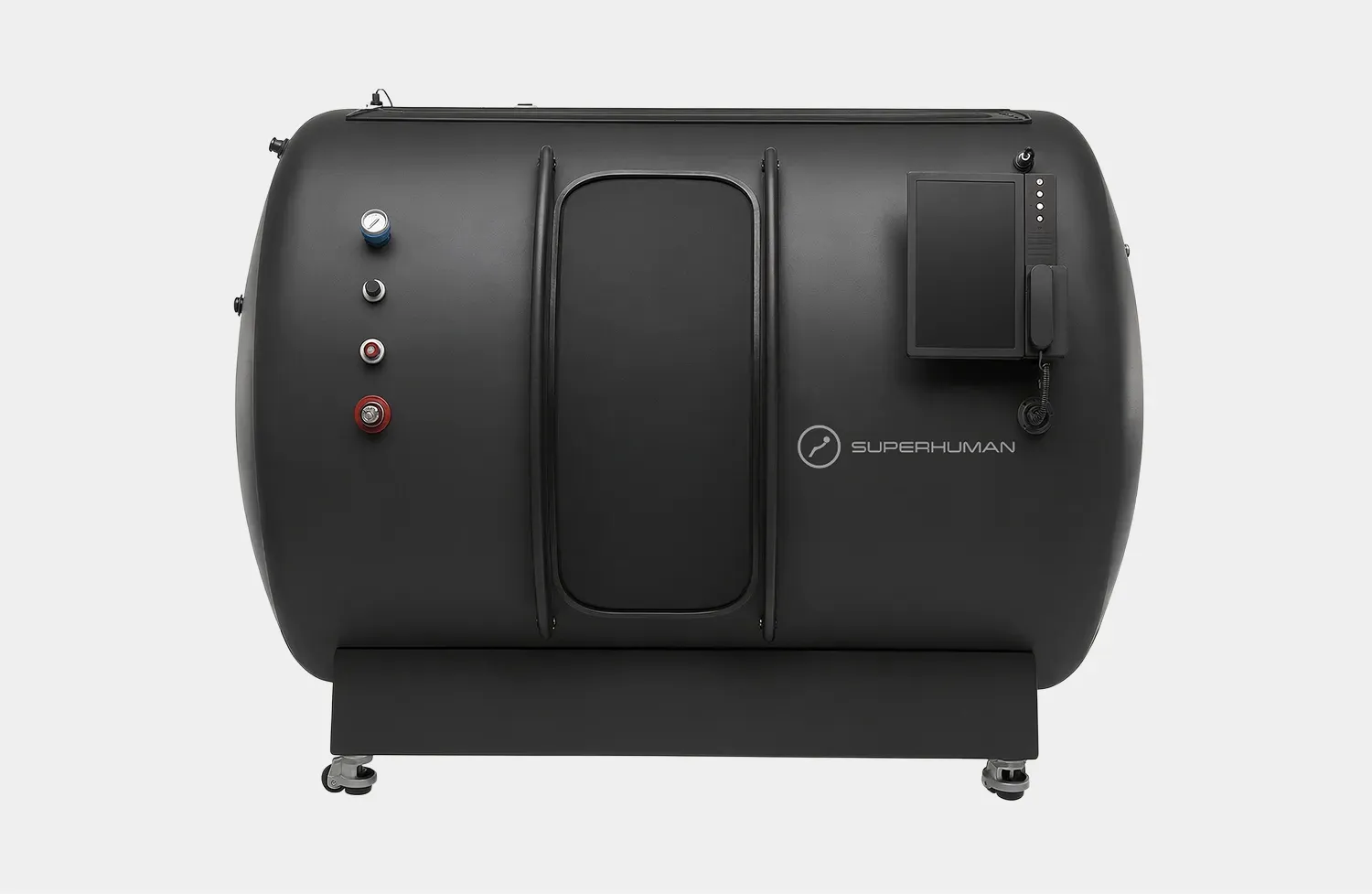
Two to four clients per session
- Recovery facility, busy clinic, gym, or team
- T2 seats two ($125,000), T4 seats four ($169,000)
- Each session hour bills two to four seats instead of one
- Multi-occupant 2.0 ATA; not a hospital multiplace
Start single-occupant if you are adding HBOT to an existing business and want to prove utilization before scaling: the L1 at $49,000 (or the seated X at $110,000 for a premium longevity practice). Size the payment side with financing and the ownership side with the cost guide.
Start multi-seat if throughput is the plan from day one: a T2 or T4 turns one session hour into two to four paid seats, which is the strongest lever in the ROI math above. Browse chambers for sale when you are ready to compare live inventory.

FAQ
Operator questions
How much does a commercial hyperbaric chamber cost?
A commercial hard-shell chamber runs from $49,000 (single-occupant L1 at 2.0 ATA) to $169,000 (four-seat T4). Soft-shell chambers are priced lower but are personal-use equipment: for a business you want the hard-shell duty cycle, the 2.0 ATA pressure tier clients ask for, and a 20 to 30+ year vessel lifespan. Running costs are minor: about $2 of electricity per session and roughly $400 a year in filters and service.
How profitable is a hyperbaric chamber business?
Session pricing in the wellness market commonly runs $100 to 250 per client. At the default assumptions in our ROI calculator ($200 per client, two sessions a day, six days a week, $1,200 a month incremental overhead), a two-seat T2 generates enough monthly profit to pay back its $125,000 price in months rather than years. Real payback depends on your ramp-up, pricing, and utilization, which is why every input in the calculator is editable.
How many sessions a day does a chamber need to break even?
Fewer than most buyers expect. Covering the incremental overhead (about $1,200 a month plus roughly 3% card fees) takes only a handful of client sessions a month at $200 each; everything above that pays down the chamber itself. At two sessions a day, six days a week, the calculator shows payback inside the first year for most of the lineup. The lever that matters most is utilization, not price.
Is a soft-shell or hard-shell chamber better for a business?
Hard-shell, for three reasons. Clients and referral partners increasingly ask for 2.0 ATA, which only a hard-shell reaches. A commercial chamber runs back-to-back sessions all day, which is hard-shell duty-cycle territory. And the 20 to 30+ year lifespan of a 304 stainless-steel vessel is what makes the long-run unit economics work. Soft-shell chambers are excellent personal equipment; they are not the tool for a paid service line.
Do I need a medical license to operate a hyperbaric chamber?
It depends on your jurisdiction and on how you position the service. Treating medical conditions is medical practice, with the licensing, supervision, and billing rules that implies; a wellness and recovery positioning is a different, lighter regime in most places, but the line and the requirements vary by state and country. Verify locally before you buy, and keep your marketing inside what the regulatory status of your device actually supports. Our operator guide covers how buyers check regulatory fit.
What space and power does a commercial chamber need?
Less than most clinical equipment: a dedicated room sized to the vessel footprint, standard electrical service, and no plumbing, special circuits, or construction. The practical vetoes are doorway and hallway width on delivery day, ceiling height for seated models, and floor loading for the heavier multi-seat chambers. We confirm all of this against your floor plan before install.
Should my clinic buy a multiplace hyperbaric chamber?
Almost certainly not a clinical multiplace: that is a hospital-scale capital project with a dedicated room, a trained crew, and staff pressurizing alongside patients, built to treat critically ill patients. If you simply need to treat more than one client per session, a multi-occupant hard chamber seats two to four people in one 2.0 ATA vessel with no hoods and no attendant inside. Our monoplace guide walks through the distinction in detail.
Last updated: August 2026. This guide is educational and does not replace legal, financial, or medical advice. Verify licensing and regulatory requirements in your jurisdiction before offering hyperbaric services.