

The short answer: No US federal license exists for hyperbaric chamber operators. The FDA regulates the device (HBOT chambers are Class II, cleared through 510(k) under product code CBF), while NFPA 99 chapter 14 requires every hyperbaric facility to name a safety director, and states set the facility and clinical rules. Michigan is the first state moving to license freestanding HBOT facilities outright.
The question “do you need a license?” almost always gets a one-word answer online, and both possible answers are wrong. “No” is wrong because a chamber sits inside a stack of codes and state rules that apply whether or not anyone calls them a license. “Yes” is wrong because there is no single credential you can apply for and hang on the wall.
What actually exists is four layers of authority: the FDA over the device, the state over clinical practice and facilities, the fire and building codes enforced by your local authority having jurisdiction, and voluntary accreditation that increasingly functions as the industry benchmark. This guide maps each one, names the specific standards, and ends with the questions to ask before you sign a lease.
Disclosure: Superhuman Chambers manufactures and sells hyperbaric chambers for wellness operators. This article is educational and is not medical, legal, or regulatory advice. Requirements differ by state and by municipality, and every operator is responsible for verifying their own obligations with the relevant authority.

The four layers that decide what you need
Authority over hyperbaric oxygen therapy is split, and no single agency issues a permission slip that covers all of it.
| Layer | Who sets it | What it governs | Applies to a wellness operator? |
|---|---|---|---|
| Device | FDA | Chamber clearance (Class II, 510(k), product code CBF), labeling, manufacturer instructions for use | Yes, through the equipment you buy and how you use it |
| Clinical practice | State medical, nursing, and podiatry boards | Who may diagnose, prescribe, and supervise treatment; scope of practice | Yes, the moment sessions are framed as treatment |
| Facility and codes | NFPA 99, ASME PVHO-1, local fire marshal and building department | Chamber construction, installation, ventilation, fire safety, named safety director | Yes, in every jurisdiction |
| Accreditation | UHMS (recognized by the FDA as an accrediting body) | Voluntary program review against published standards | Optional, but increasingly expected |
The practical consequence is that a compliant program is assembled rather than granted. Operators who go looking for one license and find nothing often conclude the field is unregulated, then discover the code requirements at the worst possible moment, which is during an inspection or an insurance review.
What the FDA does and does not require
The FDA regulates the chamber as a medical device and says nothing about who is allowed to press the buttons.
Hyperbaric oxygen therapy devices are Class II medical devices cleared through the 510(k) pathway, and cleared models can be identified by searching product code CBF in the FDA’s 510(k) database. Clearance attaches to the device and its intended use, not to the facility or the staff. There is no FDA operator license, no federal registry of HBOT centers, and no federal inspection regime for freestanding clinics.
What the FDA does have is a formal expectation about how cleared devices are used. In a letter to health care providers issued August 25, 2025, the agency set out recommendations that read as a baseline operating standard for any facility:
- Follow the manufacturer’s instructions for use for each device.
- Maintain fire prevention measures and proper grounding, given the heightened fire risk of high-concentration oxygen.
- Provide and maintain staff training on the device.
- Monitor and supervise the patient for the full duration of every session.
- Follow the manufacturer’s cleaning procedures, maintenance intervals, and safety checks.
- Exclude prohibited items, including electrical and static-generating devices, and keep patients in hyperbaric-compatible fabrics such as cotton rather than wool or synthetics.
The letter closes by pointing to two external standards: NFPA 99-2024 (Health Care Facilities Code) and ASME PVHO-1-2023 (Safety Standard for Pressure Vessels for Human Occupancy). That is the FDA telling operators, without issuing a rule, where the enforceable requirements actually live.
Two further FDA-adjacent points matter commercially. First, the cleared indication list is finite: our guide to what HBOT is actually FDA-cleared to treat covers the 13 conditions and why everything else is off-label. Second, off-label use is a practice-of-medicine question governed by state boards, not by the FDA, which is exactly where the next layer begins.
State rules: the layer that is changing fastest
As of 2026 no state comprehensively licenses and inspects freestanding HBOT facilities, roughly a dozen mandate the pressure-vessel standard, and Michigan has moved to be the first to require licensure.
The pressure-vessel piece is the most concrete. Around 11 states, including Arkansas, California, Delaware, Georgia, Hawaii, Minnesota, North Carolina, Oregon, Tennessee, Washington, and Wisconsin, have adopted statutes requiring clinical hyperbaric chambers operated in the state to comply with ASME PVHO-1, according to a 2025 Stateline review of state rules. If you operate in one of those states, the certification status of the vessel you buy is not a preference, it is a legal condition of use.
Michigan is the live test case for the next step. In February 2026, a bipartisan package was introduced in the state House and Senate that would require the Michigan Department of Licensing and Regulatory Affairs to license, inspect, and require accreditation of freestanding facilities offering hyperbaric oxygen therapy, including wellness centers and medical spas. If it becomes law, Michigan would be the first state in the nation to license this category of facility. Sponsors have described the intent as preserving patient access while adding oversight, and earlier drafts excluded portable soft-shell chambers from the licensing scheme.
State boards also reach the therapy through profession-specific permits. In Texas, for example, every podiatric physician administering hyperbaric oxygen must hold a permit from the Texas Department of Licensing and Regulation before doing so. Rules of that shape are easy to miss because they sit inside a single profession’s regulations rather than in a chapter labeled hyperbaric medicine.
The three questions to ask your state
Call the state health department before you sign a lease or place an order, and ask in these terms:
- Does the state require a facility license (medical clinic, outpatient facility, or similar) for a site providing hyperbaric oxygen therapy at our intended pressure?
- Does the state mandate ASME PVHO-1 compliance for chambers used on humans, and does that apply to soft-shell chambers as well as hard-shell?
- What physician oversight is required for our service model, and does describing sessions as wellness rather than treatment change the answer?
Get the response in writing. The answers differ by state, and in several states they differ depending on whether you run at mild pressure or at a clinical 2.0 ATA, which our ATA pressure guide breaks down in detail.
NFPA 99 and the safety director most operators miss
NFPA 99 chapter 14 requires every hyperbaric facility to designate a safety director, and the requirement does not stop at the door of a hospital.
This is the single most-overlooked obligation in the wellness segment. The UHMS Safety Committee states it plainly in its published guidance: a safety director is required by NFPA 99, and “this applies even if your state has not adopted NFPA 99 and if you are not in a Health Care Facility,” because the NFPA 101 Life Safety Code refers back to NFPA 99 for hyperbaric facilities, with enforcement falling to the local authority having jurisdiction. In practice that authority is your fire marshal or building official.
The code allocates responsibility rather than prescribing a headcount. NFPA 99 section 14.3.1.4.2 requires the physician in charge of hyperbaric medicine and the hyperbaric safety coordinator to jointly develop the minimum staff qualifications, experience, and complement, based on the number and type of chambers in use, the maximum treatment capacity, and the type of therapy normally provided. The annex to 14.3.1.3.2 adds that, because of the conflict of responsibility involved, the same individual should not serve as both medical director and safety director.
There is no certification called “hyperbaric safety director,” which confuses people into thinking the role is informal. It is not. NFPA defines a qualified person as someone who, “by possession of a recognized degree, certificate, professional standing, or skill, and who, by knowledge, training, and experience, has demonstrated the ability to perform the work,” and UHMS accreditation surveys expect the safety director to have completed a UHMS-approved or NBDHMT-approved hyperbaric safety course and to hold, or be working toward, CHT or CHRN certification.
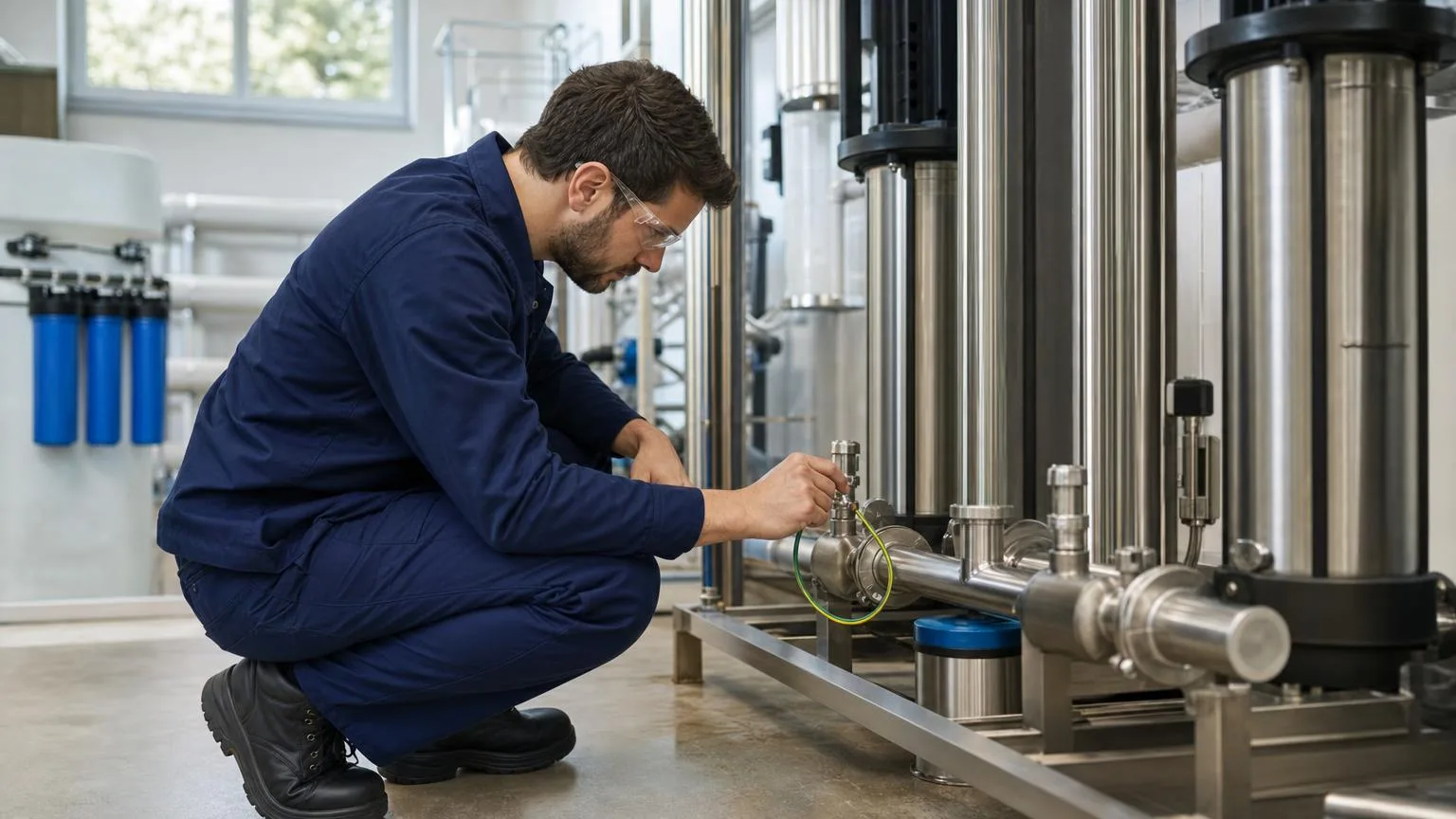
Local enforcement is real and has already reached the mild-pressure segment. Stateline reported that North Carolina fire marshals have shut down the use of soft-side chambers at wellness clinics over safety concerns, and that fire officials in other states, including Utah, have raised the same issue. An operator who assumes soft-shell equipment sits outside the codes is relying on an assumption the local AHJ may not share. The hyperbaric chamber safety pillar covers the equipment certification chain in more depth.
Staff credentials: CHT, CHRN, and what they actually mean
No credential is legally required to operate a chamber in most states, but the recognized ones come from a single board and are what accreditation and insurers look for.
| Credential | Issued by | Who can hold it | Recertification |
|---|---|---|---|
| CHT (Certified Hyperbaric Technologist) | NBDHMT | Not entry-level. Qualifying professions as of January 2019: respiratory therapist, PA, active-duty military corpsman, EMT or paramedic, RN or LPN, NP, physician | 24 CEU hours every 2 years (minimum 12 Category A) plus 100 clinical work hours |
| CHRN (Certified Hyperbaric Registered Nurse) | NBDHMT | Registered nurses only | Board-defined CEU and practice requirements |
| CHS (Certified Hyperbaric Specialist) | ABWH | Open to current CHT holders through reciprocity | Per ABWH requirements |
Three details change staffing plans. First, CHT is an add-on to an existing clinical qualification, not a standalone career entry point, and NBDHMT removed the CNA and MA pathway to recertification effective January 1, 2016. Second, the UHMS Guidelines for Hyperbaric Facility Operations set the expectation that at least one CHT or CHRN is present during chamber operations, and UHMS accreditation surveys check for it. Third, UHMS notes that the people employed as chamber operators and inside attendants come from a wide range of backgrounds, from respiratory therapists and paramedics to nurses and physicians, so the credential defines competence rather than a single job title.

For a cash-pay wellness studio running mild pressure, none of this is automatically mandatory. It is still the benchmark you will be measured against by an insurer reviewing your policy, a landlord reviewing your build-out, or a client who reads carefully. Our article on what wellness operators evaluate before buying covers how staffing burden factors into the purchase decision.
Where the wellness line actually sits
The regulatory weight of your program tracks the pressure you run and the claims you make, not the label on your door.
At 1.3 to 1.5 ATA with a soft-shell chamber, most states impose no physician-oversight requirement on a cash-pay wellness service, which is why the segment grew so quickly. At 2.0 ATA on hard-shell equipment, the program looks clinical to a regulator: physician oversight is commonly expected, facility licensing may apply, and billing brings its own rules. Medicare reimbursement for HBOT runs through CPT 99183, which is defined around physician attendance and supervision, and coverage is limited to approved indications. Our insurance coverage guide covers that side, and the hard-shell versus soft-shell comparison covers the equipment difference.
The claims you publish move the line faster than the equipment does. Describing sessions as recovery, wellness, or performance support keeps you in the cash-pay lane. Naming a disease, promising a treatment outcome, or advertising off-label indications pulls the program toward the practice of medicine in the eyes of a state board, regardless of what pressure you run. That is a marketing decision with a regulatory cost, and it is worth making it deliberately.
Accreditation is voluntary, and increasingly the benchmark
Roughly 1,200 hyperbaric medicine programs operate in the United States and about 140 hold UHMS accreditation, which makes accreditation the visible minority and the de facto quality signal.
Those figures come from UHMS estimates reported by Stateline in 2025. The FDA recognizes UHMS as an accrediting body for hyperbaric oxygen therapy, and its accreditation manual is the document most state proposals reach for when they need a ready-made standard. Michigan’s proposed package is built around exactly that idea: rather than writing a technical standard from scratch, require accreditation.
The same reporting flagged a market problem worth knowing about as a buyer. The UHMS executive director estimated there could be as many as 20,000 chambers in use in the United States that do not comply with the applicable codes, many imported and many resold on a secondary market with no requirement attached. For an operator, that reframes the purchase question from price to documentation: what standard is this vessel built to, and can the manufacturer prove it.
A pre-opening compliance checklist
- Confirm the chamber is FDA-cleared and identify its 510(k) number and product code.
- Confirm ASME PVHO-1 compliance for the vessel, and confirm whether your state mandates it.
- Ask your state health department the three questions above, and keep the written answer.
- Designate a safety director who is not the medical director, and enroll them in a UHMS- or NBDHMT-approved safety course.
- Have the local fire marshal and building department review the installation before build-out, including ventilation, oxygen handling, and grounding.
- Write the staffing plan against NFPA 99 14.3.1.4.2, and decide whether a CHT or CHRN will be present during operations.
- Build the operating protocol from the manufacturer’s instructions for use: prohibited items, clothing, monitoring, maintenance intervals, and safety checks.
- Review insurance with a broker who understands oxygen-rich environments, and confirm what your policy assumes about staffing and accreditation.
- Audit marketing claims against the FDA-cleared indication list before the site goes live.
Limitations and open questions
- This is not legal advice, and the rules are state-specific. Two operators running identical chambers in different states can face genuinely different obligations.
- The Michigan legislation is proposed, not enacted. Its final scope, including whether soft-shell chambers are covered, may change before any vote.
- The 11-state PVHO-1 count comes from secondary reporting and statutes change. Verify your own state directly rather than relying on a list.
- No federal registry exists, so national figures for how many facilities operate and how many are code-compliant are estimates, not counts.
- Codes are revised on a cycle. NFPA 99 and ASME PVHO-1 both carry edition years, and the edition your jurisdiction has adopted is the one that governs you.
What this means for wellness operators
The absence of a license is not the absence of a standard, and the gap between those two is where operator risk lives.
Start from the codes rather than from the licensing question. NFPA 99 chapter 14 applies to your facility today, in every state, enforced by a local official who may know the code better than your equipment vendor does. Naming a qualified safety director and documenting a staffing plan costs very little at the planning stage and is expensive to retrofit.
Then buy on documentation. A chamber with a verifiable 510(k) clearance and PVHO-1 compliance is the only kind that survives a serious inspection, an insurance underwriting review, or a state that decides to follow Michigan’s lead. Our hard-shell chambers, including the two-seat Superhuman T2, are built and documented for exactly that scrutiny.
Finally, treat accreditation as a direction rather than a box. Even if you never apply, running your program against the UHMS structure, with a medical director, a separate safety director, trained staff present during operations, and documented maintenance, is the fastest way to be ready for whatever your state does next. To talk through what a compliant installation looks like in your space, contact the team or read more about Superhuman.
References
- U.S. Food and Drug Administration. Follow Instructions for Safe Use of Hyperbaric Oxygen Therapy Devices: Letter to Health Care Providers. August 25, 2025. https://www.fda.gov/medical-devices/letters-health-care-providers/follow-instructions-safe-use-hyperbaric-oxygen-therapy-devices-letter-health-care-providers
- Undersea and Hyperbaric Medical Society. MEDFAQs: Accreditation and Licensure (safety director requirement, NFPA 99 references, staffing guidance). https://uhms.org/resources/featured-resources/medfaqs-frequently-asked-questions-faq/safety-technical/accreditation-and-licensure.html
- National Board of Diving and Hyperbaric Medical Technology. Certified Hyperbaric Technologist Training and Certification. https://nbdhmt.org/certified-hyperbaric-technologist-training-and-certification/
- National Board of Diving and Hyperbaric Medical Technology. Certified Hyperbaric Technologist Resource Manual (recertification: CEU and clinical-hour requirements). https://uhms.org/images/Credentialing/CHT-Resource-Manual-September-2024-1.pdf
- Vollers AC. Deaths prompt state lawmakers to consider new hyperbaric oxygen therapy rules. Stateline. September 15, 2025. https://stateline.org/2025/09/15/deaths-prompt-state-lawmakers-to-consider-new-hyperbaric-oxygen-therapy-rules/
- WHMI. Bipartisan Legislation Would Regulate Hyperbaric Chamber Use in Michigan. February 27, 2026. https://www.whmi.com/news/article/bipartisan-legislation-would-regulate-hyperbaric-chamber-use-in-michigan
- Texas Department of Licensing and Regulation. Apply for a Hyperbaric Oxygen Permit (Podiatry). https://www.tdlr.texas.gov/pod/hyperbaric-oxygen-apply.htm
- National Fire Protection Association. NFPA 99, Health Care Facilities Code, chapter 14 (Hyperbaric Facilities). https://www.nfpa.org/
- American Society of Mechanical Engineers. ASME PVHO-1-2023, Safety Standard for Pressure Vessels for Human Occupancy. https://www.asme.org/codes-standards/find-codes-standards/safety-standard-for-pressure-vessels-for-human-occupancy/