
HBOT for sport
Hyperbaric chambers for athletes
Athletes use hyperbaric chambers to recover between sessions: under pressure, oxygen dissolves directly into blood plasma and reaches stressed tissue. The research is strongest for muscle injury, mixed for soreness, and tilted toward 2.0 ATA protocols repeated over weeks. Here is the honest evidence, which chamber fits which athlete, and the own-vs-clinic math.
The mechanism
Why athletes add pressurized oxygen
A hyperbaric chamber pushes far more oxygen into the blood than normal air can, and delivers it to exactly the tissue hard training stresses.
At normal air pressure, red blood cells carry nearly all the oxygen they can hold, and plasma carries very little. A hyperbaric chamber changes that: at 2.0 ATA breathing concentrated oxygen, the pressure itself dissolves extra oxygen directly into the blood plasma. Plasma then carries that oxygen into muscle, tendon, and other stressed tissue, including areas with restricted blood flow after injury (Mayo Clinic). The ATA pressure ladder shows what each tier delivers.
For an athlete, the appeal is training density. Recovery is the constraint on how much quality work a body can absorb in a week, so a modality that supports tissue oxygenation between sessions buys more productive training days. That is why HBOT sits in professional recovery rooms alongside sleep, nutrition, mobility, and load management as one lever in the system, not a replacement for any of them.
No hype
What the research actually says
Promising, but uneven. The strongest signal is muscle injury recovery under repeated protocols; soreness and one-off sessions are where the data thins out.
| Study | Population | Finding |
|---|---|---|
| 2025 systematic review & meta-analysis | 299 subjects, 10 articles | Significant benefit for muscle injury recovery; no clear overall benefit for soreness |
| 2024 double-blind football RCT | 20 elite youth players, post-match | Single 60-min session: no significant biochemical or performance change; modest gain in perceived recovery (Hooper Index) |
| Cochrane review (DOMS / soft tissue) | 219 participants, 9 trials | Insufficient evidence for clear benefit; some DOMS trials showed interim pain increases |
| Pattern across the literature | Mixed protocols | Positive findings cluster around 2.0 ATA protocols repeated over multiple sessions, not one-offs |
Three patterns matter for an athlete deciding on a chamber. First, the 2025 meta-analysis found HBOT significantly aided recovery from exercise-induced muscle injury across 10 articles and 299 subjects, while the same analysis found no clear overall benefit for soreness. Second, a 2024 double-blind trial in elite youth footballers found a single post-match session improved perceived recovery (Hooper Index) without significantly changing biochemical or performance markers. Third, the older Cochrane review on DOMS found insufficient evidence for clear benefit, a caution flag against overpromising.
The fourth row of the table is the buying signal: positive findings cluster around 2.0 ATA protocols repeated over multiple sessions. That points directly at the equipment decision (pressure tier) and the usage decision (consistency over drop-ins). For the full study-by-study review, read our evidence spoke: HBOT for athletic recovery: what the research actually says.
From the pros
Who actually uses hyperbaric recovery
Reported users include some of the most durability-obsessed athletes alive, and the pattern in how they use it is consistency, not novelty.
LeBron James is widely reported to use hyperbaric oxygen as part of the recovery routine behind his longevity, and Michael Phelps was reported to sleep in a hyperbaric chamber while preparing for the 2012 Olympics. Reported use spans professional football, basketball, soccer, and combat sports, and the same hardware now sits in team facilities, private training gyms, and premium recovery studios.
The useful lesson is not the celebrity, it is the usage pattern. Athletes at that level do not buy one-off sessions after a hard game; they schedule the chamber into the training week the way they schedule sleep and bodywork, stacking small advantages consistently across a block. That mirrors what the evidence supports, and it is the pattern the own-vs-clinic math below is built around.
The equipment decision
Soft-shell vs hard-shell for an athlete
The first question is pressure. Most positive athletic findings come from 2.0 ATA protocols, and only a hard-shell chamber reaches that tier.
| Soft-shell (S1) | Hard-shell (L1 / X / T-series) | |
|---|---|---|
| Pressure | 1.3–1.5 ATA (mild HBOT) | 2.0 ATA, the tier most research protocols use |
| Protocol fit | Everyday wellness and light recovery | Serious recovery blocks and research-grade protocols |
| Portability | Deflates, travels, fits a spare room | Fixed install: home gym, facility, clinic |
| Duty cycle | Personal use, a few sessions a day | Back-to-back sessions all day, team throughput |
| Lifespan | About 5–10 years | 20–30+ years (304 stainless steel) |
| Price | From $15,000 (S1) | From $49,000 (L1) |
The short version: a soft-shell chamber at 1.3–1.5 ATA is the affordable, portable entry into mild HBOT; a hard-shell chamber at a true 2.0 ATA is the tier the research protocols and professional recovery rooms run on. Pressure context: HBOT pressure levels explained.
The economics
Own a chamber or pay per session?
Clinic sessions run $100 to 250 each. An athlete on a real protocol (three to five sessions a week) spends $1,300 to $5,000 a month, which is why frequent users buy.
Run the numbers on a serious recovery block. Four clinic sessions a week at $100 to 250 per session totals roughly $1,700 to $4,000 a month, and athletic use is rarely a one-month habit. An owned chamber flips the recurring cost into a fixed one: about $1.50 of electricity per session, $200 to 300 a year in filters, and a hard-shell vessel built for a 20 to 30+ year lifespan. At clinic pricing, a $15,000 soft-shell S1 pays for itself in months of regular use.
The crossover works the other way for occasional users: a session here and there is cheaper at a clinic. Size your own usage with the cost guide and the five-year cost calculator, and if the sticker is the obstacle, financing spreads a chamber into a monthly payment that regular clinic spend often already exceeds.
For teams & facilities
Equipping a team, gym, or recovery facility
Once more than one athlete needs the chamber each day, the decision shifts from pressure tier to throughput: seats, duty cycle, and a session model built on packages.
A shared chamber lives on its duty cycle. Hard-shell chambers run back-to-back sessions all day, and a multi-occupant cabin treats two to four athletes at once, so a squad can cycle through recovery windows after practice instead of queuing for a single seat. Facility buyers should also plan the commercial side honestly: the evidence favors repeated use, which makes session packages and memberships both the better recovery model and the better business model than single-session drop-ins.
The T2 seats two athletes at 2.0 ATA ($125,000) and the T4 seats four ($169,000), the pair most teams and recovery studios shortlist. Browse the full range in chambers for sale or compare the lineup in best hyperbaric chambers.
Which Superhuman
The lineup through an athlete's lens
One question sorts the range: are you recovering alone at home, or cycling a roster through the chamber every day?
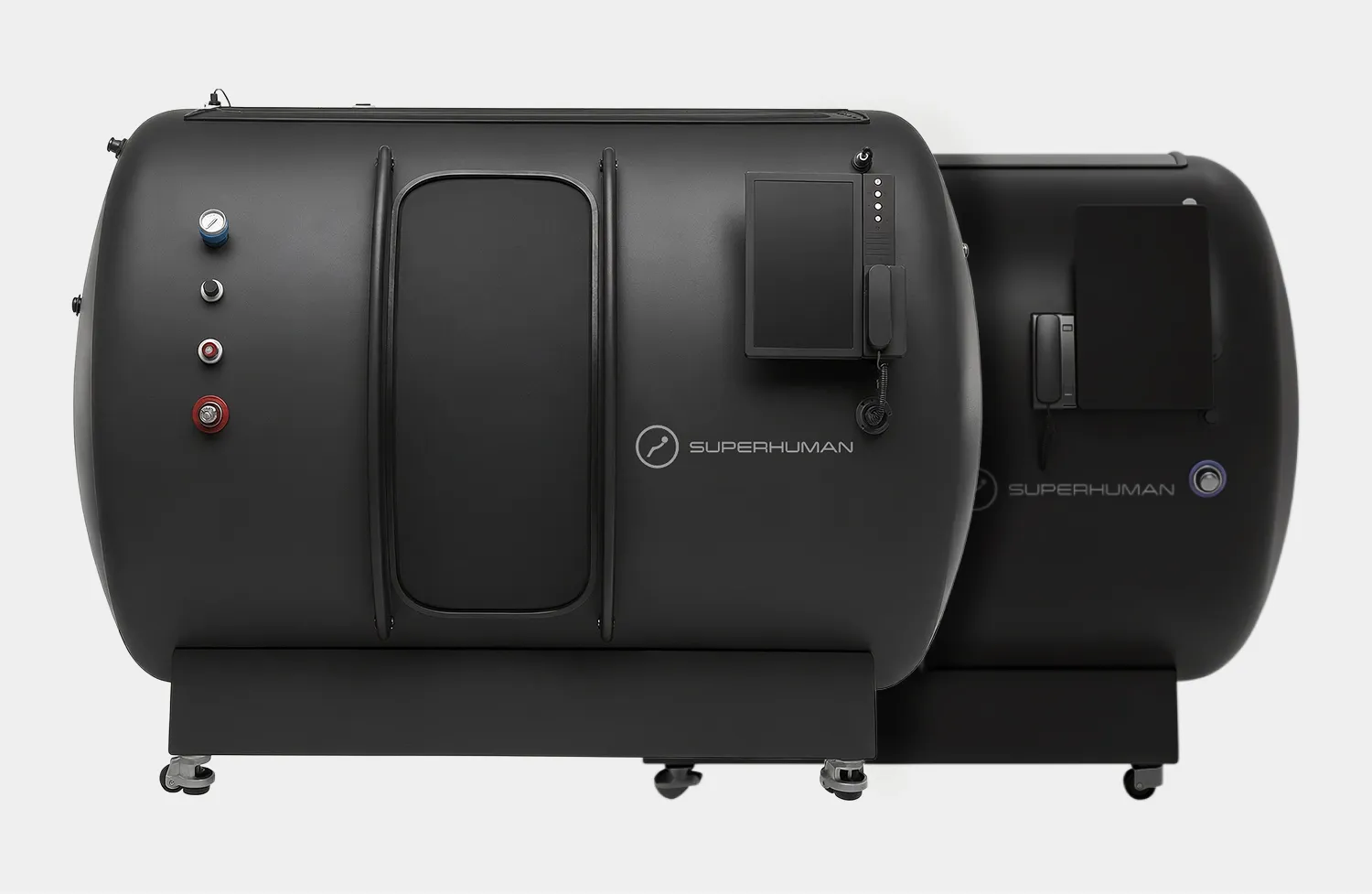
| Model | Best fit | Shell | Pressure | Seats | Price |
|---|---|---|---|---|---|
| S1 | Home gym / first chamber | Soft | 1.3–1.5 ATA | 1 | $15,000 |
| L1 | Serious home athlete | Hard | 2.0 ATA | 1 | $49,000 |
| X | Premium seated single | Hard | 2.0 ATA | 1 | $110,000 |
| T2 | Two athletes / small facility | Hard | 2.0 ATA | 2 | $125,000 |
| T4 | Team / recovery facility | Hard | 2.0 ATA | 4 | $169,000 |
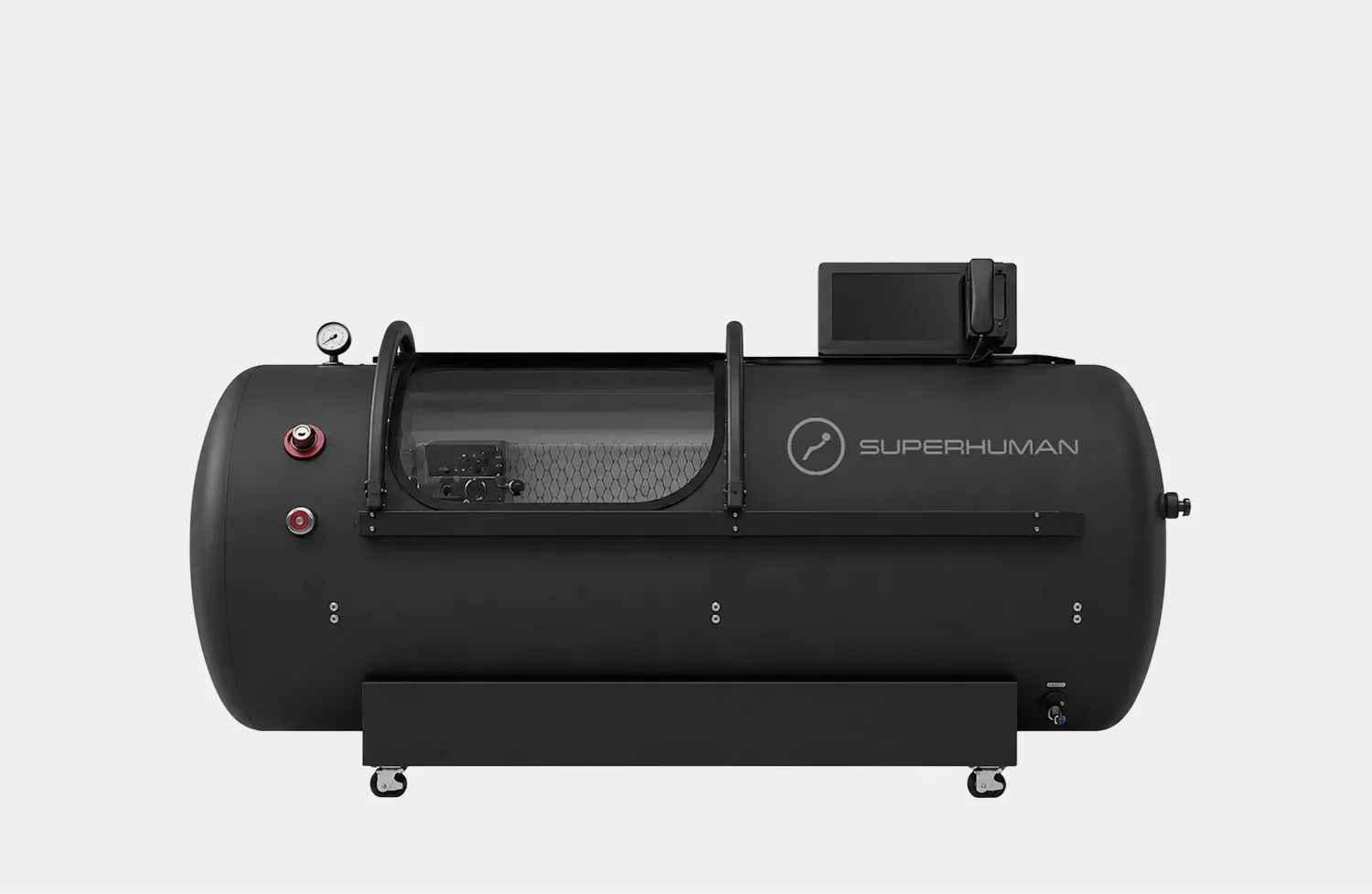
Home gym, daily protocol
- You train hard and want the chamber steps from the squat rack
- S1 at $15,000 for mild 1.3–1.5 ATA, or L1 at $49,000 for a true 2.0 ATA
- About $1.50 of electricity per session once owned
- Beats clinic pricing within months at 3–5 sessions a week
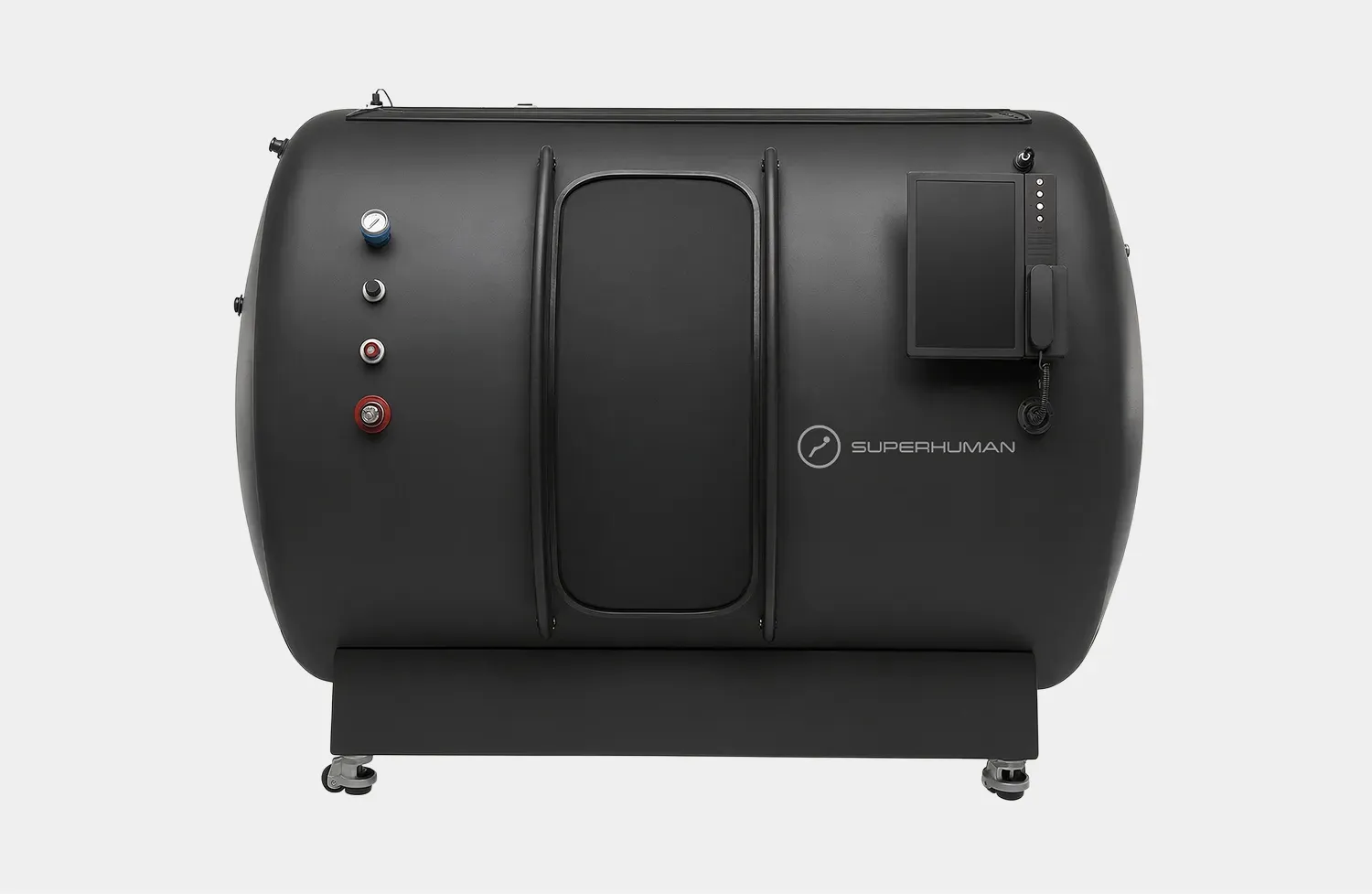
Team throughput at 2.0 ATA
- Several athletes cycle through every day
- T2 seats two, T4 seats four, both hard-shell 2.0 ATA
- Built for back-to-back sessions and a 20–30+ year lifespan
- Packages and memberships match how the evidence says to use it
For a home athlete, start with pressure and budget: the soft-shell S1 ($15,000) covers mild everyday recovery and travels; the hard-shell L1 ($49,000) runs the 2.0 ATA protocols most positive studies used; the seated X ($110,000) is the premium single. Setting it up at home is covered in the home hyperbaric chamber guide.
For a team, gym, or recovery studio, buy seats and duty cycle: the T2 and T4 treat two to four athletes per session and run all day. Whichever direction you go, verify the protocol against the evidence summary above and our research review before you set expectations.
FAQ
Athlete questions
Do hyperbaric chambers help with athletic recovery?
The evidence is promising but uneven. A 2025 systematic review and meta-analysis of 10 articles (299 subjects) found HBOT significantly aided recovery from exercise-induced muscle injury, but did not show a clear overall benefit for soreness. A 2024 double-blind trial found a single post-match session improved perceived recovery without changing biochemical markers. The fair summary: HBOT is a credible recovery-support tool, strongest around muscle injury and repeated 2.0 ATA protocols, not a guaranteed fix for soreness after one session.
Does LeBron James use a hyperbaric chamber?
He is widely reported to. Sports media have covered LeBron James using hyperbaric oxygen as part of the recovery routine that keeps him playing at the highest level into his forties. Michael Phelps was also reported to sleep in a hyperbaric chamber while preparing for the 2012 Olympics, and reported users span professional football, basketball, and combat sports. The common thread in how serious athletes use HBOT is consistency: regular sessions across a training block, not a one-off visit.
How often should an athlete use a hyperbaric chamber?
The research pattern favors series over one-offs. Most positive findings come from protocols that repeat sessions across days or weeks, typically three to five sessions per week during intense training blocks or injury recovery windows. A single session after competition showed mixed results in controlled trials. Serious athletes treat the chamber like the rest of their recovery system: scheduled, consistent, and paired with sleep, nutrition, and load management.
Is a soft-shell chamber enough for athletic recovery?
It depends on the protocol you want to run. Soft-shell chambers reach 1.3 to 1.5 ATA, the mild range, and suit everyday wellness and light recovery at home. Most positive athletic findings come from 2.0 ATA protocols, which require a hard-shell chamber. Athletes who want to match the research-grade pressure, or run back-to-back daily sessions, choose hard-shell. Athletes who want an affordable, portable entry into mild HBOT start with a soft-shell.
How much does a hyperbaric chamber for athletes cost?
Across the lineup, price follows shell, pressure, and seats. A soft-shell S1 for home use starts at $15,000. Hard-shell 2.0 ATA singles run $49,000 (L1) to $110,000 (seated X). Multi-seat chambers for teams and facilities run $125,000 (two-seat T2) to $169,000 (four-seat T4). Running costs after purchase are minor: about $1.50 of electricity per session plus $200 to 300 a year in filters.
Is it cheaper to own a chamber than pay per session?
For athletes using HBOT regularly, yes. Four clinic sessions a week at $100 to 250 each totals roughly $1,700 to $4,000 a month. An owned chamber costs about $1.50 of electricity per session plus $200 to 300 a year in filters, so a $15,000 soft-shell pays for itself against clinic pricing in months, not years. Occasional users (a session here and there) are better served paying per visit. Our cost calculator and financing guide run the numbers for your usage.
Can HBOT replace ice baths, sleep, and other recovery methods?
No, and it should not be positioned that way. HBOT is one lever in a recovery system that still runs on sleep, nutrition, mobility work, and sensible load management. The athletes who get the most from a chamber stack it on top of the basics: it adds pressurized oxygen delivery that other modalities do not provide, but it does not replace them.
Last updated: August 2026. This guide is educational and does not replace medical advice. Consult a qualified physician before starting hyperbaric oxygen therapy.