
Conditions · evidence guide
Hyperbaric oxygen therapy for wound healing: who it helps, what the evidence shows
Hyperbaric oxygen therapy is an FDA-cleared, Medicare-covered adjunct for chronic wounds that have failed standard care, with the strongest record in Wagner grade III+ diabetic foot ulcers. Courses run 30–40 sessions at 2.0–2.4 ATA. It helps selected patients; the largest double-blind trial found no benefit. Here is the evidence, study by study.
The short answer
Three verdicts, one page
Search results for this topic blend three very different statements into one answer. Separating them is the whole story: where HBOT is an established adjunct, where it is covered but selective, and what it simply is not.
Established adjunct: advanced diabetic foot ulcers
HBOT is FDA-cleared, UHMS-listed, and Medicare-covered (NCD 20.29) for Wagner grade III or higher diabetic foot ulcers that have failed an adequate course of standard wound therapy. It is delivered in addition to standard care, not instead of it. This is the flagship, best-evidenced wound use.
Covered but selective: grafts, radiation injury, infections
Compromised skin grafts and flaps, delayed radiation injury, and progressive necrotizing infections are also cleared and covered wound-related indications, each for selected patients under specialist care. The evidence base and the patient who benefits look different for each one.
Not first-line, not standalone, not a wellness service
Guidelines recommend against HBOT for Wagner grade II or lower ulcers. It never replaces debridement, offloading, infection control, or glucose management. And the studies were run at 2.0–2.4 ATA in clinical chambers: a 1.3 ATA wellness session is not this protocol.
Each bucket attracts a different reader. A patient with a diabetic foot ulcer that will not close needs bucket A and its coverage gate. A patient with a failing graft or radiation damage belongs in bucket B. And the wellness marketing that treats every wound as a candidate lives in bucket C, which is where people get oversold. New to the therapy itself? Start with how hyperbaric oxygen therapy works.
Why oxygen under pressure
How hyperbaric oxygen heals wounds
Chronic wounds are oxygen-starved, and the shortage is self-reinforcing. HBOT is the one intervention that can force oxygen past the bottleneck, which is the entire rationale for the therapy.
Oxygen dissolved in plasma, not just carried by red cells
At normal atmospheric pressure, nearly all oxygen travels bound to hemoglobin, and only about 3 mL per liter dissolves directly in plasma. In a hyperbaric chamber breathing 100% oxygen at 3 ATA, the dissolved fraction rises to roughly 60 mL per liter, enough to oxygenate tissue that red cells cannot reach through damaged or swollen microcirculation (StatPearls, NBK459172). That dissolved oxygen is the therapeutic payload.
Breaking the edema-hypoxia cycle
A chronic wound traps itself: poor circulation starves tissue of oxygen, the oxygen-starved tissue swells, and the swelling further restricts circulation, moving the wound toward tissue death. Hyperoxygenation breaks the loop from two sides at once. Plasma-borne oxygen reaches the wound bed despite the swelling, and oxygen triggers mild vasoconstriction that reduces edema without reducing overall oxygen delivery. With the immediate crisis relieved, the repair machinery can restart: HBOT stimulates angiogenesis and VEGF-driven growth of new capillaries in and around the wound, activates fibroblasts, and supports collagen deposition (StatPearls, NBK430783).
Fighting the infection that keeps the wound open
Oxygen is also ammunition. Neutrophils kill bacteria through oxygen-dependent chemistry that works poorly in hypoxic tissue, so restoring oxygen tension restores the wound's own defenses. High oxygen partial pressure is directly toxic to anaerobic organisms, and HBOT potentiates the delivery and action of certain antibiotics, which is one reason it holds indications in necrotizing soft-tissue infections alongside its healing role.
The full mechanism walkthrough, with the cellular pathways and the supporting literature, lives in our wound healing evidence guide. What matters here is the shape of the claim: a mechanistically grounded adjunct for hypoxic wounds, whose clinical value the next sections grade against the trials.
Who qualifies
Which wounds qualify: the indication landscape
Three different bodies keep three different lists, and wound indications appear on all of them. Cleared by the FDA, listed by the UHMS, and covered by Medicare are three separate statements.
The FDA's cleared indications (archived; the live page has been withdrawn) include entry #13: wounds, non-healing, diabetic foot ulcers. Note the verb: chambers are Class II devices cleared through 510(k), a pathway that reviews the equipment, not the therapy, so clearance is not proof of efficacy. The UHMS indications list places diabetic foot ulcers inside indication #6, arterial insufficiencies, as "enhancement of healing in selected problem wounds," not as a standalone numbered indication. Two more UHMS entries are wound territory: delayed radiation injury and compromised grafts and flaps. Medicare's NCD 20.29 covers diabetic lower-extremity wounds meeting strict criteria, plus soft-tissue radionecrosis, osteoradionecrosis, and compromised skin grafts.
The one-line summary our insurance pillar uses: cleared is not indicated is not covered. A device can be cleared for wounds, a society can list an indication, and a payer can still refuse the claim, and all three can be true at once. The full lists, and where the three disagree (Medicare explicitly declines two FDA-cleared indications), are mapped in our guide to FDA-cleared indications.
The selective uses, one paragraph each
Compromised skin grafts and flaps. When a graft or flap shows signs of failing, HBOT is used to oxygenate the threatened tissue while new blood supply establishes. It is a covered, surgeon-directed adjunct, with its own evidence base in our skin grafts and flaps evidence guide.
Delayed radiation injury. Radiotherapy can damage tissue months or years after cancer treatment, and soft-tissue radionecrosis and osteoradionecrosis are established, Medicare-covered HBOT indications. The literature lives in our radiation injury evidence guide, and the survivor-facing picture in the cancer and HBOT pillar.
Necrotizing soft-tissue infections. Gas gangrene and progressive necrotizing infections are surgical emergencies where HBOT serves as an adjunct to urgent debridement and antibiotics, leveraging the direct anaerobe toxicity and neutrophil support described above. This is hospital medicine, not outpatient wound care.
Post-surgical and neuropathy questions. Elective recovery after surgery and diabetic nerve damage are separate topics with thinner, different evidence: the post-surgical recovery and diabetic neuropathy evidence guides cover them, and neither is the subject of this page.
Bucket A, the flagship
Diabetic foot ulcers: where the evidence concentrates
Most wound HBOT research, and the entire Medicare coverage gate for wounds, is built around one diagnosis. Understanding it requires the Wagner scale and the coverage rule that hangs on it.
Why this wound is taken seriously
Diabetic foot ulcers develop in roughly 15% of people with diabetes, usually on the weight-bearing sole, where an insensate neuropathic foot meets pressure and poor circulation. Of those patients, 6% are hospitalized for infection or ulcer complications. The stakes after amputation are stark: a patient who loses a lower limb to a diabetic foot infection has a greater than 50% chance of losing the other limb within the next year, and five-year mortality after amputation in diabetes is about 70% (StatPearls, NBK430783). These numbers are why limb salvage, not comfort, drives the treatment logic, and why payers accept an expensive adjunct for the worst ulcers.
The Wagner scale, in plain terms
The Wagner classification grades diabetic foot ulcers on a 0–5 scale by depth and tissue involvement. It is the language every coverage decision in this field is written in, so the table below uses the standard formulations (NBK430783).
| Wagner grade | What it means |
|---|---|
| Grade 0 | No open lesion; may have healed lesions |
| Grade 1 | Superficial ulcer, no penetration into deeper layers |
| Grade 2 | Deeper ulcer reaching tendon, bone, or joint |
| Grade 3 | Deeper tissues involved, with abscess, osteomyelitis, or tendonitis |
| Grade 4 | Gangrene of some part of the foot |
| Grade 5 | Gangrene of the whole foot, or enough of it that amputation is indicated |
The coverage gate, in plain language
Medicare, and most insurers behind it, pays for HBOT in diabetic foot ulcers only when every one of these is true. The wound is a lower-extremity wound due to diabetes, in a patient with type I or type II diabetes. It is graded Wagner III or higher. It has failed an adequate course of standard wound therapy: debridement, offloading, infection treatment, moist dressings, glucose control, vascular assessment. And HBOT is delivered in addition to that standard care, not instead of it. Then the rule with teeth: if there are no measurable signs of healing within any 30-day treatment period, continued therapy is not covered (NCD 20.29). Our insurance coverage guide documents the gate line by line.
Who is not a candidate
Clinical practice guidelines recommend against HBOT for Wagner grade II or lower ulcers: standard care heals most of them (NBK430783). The second exclusion is subtler: HBOT targets hypoxic, ischemic wounds. A wound failing for other reasons has little to gain, which is why serious programs test tissue oxygenation (TCOM) before committing a patient to six to eight weeks of daily sessions. A typical referral trigger in the literature: a Wagner III+ wound that has not improved after 30 days of conventional care.
The citations
The evidence, study by study
Every load-bearing claim on this page, mapped to the study behind it. The negative rows are not hidden: the largest double-blind trial found no benefit, and a page that omits it is marketing, not information.
| Study | Journal | Design | What it found | Level |
|---|---|---|---|---|
| Faglia et al. 1996 | Diabetes Care | Randomized controlled trial | Adjunctive systemic HBOT in severe, predominantly ischemic diabetic foot ulcers; one of the earliest randomized signals of benefit | RCT |
| Abidia et al. 2003 | Eur J Vasc Endovasc Surg | Double-blind randomized controlled trial | HBOT in ischemic diabetic lower-extremity ulcers; positive healing signal in a sham-controlled design | Double-blind RCT |
| Löndahl et al. 2010 | Diabetes Care | Randomized placebo-controlled trial | HBOT as adjunctive treatment of chronic diabetic foot ulcers; improved healing in selected chronic ulcers | RCT |
| Kranke et al. 2015 (Cochrane) | Cochrane Database Syst Rev | Cochrane review, 12 trials, 577 participants | Improved DFU healing at six weeks (RR 2.35, 95% CI 1.19–4.62); benefit not evident at one year; major amputation not significant (RR 0.36, CI 0.11–1.18); later received a post-publication conflict-of-interest clarification | Cochrane review |
| Elraiyah et al. 2016 | J Vasc Surg | Systematic review of adjunctive DFU therapies | HBOT associated with improved healing (Peto OR 14.25) and lower major amputation (OR 0.30); evidence rated low to moderate quality | Systematic review |
| Fedorko et al. 2016 (DAMOCLES / Toronto) | Diabetes Care | Double-blind sham-controlled RCT, 103 patients, Wagner 2–4 | No benefit: OR 0.91 for meeting amputation criteria; healed 22% with sham vs 20% with HBOT (30 sessions at 244 kPa vs 125 kPa). The largest double-blind trial, and it was negative | Double-blind RCT |
| Mutluoglu et al. 2016 | Diving Hyperb Med | Published critique | Challenges the design and conclusions of the Toronto trial; the field disputes the negative result in public | Critique |
| Ennis et al. 2018 | Adv Wound Care | Retrospective real-world data analysis | In Wagner grade 3 and 4 DFU, healing was 56.04% overall; patients who completed their prescribed HBOT course healed at 75.24%. Observational, not randomized | Retrospective observational |
| Brouwer et al. 2020 | J Vasc Surg | Systematic review and meta-analysis | In DFU with arterial insufficiency, major amputation 10.7% with HBOT vs 26.0% without (NNT 7); no difference in wound healing. Better patient selection may define who benefits | Meta-analysis |
| Boet et al. 2020 | Eur J Anaesthesiol | Systematic review of peri-operative HBOT RCTs | Preventive peri-operative HBOT evidence is limited and heterogeneous; an anti-hype data point outside the DFU core | Systematic review |
| Sharma et al. 2021 | Sci Rep | Meta-analysis of controlled trials | Complete healing OR 0.29; major amputation RR 0.60; adverse events more frequent with HBOT (RR 1.68). The authors themselves advise caution in generalizing | Meta-analysis |
| IWGDF 2019 update / 2023 update | Diabetes Metab Res Rev | International guideline | The reference clinical framework for selecting interventions in non-healing diabetic foot ulcers; updated in 2023 | Guideline |
PMIDs, in row order: 8941460, 12787692, 20427683, 26106870, 26804368, 26740639, 27723012, 30671282, 32040434, 32355046, 33500533, 32176450 (2023 update: 37232034). Each links to its PubMed record from the sources card. The synthesis: the positive signal is real but concentrated in selected patients (Wagner grade III+, ischemic wounds, TCOM responders), the early benefit does not clearly persist at one year in the Cochrane analysis, and the best-blinded trial was negative while in DFU with arterial insufficiency the amputation signal is the strongest finding. As Brouwer and colleagues put it, better patient selection may help define who actually benefits. Compare this table with any clinic page quoting a single healing percentage without a citation.
The protocol
What a medical course looks like
Wound HBOT is a structured, supervised medical course, closer to radiation therapy in logistics than to a spa visit. Here is the actual shape of it.
A standard wound course delivers 100% oxygen at 2.0–2.4 ATA (equivalent to 33–42 feet of sea water) for 60–90 minutes at pressure, plus compression and decompression time, once daily, Monday through Friday. Courses for diabetic foot ulcers and radiation injury typically run 30–40 sessions; published protocols and clinical practice span roughly 20–60. Patients at risk of oxygen toxicity take 5-minute air breaks every 30 minutes, breathing normal air through a mask, which brings the seizure risk down to roughly 1 in 10,000 treatments (StatPearls, NBK430783). Treatment happens in a monoplace chamber (one patient, the whole vessel pressurized with oxygen) or a multiplace chamber (several patients breathing oxygen through masks in an air-filled room with medical staff inside); the choice is the facility's, not the patient's, and both deliver the same protocol.
Before the course starts, many programs run TCOM, transcutaneous oxygen measurement: sensors on the skin around the wound record oxygen tension breathing air, then oxygen, sometimes under pressure. A wound whose oxygen tension responds is a wound HBOT can plausibly help; a flat response predicts a poor return on six weeks of daily sessions (NBK459172). During the course, blood glucose and blood pressure are checked before each session, and the wound itself is measured regularly, because the payer's 30-day measurable-healing rule turns those measurements into the course's scoreboard. How session counts are set across indications is covered in how many HBOT sessions you need.
Why 1.3 ATA wellness sessions are not this protocol. Every trial in the evidence table above ran at 2.0 ATA or higher in clinical hard-shell chambers, under physician supervision, with 100% oxygen. Portable soft-shell chambers operate at 1.3–1.5 ATA, and their FDA clearance covers acute mountain sickness only, not wound healing. The pressure gap is not a detail: dissolved plasma oxygen, the entire mechanism of this therapy, scales with pressure. Our guide to chamber pressure levels and the FDA-cleared indications guide document the regulatory line. A wellness studio citing wound-healing research for a 1.3 ATA session is citing someone else's evidence.
The money question
Coverage, cost, and the paperwork
The clinical gate from the previous section has a financial shadow: how a course is billed, what Medicare pays, and where authorization can stop mid-course.
For qualifying diabetic lower-extremity wounds, Medicare's NCD 20.29 is the reference payer policy, and most commercial insurers mirror it. A 2022 registry analysis put Medicare's payment at about $595.86 per session, leaving a typical Part B coinsurance near $119 per session after the deductible. Multiply by a 30–40 session course and the order of magnitude is clear, which is exactly why the 30-day measurable-healing rule exists: the payer stops funding a course that is not visibly working. On the billing side, the facility bills HCPCS G0277 in 30-minute increments (a 90-minute session is 3 units, about $487 per session on the Medicare fee schedule) and the supervising physician bills CPT 99183 once per session (about $109). The mechanics, including MUE caps, are in our CPT 99183 and G0277 guide.
Commercial coverage adds one more constraint patients feel directly: authorization in blocks. In a Johns Hopkins analysis of 60 insurers, 61.9% of policies required re-authorization after an initial block, with a median of 20 sessions per block (IQR 12–30). In practice, most insured patients are approved for roughly 12–20 sessions before the clinic must justify continuation with documented healing progress. The full economics, payer by payer, live in the hyperbaric oxygen therapy insurance guide, which is the right next read if coverage is your deciding question.
One boundary worth stating plainly, because search results blur it: home hyperbaric chambers are never covered for wound care, by Medicare or any commercial insurer, and no wound indication attaches to them. Coverage follows a physician's order for treatment in a medical facility, full stop (details in the insurance guide).
Before the first session
Safety in wound patients
HBOT has a real but manageable safety profile, and the wound population, older, diabetic, often frail, carries two or three specific cautions on top of the general ones.
The common side effects are mundane. Ear barotrauma during compression is the most frequent complaint, managed with equalization coaching and slower pressurization. Temporary changes in visual acuity can appear across long courses and typically resolve after treatment ends. Claustrophobia affects some patients, mostly in monoplace chambers. Serious events are rare in screened patients: oxygen toxicity seizures occur in roughly 1 in 10,000 treatments when standard air breaks are used, and the one absolute contraindication is an untreated pneumothorax (Heyboer 2017, PMID 28616361; NBK430783).
The wound-specific caution is hypoglycemia: blood glucose can drop during a session in insulin-dependent patients, so levels are checked before and after treatment, and a session may be delayed or fed if the number is low. Add the Sharma meta-analysis finding that adverse events overall were somewhat more frequent in HBOT arms (RR 1.68), mostly minor, and the honest summary is: safe when supervised, not trivial, and worth a real screening conversation. The complete picture is in our chamber safety guide and the side effects and contraindications guide.
For wellness operators
What you can say, and what you must not claim
Clients with non-healing wounds will ask about your chamber. The compliant answers are short, the referral is the product, and staying inside these lines protects the client and the business.
| You can say | You must not claim | |
|---|---|---|
| Talking about the evidence | HBOT is FDA-cleared and Medicare-covered as an adjunct for Wagner grade III+ diabetic foot ulcers that have failed standard care | That your sessions will heal any specific wound. Even the trials disagree with each other; promise nothing |
| A client with a non-healing wound asks | Refer them to their physician or an accredited wound center; medical HBOT is prescribed, not booked | Selling wellness sessions as wound treatment, or letting the client delay medical care |
| Pressure honesty | State plainly that your 1.3 ATA sessions are not the 2.0–2.4 ATA protocol the wound studies used | Quoting wound-healing research as if it were conducted in mild-pressure wellness chambers |
| Referral as positioning | Make referral part of your standard script; it protects the client and the business | Positioning your studio as an alternative to a wound center or a hyperbaric medicine consult |
One script covers the conversation that matters most. "I have a diabetic ulcer that won't heal. Will this help?" The honest answer: wound HBOT is a prescribed medical course, 30–40 sessions at 2.0–2.4 ATA in an accredited clinical facility, added to professional wound care, and usually covered by insurance when criteria are met. What we offer here is not that. Then hand them the questions to bring to their doctor: What Wagner grade is my wound? Have I completed an adequate course of standard wound therapy? Would a TCOM test show I am likely to respond? Is there a UHMS-accredited facility you would refer me to? An operator who makes that referral is doing right by the client, and the clients remember who sent them to real care.
The equipment side
The chambers we build for wellness operations
We do not build wound-care devices, and nothing on this page changes that. What we build are hard-shell chambers for wellness, recovery, and performance services, with the engineering documentation insurers and local reviewers ask for. If your clients include people with non-healing wounds, the section above is the playbook; this strip is simply what the hardware looks like.
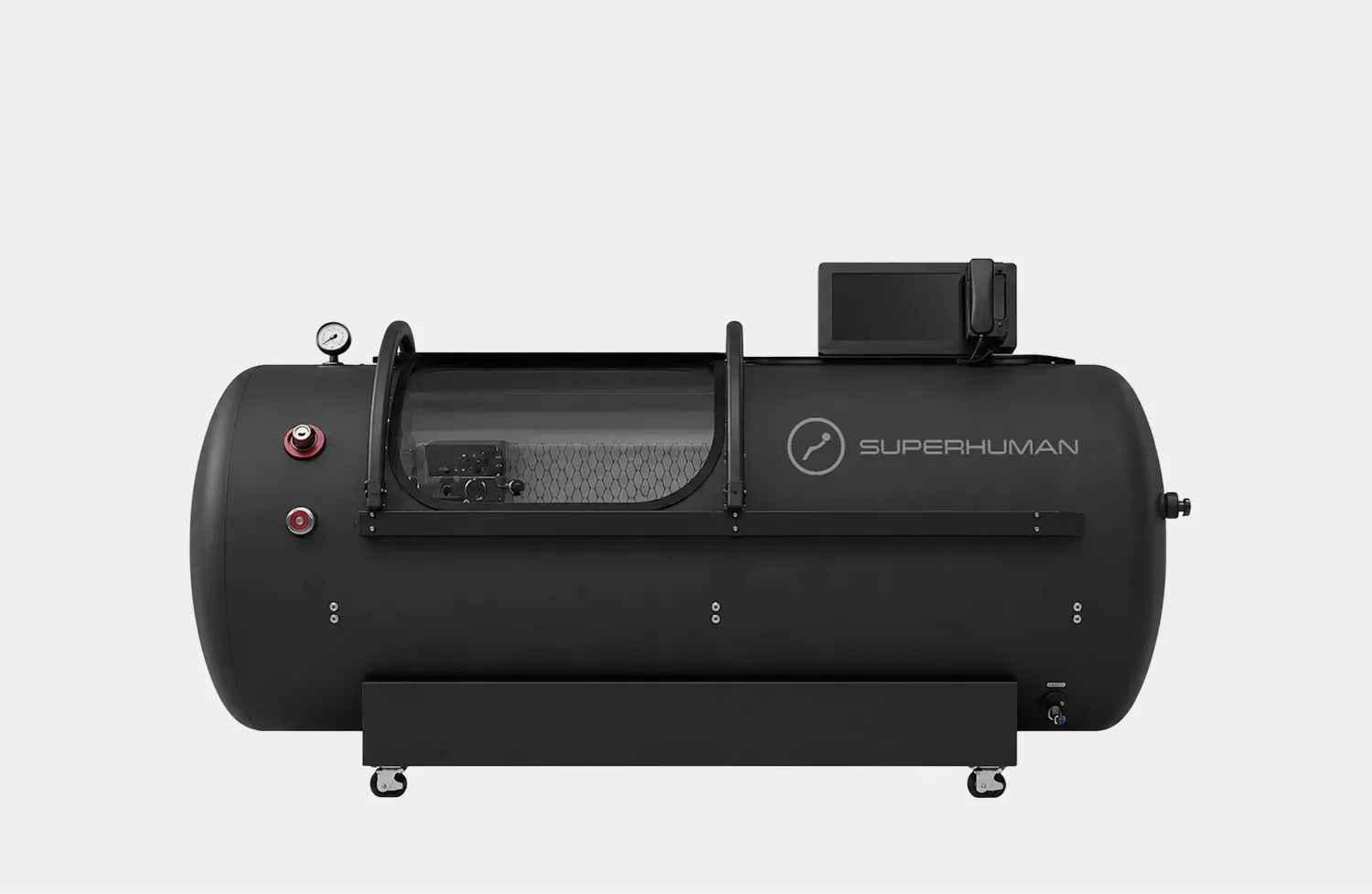
Superhuman L1: 2.0 ATA steel vessel from the ASME-certified factory, CE, ISO 9001 and ISO 13485
Superhuman L1, $49,000 →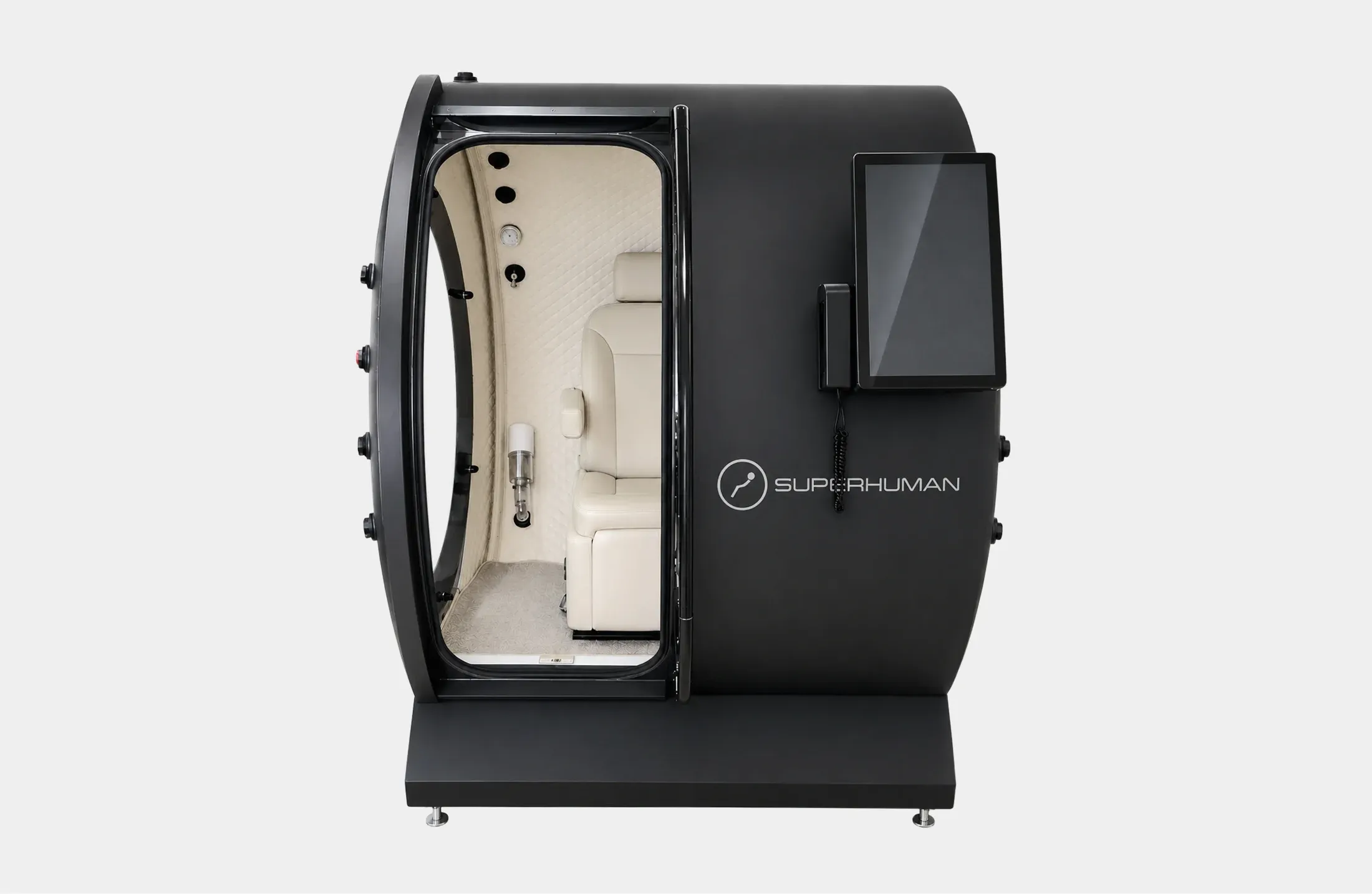
Superhuman X: ASME, PVHO-1 tested to 150% of rating, CE and UKCA, ISO 13485 and ISO 9001 manufacturing
Superhuman X, $110,000 →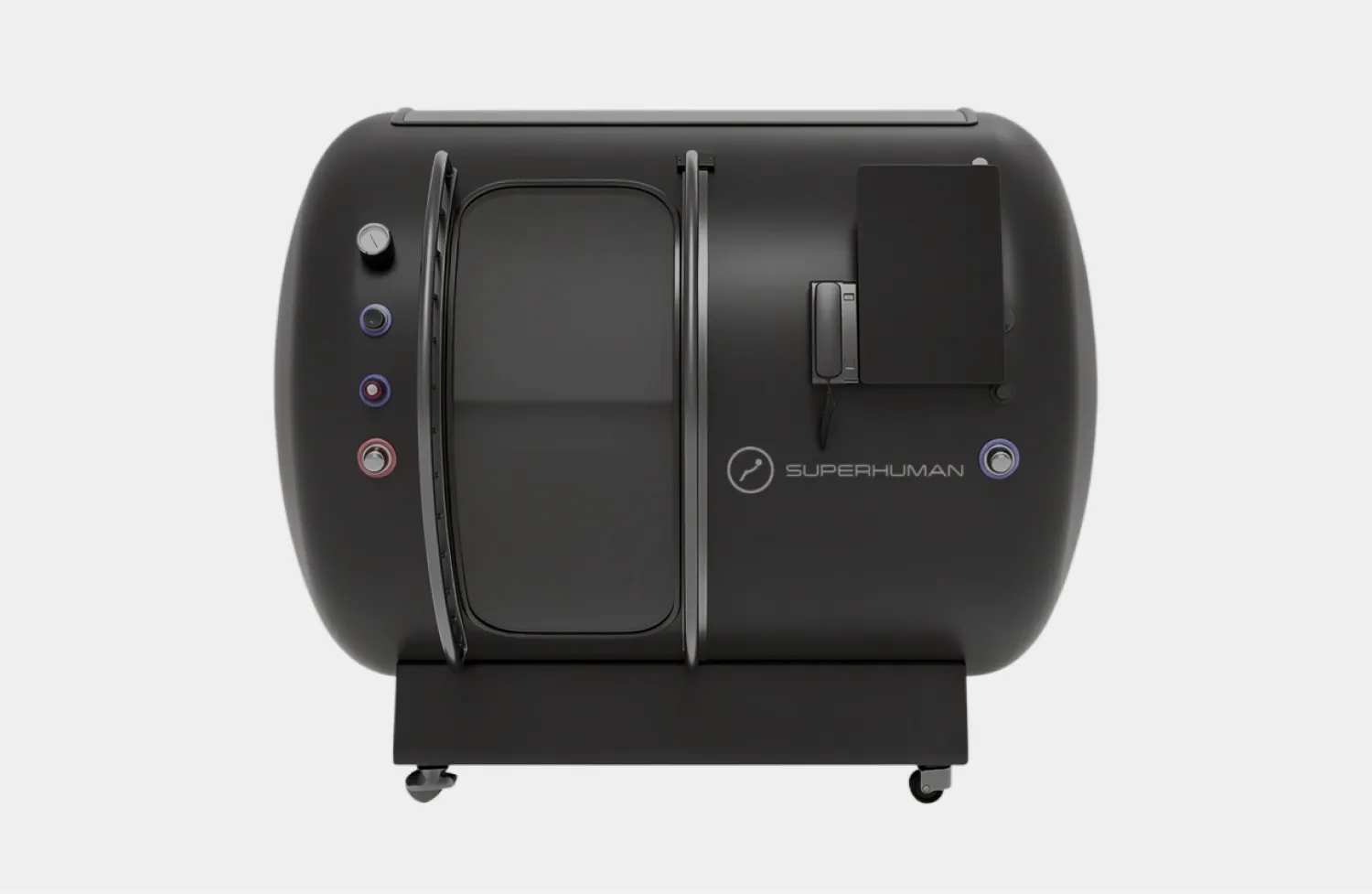
Superhuman T2: two seats, built in an ISO 13485 medical-device facility, ASME and PVHO-1 tested
Superhuman T2, $125,000 →Scoping a chamber for a wellness operation? Book a consultation or browse the full lineup for current pricing. For anything wound-related, the path runs through a physician and an accredited clinical facility, not through wellness equipment.
Honest edges
Limitations and open questions
The evidence is real where it is real and contested where it is contested. Both halves deserve the same clarity.
The durability problem is the first honest edge. The Cochrane review found HBOT improved DFU healing at six weeks but could not confirm the benefit at one year, rated the underlying trials as flawed in design or reporting, and found no statistically significant effect on major amputation. The review itself later received a post-publication conflict-of-interest clarification from Cochrane's editors, with an updated version announced; readers should know that context when weighing its conclusions (PMID 26106870).
The second edge is that the field argues with itself in public. DAMOCLES, the largest double-blind sham-controlled trial, was negative, and published critiques (Mutluoglu 2016) dispute its design and conclusions, while the meta-analyses (Sharma 2021, Brouwer 2020) land in different places depending on which patients and endpoints they pool. The likeliest resolution is not that one side is right: it is that patient selection decides more than the therapy itself. Ischemic, hypoxic, Wagner III+ wounds with a TCOM response are where the signal lives, and future trials that enroll only those patients may finally settle the question. Finally, a regulatory caveat that belongs on every wound page: FDA clearance of a chamber for wound use rests on 510(k) device equivalence, and a cleared indication is not proof of efficacy. The evidence above, not the clearance, is what justifies the treatment.
FAQ
Wound healing and HBOT questions
Does hyperbaric oxygen therapy heal diabetic foot ulcers?
For selected patients, as an adjunct to standard care, the evidence is genuinely mixed. Meta-analyses report improved short-term healing and, in ulcers with arterial insufficiency, fewer major amputations (10.7% vs 26.0%, NNT 7 in Brouwer 2020). The largest double-blind sham-controlled trial (Fedorko 2016, DAMOCLES) found no benefit. The fairest summary: HBOT helps some carefully selected patients with Wagner grade III or higher ulcers that have failed standard therapy, delivered at 2.0–2.4 ATA alongside debridement, offloading, and infection control. It is not a universal fix, and patient selection is the main variable.
How many HBOT sessions are needed for wound healing?
Typical medical courses for diabetic foot ulcers and radiation injury run 30–40 sessions, delivered once daily, five days a week, at 2.0–2.4 ATA for 60–90 minutes at pressure. The published literature and clinical protocols span roughly 20–60 sessions, and Medicare re-evaluates coverage every 30 days based on measurable healing. Our guide on how many HBOT sessions you need covers course logistics in more detail.
Does Medicare or insurance cover HBOT for wounds?
Yes, through a strict gate. Medicare's NCD 20.29 covers diabetic lower-extremity wounds when they are Wagner grade III or higher, have failed an adequate course of standard wound therapy, and HBOT is added to standard care rather than replacing it. Coverage stops in any 30-day window without measurable healing. Commercial insurers typically authorize in blocks (median 20 sessions in a 60-insurer Johns Hopkins analysis) before requiring re-authorization. Compromised grafts and flaps and radiation injury are covered under their own criteria. Our insurance coverage guide walks the full mechanics.
What is a Wagner grade, and why does grade III matter?
The Wagner scale grades diabetic foot ulcers from 0 (no open lesion) to 5 (gangrene of the whole foot). Grade III is where deeper tissue becomes involved: abscess, osteomyelitis, or tendonitis. It matters because Medicare's coverage line is drawn there: HBOT is covered only for ulcers graded III or higher that have failed standard therapy. Below that line, standard wound care is the treatment, and guidelines recommend against HBOT for grade II or lower.
Can I treat a wound in a home or wellness chamber?
No, and this is a medical boundary, not a sales argument. The wound-healing evidence comes from clinical hard-shell chambers delivering 100% oxygen at 2.0–2.4 ATA under physician supervision, with transcutaneous oximetry testing and daily wound care alongside. Soft-shell chambers at 1.3–1.5 ATA are FDA-cleared only for acute mountain sickness, and no insurer covers home chambers for wound care. A non-healing wound needs a wound care team first; the hyperbaric question comes after that evaluation.
Is HBOT painful? What are the side effects for wound patients?
The treatment itself is not painful. The common problems are mundane: ear barotrauma during compression is the most frequent, temporary vision changes can appear across a long course, and claustrophobia affects some patients in monoplace chambers. Two wound-specific cautions matter: blood glucose can drop during sessions in insulin-dependent patients, so levels are checked before and after; and oxygen toxicity seizures are rare, roughly 1 in 10,000 treatments with standard air breaks. The one absolute contraindication is an untreated pneumothorax. Our safety pillar and side effects guide carry the full picture.
What is TCOM, and why test before starting?
TCOM, transcutaneous oxygen measurement, measures oxygen tension in the tissue around the wound, at sea-level air and again under oxygen or pressure challenge. It answers the single most important question in this field: is this wound actually oxygen-starved, and will it respond? HBOT helps hypoxic, ischemic wounds; a wound that is not oxygen-limited has little to gain. Because the trials show selection drives outcomes, many hyperbaric programs use TCOM to decide who is a candidate before committing anyone to a 30–40 session course.
My wound is not diabetic. Does HBOT apply to me?
Possibly, through the other covered wound indications. Compromised skin grafts and flaps are a UHMS-listed and Medicare-covered use, covered in our grafts and flaps evidence guide. Delayed radiation injury (soft-tissue radionecrosis and osteoradionecrosis) is established and covered, with the deep dive in our radiation injury guide and the cancer and HBOT pillar. Progressive necrotizing infections are a surgical emergency indication. Post-surgical recovery and diabetic neuropathy each have their own evidence guides. The common thread: these are physician-managed, accredited-facility treatments, each with its own evidence base.
Last updated: September 2026. This guide is educational and is not medical advice. It summarizes published research and regulatory positions, which evolve. Decisions about wound care, and about hyperbaric oxygen therapy alongside it, belong with your wound care team and treating physicians.