

Conditions · evidence guide
HBOT for Sudden Hearing Loss: What the Evidence Shows
Sudden sensorineural hearing loss is a UHMS-approved HBOT indication, and the AAO-HNS guideline lists HBOT combined with steroids as an option within two weeks of onset. Meta-analyses show about 10 dB of added recovery and fourfold better odds when started early. It is not FDA-cleared, rarely insurance-covered, and shows no benefit for chronic loss or tinnitus. Here is the full record.
The short answer
Three verdicts, one page
Searches for HBOT and hearing loss blend three very different statements into one answer. Separating them is the whole story: this is the one condition in our series with real institutional recognition, the benefit is real but modest and time-bound, and the edges around it are sharp.
The only guideline-listed page in this series
Sudden sensorineural hearing loss is a UHMS-approved HBOT indication (board approval 2011, Indications Manual since 2014), and the 2019 AAO-HNS clinical practice guideline names it directly: clinicians may offer HBOT combined with steroids within two weeks of onset, or as salvage within one month. Three independent pooled analyses of the trials point in the same direction.
What the benefit actually looks like
Added to steroids early, HBOT buys about 10 to 16 decibels of extra threshold recovery on average, roughly four times the odds of a meaningful gain (JAMA 2022), and a number needed to treat of about 5 (Cochrane). The biggest absolute gains, about 19 dB in moderate and 38 dB in severe loss, land in the patients who have the most hearing to lose and start the soonest. The evidence supports combination therapy, never HBOT alone.
The hard edges, stated up front
The guideline grade is "option," the weakest tier. HBOT is not FDA-cleared for hearing loss, and Medicare does not cover it, so US courses are cash-pay. Cochrane found no benefit for chronic hearing loss or tinnitus and recommends against that use. And every trial ran at 2.0 to 2.5 ATA in clinical chambers: a 1.3 ATA mild session is not the studied treatment.
Two disclosures frame everything below, and they belong at the top. First, UHMS-listed is not FDA-cleared: hyperbaric chambers are cleared for about thirteen indications (carbon monoxide poisoning, decompression sickness, non-healing diabetic wounds, radiation injury, and others), and hearing loss is not among them (FDA, archived; UHMS indications), so every US hearing-loss use is off-label. Second, Medicare does not cover it (NCD 20.29), which makes the studied 10-20 session course a cash expense for most American patients. Neither fact cancels the evidence; both belong in the decision. New to the therapy itself? Start with how hyperbaric oxygen therapy works, and for the shorter primer on this exact topic see our hearing loss evidence guide.
If you or someone near you lost hearing suddenly, this page is not your first step. A physician is. Sudden sensorineural hearing loss is a medical emergency: a drop of at least 30 decibels across three consecutive frequencies within 72 hours, usually one ear, often on waking, and constantly mistaken for earwax or a blocked ear. The right first move is an urgent audiogram and an ENT or emergency evaluation within days, with an MRI to rule out retrocochlear causes such as a vestibular schwannoma (AAO-HNS 2019). Every credible protocol, steroids and HBOT alike, is built around early treatment: the benefit concentrates in the first two weeks, the salvage window runs to about one month, and after that the evidence fades. A chamber session booked instead of the workup wastes the one resource this condition does not replenish: time.
Why oxygen is even on the table
The oxygen-hungry cochlea, graded
The inner ear is one of the most oxygen-dependent and worst-supplied organs in the body. That biology is why oxygen therapy is plausible here at all, and why the clock matters so much.
The cochlea runs on diffusion. The organ of Corti, the structure whose hair cells turn vibration into signal, has minimal direct blood supply and almost no collateral circulation: oxygen reaches it by diffusing through the perilymph from a single long, slender vessel, the labyrinthine artery. Animal models that occlude that artery show progressive degeneration, fibrosis, and hearing loss (StatPearls, NBK459160). When supply falters, the hair cells starve quickly, and starved hair cells die on a timeline measured in days.
Breathing 100% oxygen at 2.0-2.5 atmospheres dissolves far more oxygen into blood plasma and perilymph than normal breathing can, raising oxygen tension in the inner ear beyond anything room air delivers. The hypothesis is that this flood of dissolved oxygen keeps struggling hair cells alive through the acute injury window. Plausible is not proven, and on this page the mechanism earns its place only because the trials came back positive: the AAO-HNS guideline did not list HBOT because the theory is elegant; it listed it because pooled randomized trials showed a signal. For the general physiology of what pressure does to oxygen delivery, our chamber pressure levels guide covers the honest version.
The citations
The evidence, study by study
Every load-bearing claim on this page, mapped to the source behind it. The critique row stays in the table, because a page that hides the heterogeneity argument is marketing, not information.
| Study | Design & population | Protocol | What it found | Level |
|---|---|---|---|---|
| Chandrasekhar et al. 2019 (AAO-HNS) Otolaryngol Head Neck Surg | The US clinical practice guideline for sudden hearing loss, covering diagnosis, treatment, and follow-up in adults; 5 to 27 cases per 100,000 people annually | Evidence-graded key action statements | KAS 9a: clinicians MAY offer HBOT combined with steroid therapy within 2 weeks of onset. KAS 9b: the same combination as salvage within 1 month. Grade: "option," the weakest actionable tier, and always combined, never standalone | Practice guideline |
| Bennett et al. 2012 (Cochrane) Cochrane Database Syst Rev | Cochrane review, 7 randomized trials, 392 participants, described by the reviewers as small and generally poor quality | HBOT versus alternative therapy in acute and chronic ISSHL, with tinnitus outcomes | Acute cases: RR 1.39 (95% CI 1.05-1.84) for a 25% pure-tone improvement, +15.6 dB average threshold gain (CI 1.5-29.8), NNT 5 (CI 3-20). The stricter 50%-return endpoint was NOT significant (RR 1.53, CI 0.85-2.78). Chronic loss and tinnitus: no evidence of benefit, and the review recommends against that use | Cochrane review |
| Rhee et al. 2018 JAMA Otolaryngol | Systematic review and meta-analysis, 3 RCTs plus 16 nonrandomized studies, 2,401 patients, HBOT plus medical therapy versus medical therapy alone | Random-effects pooling; complete recovery, any recovery, and absolute gain as endpoints | Complete hearing recovery OR 1.61 (95% CI 1.05-2.44); any recovery OR 1.43 (CI 1.20-1.67); absolute gain significantly greater with HBOT. Benefit concentrated in severe-to-profound baseline loss, salvage use, and courses of at least 1,200 total minutes | Meta-analysis |
| Joshua et al. 2022 JAMA Otolaryngol | Systematic review and meta-analysis restricted to prospective RCTs meeting AAO-HNS diagnostic criteria: 3 trials, 150 adults (88 HBOT, 62 control) | Fixed-effects model; primary outcome mean absolute hearing gain, secondary odds of >=10 dB recovery | +10.3 dB mean gain favoring HBOT (95% CI 6.5-14.1, I2=0%); odds ratio 4.3 for >=10 dB recovery (CI 1.6-11.7). Conclusion: benefit as part of a combination treatment. The cleanest, strictest pooling of the three | Meta-analysis (RCT-only) |
| Lammers, Lea, Westerberg 2019 JAMA Otolaryngol | Published critique of the Rhee 2018 meta-analysis | Methodological comment | Flags extensive heterogeneity in this literature: mixed protocols, timings, and endpoints. The standing caveat that keeps the effect sizes above honest; the field also publicly disputed the weighting in the 2022 pooling | Critique |
| LeGros and Murphy-Lavoie 2024 (UHMS) Undersea Hyperb Med | The sudden hearing loss chapter of the UHMS Hyperbaric Indications Manual, 15th edition, reprinted | Review of the indication, natural history, and treatment protocol | Confirms SSNHL as a current UHMS indication. About 88% of cases are idiopathic; spontaneous recovery is estimated at 30-60%, which is why attribution is hard. More than 800 English-language papers on ISSHL over 30 years | UHMS manual chapter |
| Sherlock et al. 2021 Diving Hyperb Med | Retrospective review of 319 patient referrals in Australia and New Zealand across the windows before and after the UHMS listing | Five years pre-listing versus three years post-listing | Documents that the UHMS decision changed real-world referral practice. The guideline status on this page is not decorative; it moved patients into chambers under medical direction | Practice study |
PMIDs and links for every row are in the sources card. The synthesis: three independent pooled analyses (Cochrane 2012, Rhee 2018, Joshua 2022) agree on direction, an added 10-16 dB of threshold recovery when HBOT joins steroids early; the strictest endpoint in Cochrane (a 50% return of hearing) was not significant; the reviewers themselves call the trials small and the clinical significance unclear; and the chronic-loss and tinnitus verdict is an explicit no. That is the state of the evidence in October 2026.
Severity and timing decide who benefits
The headline averages hide the subgroup story, and the subgroups are where the decision lives. Two factors predict a larger effect across the literature: how much hearing was lost and how fast treatment starts. The UHMS literature, summarized in the StatPearls chapter, cites average gains of about 19.3 dB in moderate loss and 37.7 dB in severe loss, enough in the severe group to move an average patient from hearing-aid territory toward near-normal hearing (NBK459160). The Rhee meta-analysis found the benefit concentrated in severe-to-profound baseline loss, in salvage use, and in courses totaling at least 1,200 minutes (Rhee 2018). And the trials consistently favor starts within the first week or two. The uncomfortable corollary: mild loss, treated late, is the profile least likely to benefit, and the one most likely to recover on its own anyway.
Why an "option" grade is still meaningful
The AAO-HNS guideline grades HBOT as an option, the weakest actionable tier, below "recommendation." Skeptics quote the tier; marketers skip it. Both miss what the tier means here. In a guideline that also issued strong recommendations against antivirals, thrombolytics, and vasodilators for the same condition, HBOT is one of the only adjuncts named as worth offering at all, and the wording was deliberately tightened in 2019: combined with steroids, inside a defined window (Chandrasekhar 2019). Add the UHMS listing, which moved real referral practice when it arrived (Sherlock 2021), and the fair reading is: a genuine, bounded, time-sensitive option, graded conservatively because the trials are small. That is a strong position by HBOT standards, and this page still refuses to round it up to a promise.
The dose that was tested
The protocol that was actually studied
"Hyperbaric" is not one treatment. The hearing-loss evidence was generated under narrow conditions, and whether any chamber is even relevant to SSNHL is decided by this table.
| Parameter | Studied protocol (UHMS / StatPearls) |
|---|---|
| Pressure | 2.0-2.5 ATA, breathing 100% oxygen |
| Session length | 90 minutes at pressure, once daily |
| Course | 10-20 sessions; reassess at session 10 (patients with 10 dB or less improvement by then are unlikely to benefit from more) |
| Timing | Best within 14 days of onset; AAO-HNS salvage window to 1 month; diminishing returns out to about 3 months |
| Paired with | Systemic or intratympanic corticosteroids, prescribed by the treating physician |
| Candidate | Moderate-to-severe loss (worse than 40 dB), acute presentation |
| Most common complication | Middle-ear barotrauma, about 13%, the vast majority resolving without sequelae |
Two details in that table do most of the work. The first is the word paired: the evidence is for HBOT layered onto corticosteroids, systemic or intratympanic, prescribed by the treating physician. HBOT alone is not an established treatment, and the optimal protocol (exact pressure, session count, timing) is still debated even by the researchers who found the benefit (Joshua 2022). The second is the pressure: every SSNHL trial ran at 2.0 ATA or higher, breathing 100% oxygen, in clinical hard-shell chambers.
Why 1.3 ATA sessions are not this protocol. Soft portable chambers operate around 1.3-1.5 ATA, usually fed by an oxygen concentrator rather than 100% medical oxygen, and their FDA clearance covers acute mountain sickness only. Dissolved plasma oxygen, the entire mechanism here, scales with pressure, so a mild session is not a discounted version of the studied dose; it is a different, unstudied one. Our guide to chamber pressure levels and the hard-shell versus soft-shell comparison document the gap. A wellness studio citing hearing-loss trials for a 1.3 ATA session is citing someone else's evidence.
The status question
Approved, cleared, covered: three different things
The most common error in this niche is treating "UHMS-approved" as if it meant FDA clearance or insurance coverage. It means neither, and getting the three categories straight is where most vendor pages quietly mislead.
UHMS-approved: yes. The Undersea and Hyperbaric Medical Society board approved idiopathic sudden sensorineural hearing loss as an HBOT indication on October 8, 2011 (UHMS approval notice), and it has been carried in the Hyperbaric Oxygen Therapy Indications Manual since the 2014 edition; the current 15th edition's chapter is publicly reprinted (LeGros 2024). This reflects a recognized body of evidence, and it is real.
FDA-cleared: no. The FDA clears hyperbaric chambers for a specific list of about thirteen conditions, and hearing loss is not on it (FDA, archived; the full list is mapped in our FDA-cleared indications guide). Note also what clearance even is: chambers are Class II devices reviewed through 510(k) equivalence, so a clearance is about the equipment, not proof the therapy works. Using a chamber for SSNHL in the US is off-label use of a cleared device, legal for physicians to prescribe, and accurately described only with all of those words attached.
Insurance-covered: usually no. SSNHL is not on Medicare's covered list (NCD 20.29), and commercial insurers largely follow, so American courses are typically self-pay. Health Canada, by contrast, does approve HBOT for SSNHL, a reminder that regulatory status stops at the border and should never be imported across it. How coverage works for the indications that are covered in the US is mapped in our insurance coverage guide. For order of magnitude on the cash side: the StatPearls chapter cites about $2,000-5,000 for a 10-session outpatient course (a 2017-era estimate), and the studied course runs 10-20 sessions (NBK459160).
Before the first session
Safety for the hearing-loss patient
HBOT has a real but manageable safety profile, and this page invents no hearing-specific dangers. What this audience adds is an irony worth stating and a sequencing rule worth enforcing.
The general profile is the standard one: middle-ear barotrauma during compression is the most common problem, about 13% of patients in the hearing-loss literature, the vast majority resolving without sequelae (NBK459160), plus sinus pain, fatigue, temporary vision changes across long courses, and claustrophobia in single-person chambers. The serious but rare risk is an oxygen-toxicity seizure, and the one absolute contraindication is an untreated pneumothorax (Heyboer 2017). The full picture is in our chamber safety guide and the side effects and contraindications guide.
The hearing-specific cautions are about context. The barotrauma irony is real: the most common side effect lands on the same organ system the patient came to protect, which is why compression rates, equalization coaching, and screening for congestion matter more here, not less. The steroid layer belongs to the physician: systemic corticosteroids carry their own contraindications (diabetes, peptic ulcer disease, psychiatric illness, and others), and the intratympanic route exists partly for those patients; none of that is a chamber operator's call. The symptoms that ride along are diagnostic clues: vertigo, aural fullness, and bilateral onset are features the ENT workup needs to hear about before anyone books a course. The summary that matters: screened, supervised, physician-directed, inside the window, or not at all.
For wellness operators
What you can say, and what you must not claim
SSNHL is the rare topic where the ethical and the commercial align: the guideline language is public, the window is short, and the operator who treats it as an emergency referral builds more trust than the one who books a session and skips the workup.
| You can say | You must not claim | |
|---|---|---|
| Talking about sudden hearing loss | SSNHL is a UHMS-approved indication, and the AAO-HNS guideline lists HBOT combined with steroids as an option within two weeks of onset | Any cure promise, the words "FDA-approved for hearing loss" (false), or framing HBOT as a standalone treatment |
| A client calls with sudden hearing loss | Treat it as the emergency it is: same-day ENT or emergency evaluation first, audiogram and MRI, then the HBOT question with the physician | Booking a chamber session before the workup, or letting your schedule replace the two-week treatment window |
| Pressure honesty | State that every SSNHL trial ran at 2.0-2.5 ATA on 100% oxygen in clinical hard chambers, and state your chamber's rating | Quoting hearing-loss trial results for a 1.3 ATA soft-shell session. That is someone else's evidence at a dose you do not deliver |
| Tinnitus and old hearing loss | Cochrane found no benefit for chronic loss or tinnitus and recommends against HBOT for them | Marketing sessions for ringing ears, noise damage, or hearing loss that is months old. There is no evidence to sell |
One script covers the conversation that matters most. "I woke up this morning and my left ear is dead. Can you fit me in today?" The honest answer: what you are describing is a medical emergency with a two-week treatment window, and the first stop is an ENT or an emergency department today, for an audiogram and an MRI, not a chamber. HBOT is a real, guideline-listed option on top of steroids inside that window, and once your physician is involved we can talk about whether our equipment is even the right class for it. An operator who says that out loud will lose today's booking and keep every bit of trust, and a person whose hearing is on a countdown remembers exactly who sent them to real care first.
The equipment side
Pressure classes, and nothing more
The studied protocol starts at 2.0 ATA on 100% oxygen, so the equipment question has a factual answer. Here are the hardware categories, with zero outcome claims: equipment class decides whether a protocol is physically deliverable, not whether it works for you.
The trials behind the AAO-HNS option and the meta-analyses above all used clinical hard chambers at 2.0-2.5 ATA breathing 100% oxygen. Soft portable chambers operate around 1.3 ATA, typically concentrator-fed, and their FDA clearance covers acute mountain sickness only: they cannot reach the pressure class of a single study on this page. Our own soft-shell S1 (1.3-1.5 ATA, concentrator-fed) sits in that class, and we do not present it as hearing-loss equipment, because it is not the equipment the evidence used. The regulatory and engineering details live in our medical-grade chambers explainer, the ATA pressure guide, and the soft-shell chamber guide.
For an operator whose community includes ENT referrals, the equipment-class takeaway is narrow and factual: the SSNHL protocol sits in hard-shell, medically engineered territory, certified pressure vessels, documented oxygen delivery, trained oversight, and physician direction. The single-person rung of that class in our lineup is the Superhuman L1 (2.0 ATA hard-shell, from $49,900), with the two- and four-person models shown below. Our chambers are built to that engineering class, which is the only claim we make here. It is a claim about hardware. The clinical claim belongs to the trials and the guideline, and the treatment decision belongs to the patient and their ENT, inside a window that equipment shopping does not pause.
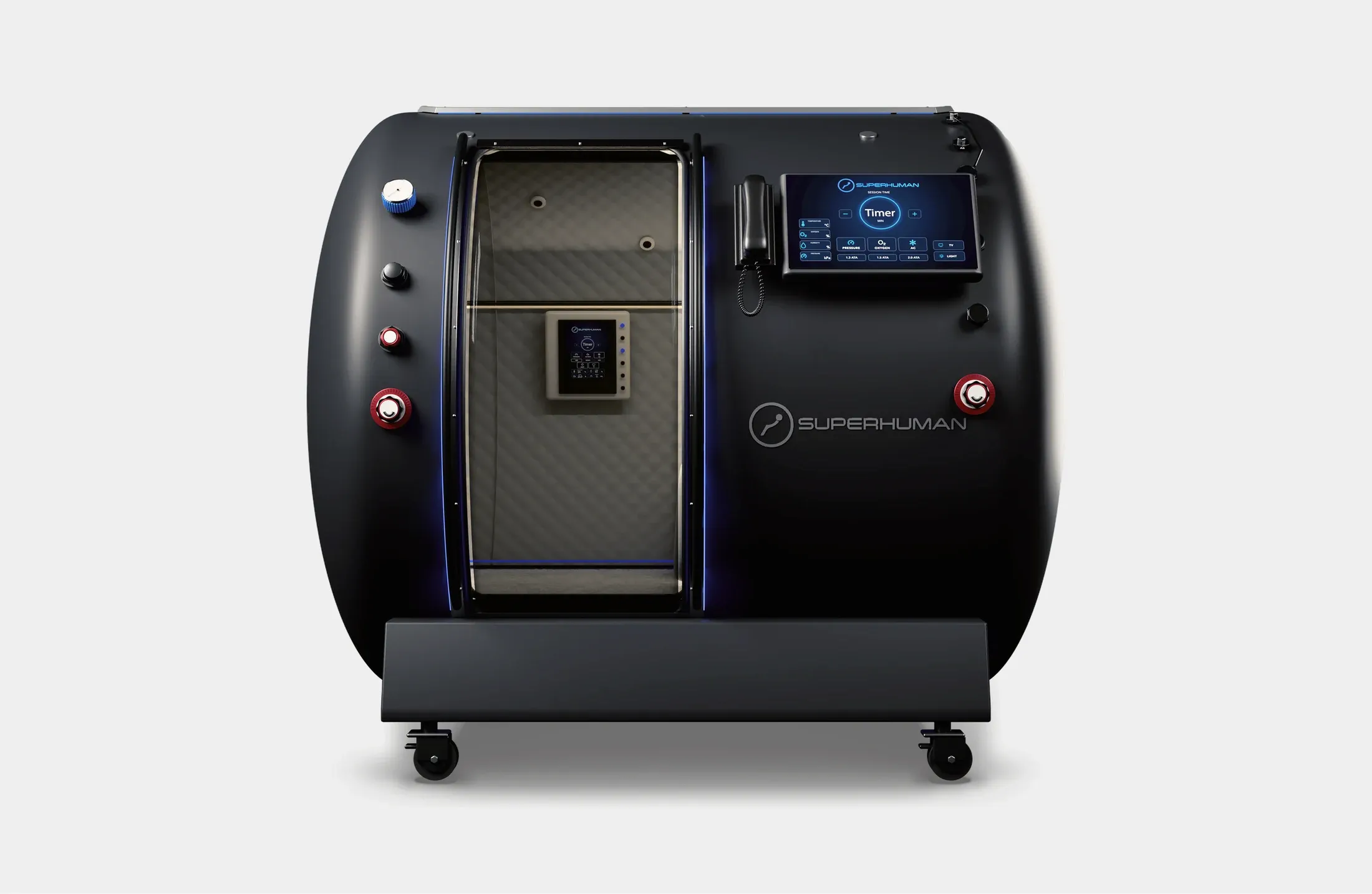
Superhuman T2: 2.0 ATA hard-shell, ASME and PVHO-1 tested, built in an ISO 13485 medical-device facility
Superhuman T2, from $99,900 →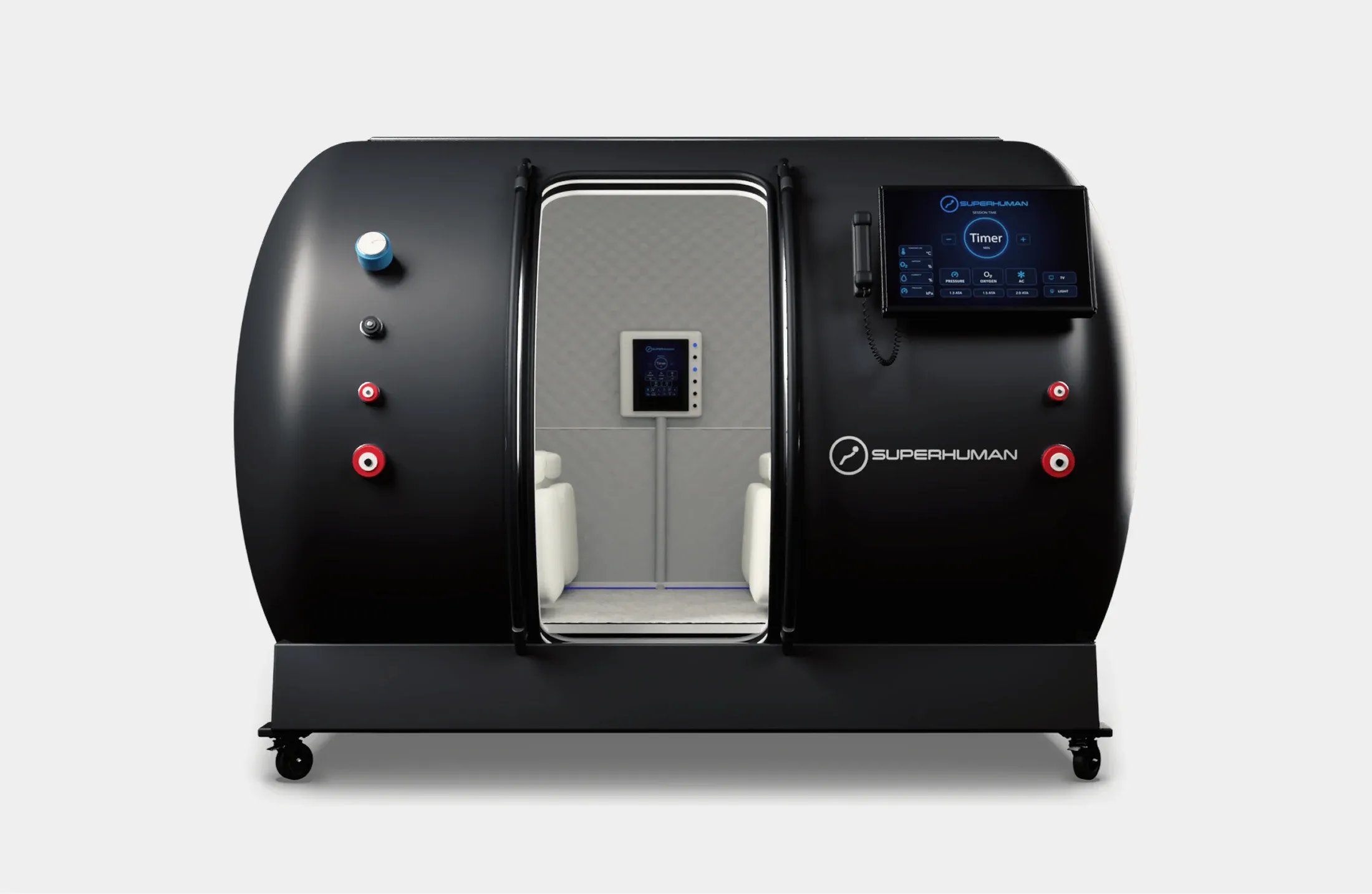
Superhuman T4: 2.0 ATA hard-shell for four occupants, ASME-certified vessel, clinical-scale throughput
Superhuman T4, from $169,000 →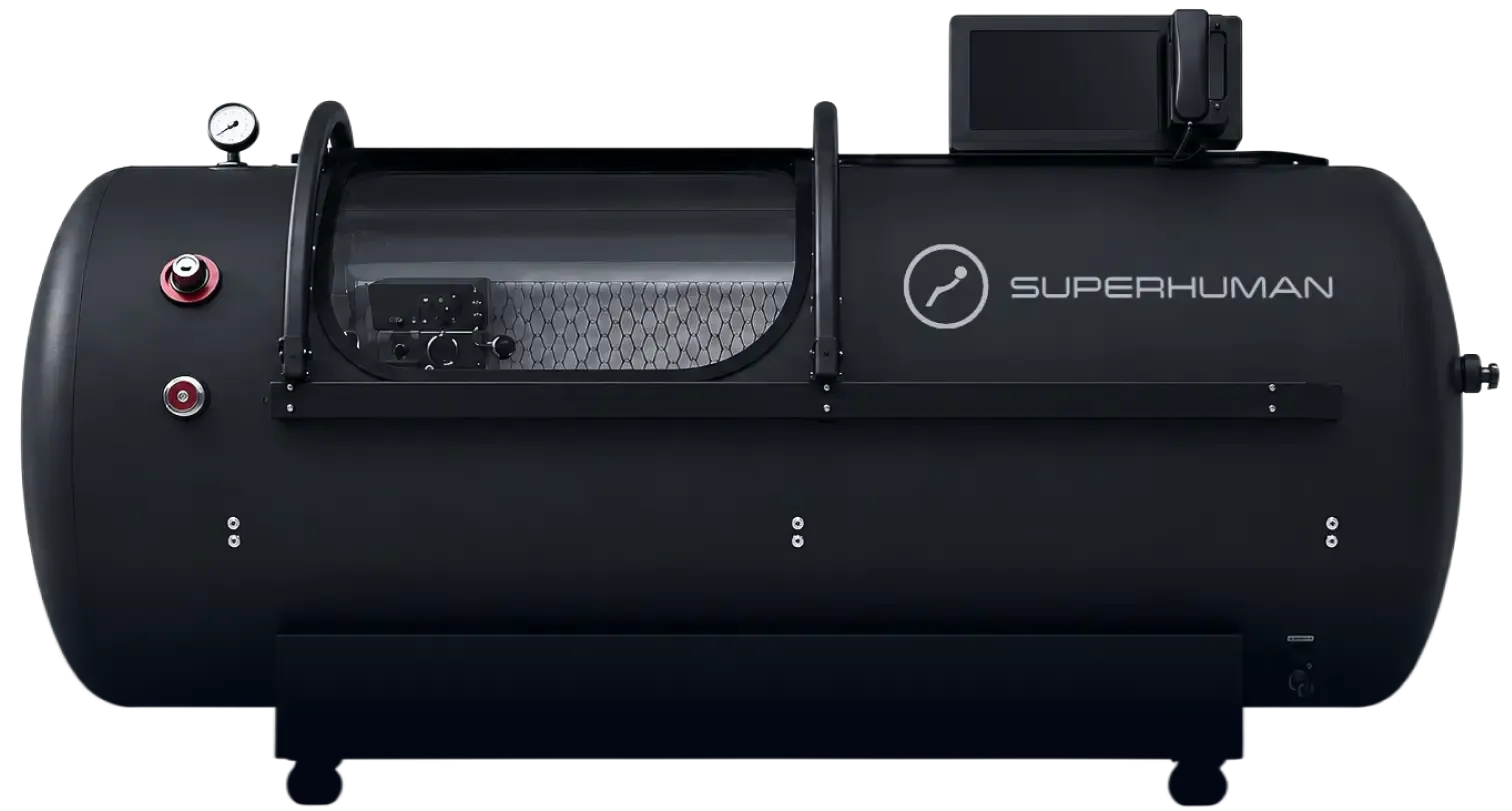 Single-person hard-shell Superhuman L1: 2.0 ATA, one occupant. Superhuman L1, from $49,900
 Scoping a chamber for a clinical or wellness operation? Book a consultation, or see the numbers in our financing and payments guide. For an actual sudden hearing loss, the path runs through an ENT and the AAO-HNS guideline, not through equipment of any class.
The hardware facts
Engineering class, on paper.
Tap one for what it governs and which chambers it covers.
| A certification is not an outcome claim. What it says is narrower: the vessel is engineered, tested, and documented, and the soft shell in the last column is not the same class of equipment. That class difference is the only hardware point this page makes. |  |  |  |  |  |
|---|---|---|---|---|---|
| ASME PVHO-1 Vessels with a person inside. Starts at 2 psi. | Tested to ASME PVHO-1 standards | Tested to ASME PVHO-1 standards | Tested to ASME PVHO-1 standards | Tested to ASME PVHO-1 standards | Certification in progressListed here once issued. |
| ASME Section VIII Steel, thickness, welds. We hold the certificate. | Certified | Certified | Certified | Certified | Not applicableSoft shell, no steel pressure vessel. |
| ISO 13485 Medical device quality management. Entity, not chamber. | Applies to all of our chambers. | ||||
| ISO 9001 General quality management. | Applies to all of our chambers. | ||||
| CE / UKCA EU and UK market conformity. The manufacturer declares. | CE, PED | CE, PED | CE, PED, UKCA | CE | CE |
ASME PVHO-1 4 tested to, 1 pending
Vessels with a person inside. Starts at 2 psi.
- Superhuman T4 Tested to ASME PVHO-1 standards
- Superhuman T2 Tested to ASME PVHO-1 standards
- Superhuman X Tested to ASME PVHO-1 standards
- Superhuman L1 Tested to ASME PVHO-1 standards
- Superhuman S1 Certification in progress Listed here once issued.
ASME Section VIII 4 certified, 1 not applicable
Steel, thickness, welds. We hold the certificate.
- Superhuman T4 Certified
- Superhuman T2 Certified
- Superhuman X Certified
- Superhuman L1 Certified
- Superhuman S1 Not applicable Soft shell, no steel pressure vessel.
ISO 13485 5 certified
Medical device quality management. Entity, not chamber.
Applies to all of our chambers.
ISO 9001 5 certified
General quality management.
Applies to all of our chambers.
CE / UKCA 5 declared
EU and UK market conformity. The manufacturer declares.
- Superhuman T4 CE, PED
- Superhuman T2 CE, PED
- Superhuman X CE, PED, UKCA
- Superhuman L1 CE
- Superhuman S1 CE
The patient's checklist
If you are considering HBOT for sudden hearing loss
This is the one page in the series where the evidence says a real option exists. It is also the page where the calendar is the enemy. Here is the diligence, in the order the clock demands.
The first 72 hours
Three steps, in order, all physician-led. Get an audiogram: hearing loss is a symptom, and the audiogram is what turns it into a diagnosis, distinguishing sensorineural loss from conductive causes like wax or fluid. Get the ENT evaluation and the MRI: the guideline directs clinicians to rule out retrocochlear pathology, because a small tumor on the hearing nerve can present exactly as sudden deafness, and it has its own clock. Have the steroid conversation: corticosteroids within two weeks are the guideline's first-line option, and HBOT, if it enters at all, enters combined with them. Every one of these steps is in the public guideline (AAO-HNS 2019), and none of them involves a wellness studio.
Questions for the HBOT provider
Which protocol, exactly? Pressure in ATA, oxygen percentage and delivery, minutes at pressure, total sessions; the honest answer is 2.0-2.5 ATA, 100% oxygen, 90 minutes, 10-20 sessions, and anything vaguer is a red flag. Who is supervising? The guideline frames HBOT as something a clinician offers or refers to; a physician should know your audiogram, your MRI result, and your steroid plan. What is the total itemized cost, in writing, including what happens to the balance if your hearing recovers spontaneously at session six, which, a quarter to two thirds of the time, it does (NBK459160). And the question that separates honest providers from marketers: what do you tell patients the evidence actually is? "An option, combined with steroids, worth starting this week" is the guideline's answer. Anything more confident is not.
Red flags, audited against the literature
"FDA-approved for hearing loss": false; hearing loss is not on the FDA's cleared-indication list, and US clinic pages saying otherwise are misstating the record (FDA, archived). Promises for tinnitus or old hearing loss: explicitly not supported; Cochrane recommends against it (Bennett 2012). A 1.3 ATA home unit sold with 2.5 ATA trial results: a different, unstudied dose wearing the studied one's clothes. HBOT offered instead of the workup: walk out; the MRI question alone makes that dangerous. "Come back whenever": the benefit lives in a window measured in days, and a provider who does not mention the clock has not read the guideline.
Honest edges
Limitations and open questions
This is the strongest evidence base in our conditions series, and it still has edges. A YMYL page earns trust by stating them itself.
The trials are small and imperfect. Cochrane pooled 392 patients across seven trials and called them small and generally poor quality, adding that the clinical significance of the hearing gain "remains unclear" (Bennett 2012). The strictest endpoint, a 50% return of hearing, did not reach significance. The field argues about the pooling in public: published critiques flagged heterogeneity in the 2018 meta-analysis (Lammers 2019) and weighting in the 2022 one. An average gain of 10 dB is real, but whether every patient notices 10 dB in daily life is a fair question the trials do not fully answer.
Spontaneous recovery muddies everything. Depending on the estimate, roughly a quarter to two thirds of patients recover useful hearing with no treatment at all, and placebo arms in the controlled trials run 35-39% (NBK459160; LeGros 2024). That is precisely why the randomized trials matter and why the anecdote of a friend who "got better after ten sessions" cannot settle anything. It is also why the benefit is expressed as added recovery on top of steroids and natural history, not as a cure rate.
The protocol is not settled, and the scope is narrow. The optimal pressure, session count, and start time are still debated; the guideline covers adults only, and pediatric data are absent; HBOT monotherapy is unestablished; and nothing here extends to noise-induced loss, age-related loss, acoustic trauma, or tinnitus, each of which is a different, mostly empty evidence base. The fair verdict: a genuine, guideline-listed, time-sensitive adjunct with a modest average benefit, off-label and usually self-pay in the US, useless outside its window and its indication. For the sharpest contrasts in this series, see the wound healing pillar, where the indication is fully cleared and covered but the flagship double-blind trial was negative; the stroke pillar, where an uncontrolled literature met its sham-controlled test and lost; and the Lyme pillar, where no controlled trial exists at all. Sudden hearing loss is the page where the evidence genuinely supports action, as long as the action starts this week.
FAQ
Sudden hearing loss and HBOT questions
Is HBOT FDA-approved for sudden hearing loss?
No, and the distinction matters because clinic websites get it wrong. Sudden sensorineural hearing loss is a UHMS-approved indication, approved by the Undersea and Hyperbaric Medical Society board in 2011 and carried in the Indications Manual since the 2014 edition, and the 2019 AAO-HNS clinical practice guideline lists HBOT combined with steroids as an option within two weeks of onset. But the FDA's cleared-indication list for hyperbaric chambers does not include hearing loss, so US use is off-label device use, and Medicare does not cover it. A therapy can be guideline-listed and evidence-supported while remaining off-label and uninsured, and all of those things are true here at once. Any page calling HBOT "FDA-approved for hearing loss" is misstating the record.
I just lost hearing in one ear. How soon do I need to act?
Today. Sudden sensorineural hearing loss is a medical emergency, not a wait-and-see symptom: it is defined as a drop of at least 30 decibels across three consecutive frequencies within 72 hours, and it is frequently mistaken for earwax or a blocked ear, which is exactly how people lose the treatment window. The first move is an urgent audiogram and ENT evaluation, typically with an MRI to rule out retrocochlear causes. The HBOT evidence concentrates in patients treated within about 14 days, the AAO-HNS salvage window stretches to one month, and beyond that the returns diminish sharply. A chamber session is a question for after the workup, never instead of it.
How much does HBOT actually improve hearing?
On average, modestly but measurably, when added to steroids early. The strictest pooling (three prospective randomized trials, 150 adults, JAMA 2022) found 10.3 dB more hearing recovery with HBOT (95% CI 6.5-14.1) and 4.3 times the odds of gaining at least 10 dB. The Cochrane review (seven trials, 392 patients) found +15.6 dB and a number needed to treat of 5, while noting the trials were small and the clinical significance "remains unclear." The averages hide the real story: patients with moderate loss gained about 19 dB and severe loss about 38 dB in the UHMS literature, and patients treated in the first week or two outperform later starts. A person with mild loss treated late is the profile least likely to see the effect the trials measured.
Will HBOT help my tinnitus or my long-standing hearing loss?
No, and this is one of the cleanest answers in the entire HBOT literature. The Cochrane review states it directly: there is no evidence of a beneficial effect of HBOT on chronic sudden hearing loss (persisting past six months) or on tinnitus, and the reviewers do not recommend HBOT for either purpose. The entire evidence base is about the acute injury window, the first days and weeks when damaged cochlear hair cells can still recover. Anyone selling chamber packages for ringing ears or hearing loss that is months old is selling outside the evidence, and in this case the evidence is explicit rather than absent.
Does insurance cover HBOT for sudden hearing loss, and what does a course cost?
In the United States, usually no. Medicare's NCD 20.29 covers HBOT for its listed conditions, and sudden hearing loss is not among them; commercial insurers mostly follow the same line, so SSNHL courses are typically self-pay despite the UHMS listing and the guideline option. (Health Canada, by contrast, does approve HBOT for SSNHL, a reminder that regulatory status stops at the border.) For order of magnitude only: the StatPearls chapter cites roughly $2,000-5,000 for a 10-session outpatient course, a 2017-era estimate, and the studied course runs 10-20 daily sessions. Get the total itemized cost in writing before session one, and ask what happens to the balance if you stop early.
Can a home or mild-pressure chamber deliver the studied protocol?
No. Every SSNHL trial used a clinical hard chamber at 2.0 to 2.5 ATA with 100% oxygen, daily, under medical supervision. Soft portable chambers operate around 1.3-1.5 ATA, are typically concentrator-fed rather than 100% medical oxygen, and their FDA clearance covers acute mountain sickness only. Dissolved plasma oxygen scales with pressure, so a mild home session is not a cheaper version of the studied dose; it is a different, unstudied one. If sudden hearing loss is the reason you are looking at hyperbaric therapy at all, the relevant hardware is hard-shell clinical equipment inside the medical system, and the two-week clock matters more than the equipment shopping.
Is HBOT a substitute for steroids or the ENT workup?
No, and the guideline is exact about this. HBOT appears in the AAO-HNS guideline only in combination with steroid therapy, as an option, never as a standalone. The workup itself is not optional either: audiometry confirms the diagnosis, and MRI or equivalent evaluation rules out retrocochlear pathology such as a vestibular schwannoma, which can present exactly as sudden hearing loss and has its own clock. The honest sequence is audiogram and ENT first, steroids as the physician judges, HBOT as a possible add-on inside the window, in that order.
Last updated: October 2026. This guide is educational and is not medical advice. Sudden sensorineural hearing loss is a medical emergency: if it happens, seek an urgent audiogram and ENT evaluation first, and let your physician weigh HBOT as a possible adjunct to steroids inside the treatment window. HBOT is not FDA-cleared for hearing loss, any US use is off-label, and decisions about it belong with your treating specialists, who can weigh your audiogram, your imaging, and your timing against the full record summarized here.


