


The short answer: Wellness tourism keeps growing and guests increasingly book longevity programs, not just massages; HBOT is the signature treatment that anchors those programs, priced at $250–$450 per session at spa rates, with a four-person chamber at a destination property typically paying back in 2–6 months.
The spa menu is being rewritten. Properties that built their reputation on massage and facials now compete on regenerative programs: guests arrive for three to seven nights expecting diagnostics, recovery therapies, and something they cannot get at home. Hyperbaric oxygen therapy fits that expectation precisely. It is premium, it is bookable in 60–90 minute slots like any treatment, and it gives the program a clinical-grade centerpiece. This guide covers where HBOT sits in the spa menu, how to package and price it, what throughput to plan for, the staffing and supervision model, and how to integrate the equipment into a spa environment rather than a clinical one.
Disclosure: Superhuman Chambers manufactures and sells commercial hyperbaric chambers for wellness operators, including spas, sanatoriums, and resorts. This article is educational only and is not medical, legal, or financial advice. Operators are responsible for claims, screening, and compliance in their jurisdiction.
The regenerative shift in wellness hospitality
The short answer: Resort and sanatorium guests increasingly buy multi-day longevity programs with named therapies and measurable structure, and properties without a regenerative treatment tier are losing their highest-spending segment.
The market signal is consistent: wellness tourism has outgrown general tourism growth for years, and the fastest-growing segment inside it is structured, program-led stays. Flagship properties have demonstrated the model at scale; wellness resorts in the Amrit Ocean mold, for example, built their entire positioning around multi-day programs combining recovery technologies, bodywork, and longevity services rather than a la carte spa bookings. The lesson for independent operators is not to copy a flagship, but to notice what guests now expect a serious property to offer.
HBOT sits naturally at the top of that expectation list. It is technology-led, premium-priced, session-based, and pairs with everything already on the menu. A sanatorium adding it gains a signature procedure; a day spa adding it gains a reason to sell multi-visit programs instead of single appointments.
Where HBOT sits in the spa menu
The short answer: HBOT is a 60–90 minute bookable treatment that slots into the menu exactly like a massage or float session, and its highest-value role is as the anchor of paired circuits and multi-day programs.
Operationally, the guest journey is pure spa: book online or through concierge, arrive, change into comfortable clothing, recline in the chamber for the session, and continue the day with no downtime. Guests read, meditate, or sleep during the session, which makes HBOT the calmest premium treatment on the menu.
Pairings multiply its value:
- HBOT + massage: oxygen session first, bodywork after; the classic recovery pairing and the easiest package to sell.
- HBOT + float or contrast circuit: positions the chamber as the technology element in a thermal journey.
- HBOT as program anchor: 3, 5, or 7-day stays built around daily sessions, with spa treatments layered around them. This is where the real revenue lives.
Guest packages and pricing
The short answer: Spa-market session rates run $250–$450, with 3-, 5-, and 10-session packages at 10–20% below list and concierge-delivered premium formats above it; packages, not single sessions, drive the economics.
Single sessions are the menu entry point, but the business model is built on packages. A 5-session pack at $1,600–$2,000 converts a day guest into a week-long relationship. Concierge formats, where the session is delivered as part of a private suite experience with pre- and post-treatment rituals, command the top of the rate card.
The table below models a Superhuman T4 at $169,000 at a destination property, running 90-minute slots, 30 days per month, at three utilization levels. Occupancy reflects multi-person sessions averaging 2–3 guests per session. Figures are illustrative gross revenue; net payback assumes a 60% margin, lower than a gym because spa staffing and service delivery cost more.
| Scenario | Sessions/day | Avg guests/session | Rate/session | Monthly gross | Net at 60% margin | Payback on $169,000 |
|---|---|---|---|---|---|---|
| Conservative | 3 | 2 | $250 | $45,000 | $27,000 | ~6–7 months |
| Base | 4 | 2.5 | $325 | $97,500 | $58,500 | ~3 months |
| Strong | 5 | 3 | $400 | $180,000 | $108,000 | ~1.5–2 months |
Even the conservative column outperforms most spa equipment investments, because HBOT revenue scales with seats and slots rather than therapist hours. For the full ROI framework with financing and five-year ownership costs, see the hyperbaric chamber business pillar; equipment pricing context is in the hyperbaric chamber cost guide.
Throughput: matching the chamber to guest flow
The short answer: Multi-person hard-shell chambers are what make HBOT viable at resort volumes: the two-seat T2 at $99,900 suits boutique properties, and the four-seat T4 at $169,000 suits destination resorts and sanatoriums with program traffic.
The throughput logic is simple. A single-seat chamber delivers one guest per slot; a four-seat chamber at 2.5 average occupancy delivers two and a half, at nearly the same staffing and time cost. In a property where the spa runs fully booked during high season, seats are revenue.
- Superhuman T2, $99,900: two seats, 2.0 ATA. Right for boutique spas, couples-oriented properties, and private-session positioning.
- Superhuman T4, $169,000: four seats, 2.0 ATA. Right for resorts and sanatoriums running multi-day programs where groups of guests move through treatments together.
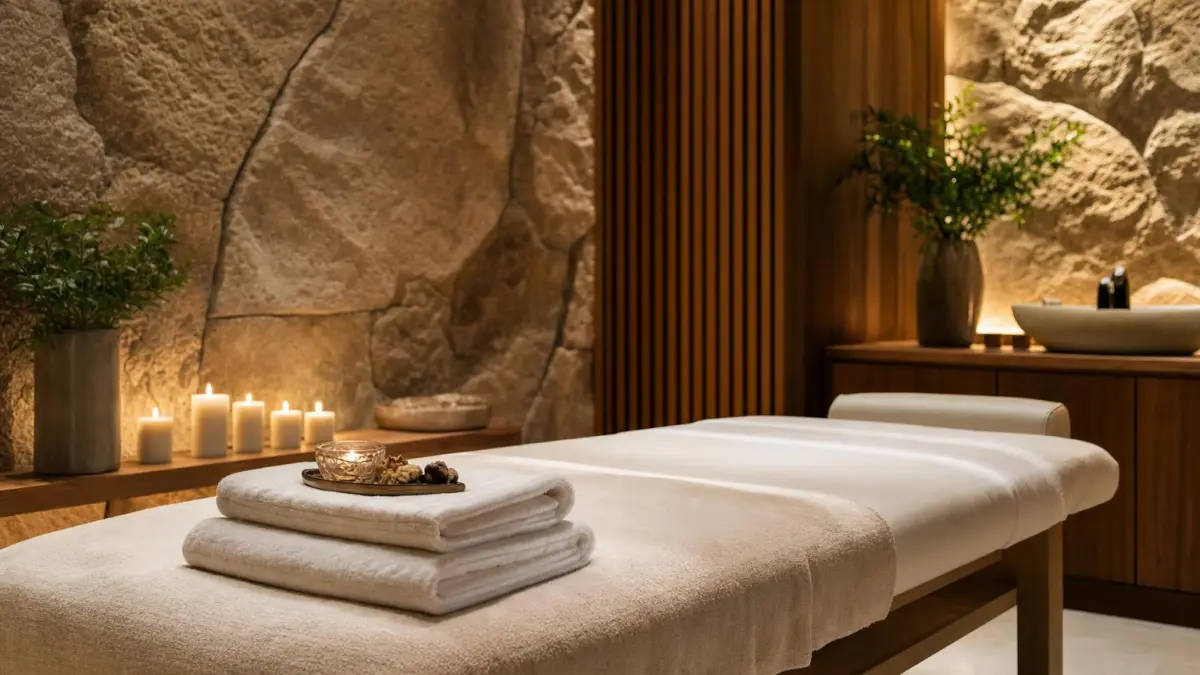
Fit-out matters as much as capacity. The quiet-luxury standard is a chamber integrated into the treatment floor: soft lighting, acoustic separation from wet areas, a lounge-style approach rather than a clinical corridor. The equipment should photograph like the rest of the property, because guests will photograph it.
Staffing and medical supervision
The short answer: HBOT sessions are run by trained spa or wellness staff under a defined supervision protocol, not by physicians in most wellness jurisdictions; the non-negotiables are certified operator training, written screening, and clear escalation procedures.
The staffing model mirrors other premium spa equipment. One trained attendant manages check-in, the pressurization protocol, in-session communication, and depressurization, and can supervise while remaining available to the treatment floor. Train at least two staff members so the service never depends on one person’s schedule. The training pathway is covered in our hyperbaric technician certification guide.
Screening is the second pillar. Every first-time guest completes a written intake covering the standard contraindications before their first session, and staff are trained on what excludes a guest or requires a physician’s input. The side-effect and contraindication framework your team should work from is in HBOT side effects and contraindications. Properties with a medical director or visiting physician add a supervision layer on top; most wellness properties operate responsibly without one, subject to local rules.
Design integration: spa, not clinic
The short answer: The chamber should read as part of the treatment floor, not as medical equipment parked in a back room; placement, finishes, and the arrival ritual decide whether guests perceive it as the property’s signature experience.
Three design decisions carry the integration. First, placement: put the chamber on the guest journey, ideally between the relaxation area and the treatment rooms, so every spa guest sees it. Second, environment: warm finishes, dimmable light, acoustic calm, and no clinical signage. Third, ritual: a short welcome protocol, a comfortable pre-session lounge moment, and a post-session transition into the relaxation area. Guests are buying an experience; the chamber is the hardware, the ritual is the product.
The ROI sketch for a hotel or resort
The short answer: Beyond session revenue, HBOT pays through amenity differentiation: longer stays, higher package spend, and repeat guests who return for the program, with direct payback often inside a single high season.
The direct math is in the table above. The indirect math is what justifies the investment at the property level. A signature regenerative program lifts average length of stay, because guests book extra nights to complete their 5-session protocol. It lifts total guest spend, because program guests buy bodywork, dining, and retail around their sessions. And it drives repeat bookings: a guest who felt the difference after a structured week returns next season, and tells the exact peer group the property wants.
Amenity differentiation is the defensive value. In most markets, no competing property within an hour’s drive offers HBOT. Being first makes the treatment a search category you own, the same way early adopters of salt rooms and float tanks owned those searches for years.
FAQ
What does a hyperbaric chamber cost for a spa or resort? Commercial hard-shell chambers range from $49,900 (single-seat, 2.0 ATA) to $169,000 (four-seat). The two-seat T2 at $99,900 fits boutique spas; the T4 fits destination properties. Full context: hyperbaric chamber cost.
What should we charge per session? Spa-market rates run $250–$450 per session, with packages of 3, 5, or 10 sessions discounted 10–20% off list and concierge formats priced above the rate card. Single sessions are the entry point; packages drive revenue.
Do we need medical staff on site? In most wellness jurisdictions, HBOT operates as a supervised wellness service run by trained spa staff, without a physician on site. Certified operator training, written screening, and escalation procedures are required; see hyperbaric technician certification and side effects and contraindications. Confirm local regulations before launch.
How much space and what utilities does it need? Plan for 100–200 sq ft per chamber depending on the model, standard commercial electrical service, and placement on the treatment floor with acoustic separation. Your vendor should review floor plans and delivery access before quoting.
How many guests per day can one chamber handle? At 90-minute slots over a 10-hour spa day, a chamber runs 5–6 sessions daily; a four-seat chamber at 2.5 average occupancy serves 12–15 guests per day. Two chambers double that for high-volume resorts.
What is the realistic payback period? At the base scenario (4 sessions/day, 2.5 guests, $325 rate), a $169,000 four-seat chamber generates roughly $97,500/month gross and pays back in about 3 months at a 60% margin. The detailed model is in hyperbaric chamber business.
Getting started
The properties winning the longevity-travel segment share a pattern: a signature technology treatment at the center, structured multi-day programs around it, and design that keeps the experience squarely in spa territory. HBOT delivers all three with session economics few treatments match. To scope a configuration for your property, start with the hyperbaric chamber business pillar and hyperbaric chambers for sale, or contact us with your guest volume and treatment-floor plan.