

2026 US Hyperbaric Index · 454 providers
How much does hyperbaric oxygen therapy cost in 2026?
Hyperbaric oxygen therapy cost is a median $200 per session in a hard-shell chamber. A soft-shell session costs a median $100. Superhuman Chambers read 491 published prices from 454 US providers on 13 November 2026. Below: prices by chamber type, by state, by the hour and by course, then what insurance pays and what the same session costs in a chamber you own.
The short answer
Hyperbaric oxygen therapy cost per session
A hyperbaric oxygen therapy session costs a median $129 across all 491 published US prices, and the chamber type decides the price: $100 soft-shell, $200 hard-shell. A hospital session billed to Medicare is $531.32.
- $200
- median session, hard-shell chamber at 2.0 ATA or more (118 prices)
- $100
- median session, soft-shell chamber at 1.3 to 1.5 ATA (208 prices)
- $105
- median price per session in a 10-pack (245 providers)
- $531.32
- 90-minute hospital session at 2026 Medicare rates
| Where the session happens | Median price per session | Sample | What it buys |
|---|---|---|---|
| Soft-shell chamber, 1.3 to 1.5 ATA | $100 | 208 prices | A portable fabric chamber, usually in a studio or wellness center |
| Hard-shell chamber, 2.0 ATA or more | $200 | 118 prices | A rigid chamber rated or stated at 2.0 ATA or more; $185 per 60 minutes |
| Hard-shell chamber, any pressure | $199 | 203 prices | Every hard-shell price, whatever pressure the provider states |
| All non-hospital providers | $129 | 491 prices | 454 providers across 49 states, all chamber types together |
| Session bought in a 10-pack | $105 | 245 providers | Price per session; 16.7% below the same provider's single price |
| Hospital outpatient, billed to Medicare | $531.32 | CMS 2026 rates | 90 minutes: three 30-minute units at $140.59 plus the physician fee |
How we collected these prices: we read the websites and booking pages of US hyperbaric oxygen therapy clinics and studios on 13 November 2026 and recorded the regular walk-in price for one person and one session. Intro offers, member rates, group prices and bundles are left out. No provider is named, and nothing is estimated. The full method is on the US Hyperbaric Index page. Superhuman sells chambers and does not run clinics, so none of these session prices are ours, and none of them are quotes.
The same word covers two markets. A wellness or recovery session is a cash service: you book it, you pay for it, and insurance does not pay any part of it. A hospital session is physician-supervised care in a facility, billed to insurance when the indication is covered. Hyperbaric oxygen therapy (HBOT) cost depends on which of the two you book, and the two numbers are not comparable.
The median is the middle price of hyperbaric oxygen therapy: half of the clinics charge more and half charge less. We use it instead of an average because a few very high prices would pull an average up. If you are new to the therapy itself, start with how HBOT works, then come back for the money.
Where you live
Hyperbaric session cost by state
A hard-shell hyperbaric session costs a median $150 in Arizona and Nevada and $250 in Texas, and 11 states have enough published prices for a hard-shell median of their own. The map on our Index page covers all 50 states and DC.
| State | Median session, hard-shell 2.0+ ATA | Per 60 minutes | Lowest to highest price | Prices |
|---|---|---|---|---|
| Indiana | $350small sample | not stated | $150 to $425 | 3 |
| Texas | $250 | $250 | $110 to $300 | 13 |
| California | $222.50 | $210 | $110 to $349 | 32 |
| Illinois | $217.50 | $217.50 | $175 to $450 | 6 |
| Washington | $217.50small sample | $182.50 | $150 to $225 | 4 |
| Colorado | $205small sample | $205 | $120 to $250 | 5 |
| Florida | $200 | $199 | $148 to $297 | 14 |
| Utah | $189.50small sample | $180 | $175 to $199 | 4 |
| Oregon | $167small sample | $135 | $129 to $275 | 4 |
| Arizona | $150 | $150 | $100 to $299 | 6 |
| Nevada | $150small sample | $123.33 | $99 to $285 | 5 |
| United States | $200 | $185 | 118 |
"Small sample" = 3 to 5 prices, so read that median as indicative only. A median needs at least 3 prices, so the other states are not in this table; the map lists their individual prices. Per-60-minute medians use only prices with a stated session length, and headline prices are never rescaled.
The hyperbaric oxygen therapy cost depends on where you live, and prices are not published everywhere. In the other states we found fewer than 3 hard-shell prices, so we show no median for them. That does not mean no chamber operates there: 57% of the hard-shell providers we read publish no single-session price. The US Hyperbaric Index lists every state, the soft-shell and all-provider medians, 10-pack prices and the number of locations.
Three price tiers
HBOT cost by chamber type and pressure
HBOT cost doubles with the chamber type: a soft-shell session at 1.3 to 1.5 ATA is a median $100, and a hard-shell session at 2.0 ATA or more is a median $200. The gap is $100 a session.
Soft-shell, 1.3 to 1.5 ATA: $100
An inflatable fabric chamber with a zipper and an oxygen concentrator. It is the cheapest session to sell because the equipment costs the studio far less. The median across 208 published prices is $100.
Hard-shell, any pressure: $199
Every price for a rigid chamber, including providers that run below 2.0 ATA or do not publish a pressure. The median across 203 prices is $199, one price per provider.
Hard-shell, 2.0 ATA or more: $200
A rigid chamber rated or stated at 2.0 ATA or more. The median across 118 prices is $200, or $185 per 60 minutes. This is the tier a home hard-shell chamber replaces.
The price of a hyperbaric oxygen therapy session follows the hyperbaric chamber cost: soft-shell chambers cost clinics far less to buy than hard-shell ones. Pressure is measured in atmospheres absolute. When a provider advertises a low price, the first thing to check is the ATA figure, because a $100 session and a $200 session are often not the same pressure, and a soft-shell chamber cannot reach 2.0 ATA. Our ATA pressure guide explains the numbers, and the soft-shell and hard-shell guides cover what each chamber type can and cannot do.
One caution on the top tier. Of the 118 hard-shell prices in the 2.0 ATA class, 49 state a fixed session pressure of 2.0 ATA or more and 66 say "up to 2.0" or give a range. A chamber rated to 2.0 ATA is not always run at 2.0 ATA, so ask what pressure your session will use.
Length matters
Hyperbaric chamber cost per hour
One hour in a hard-shell hyperbaric chamber at 2.0 ATA or more costs a median $185, from 97 prices with a stated session length, and state medians run from $123.33 to $250 per 60 minutes. The state table above gives the figure for each of the 11 states.
The per-hour figure sits below the per-session figure because many hard-shell sessions run longer than an hour. When you compare the hyperbaric oxygen therapy cost at two providers, convert both quotes to a price per hour at pressure.
Covered hospital sessions are counted the same way. The facility bills chamber time in 30-minute units, so a longer covered session costs the payer more units. The billing detail is in our insurance coverage guide.
Sessions multiplied by weeks
What a full course of HBOT sessions costs
A course of 20 to 40 hyperbaric oxygen therapy sessions costs $4,000 to $8,000 at the $200 hard-shell median, and the course total matters more than the price of one session. Clinics quote per visit, which keeps the number small.
| Course length | Soft-shell, at $100 | Hard-shell in 10-packs, at $170 | Hard-shell single sessions, at $200 |
|---|---|---|---|
| 10 sessions | $1,000 | $1,700 | $2,000 |
| 20 sessions | $2,000 | $3,400 | $4,000 |
| 40 sessions | $4,000 | $6,800 | $8,000 |
| 60 sessions | $6,000 | $10,200 | $12,000 |
This table is multiplication on three Index figures: the soft-shell median, the hard-shell median, and the hard-shell median less the 15.0% median 10-pack discount.
On the covered side the totals are larger. A study of registry data estimated the Medicare cost of a 40-session course at $23,834.40 in 2022 dollars, split between a facility component and a physician component (PubMed 38985150).
How many sessions you need is a question for your clinician. This page only does the multiplication, and it cannot tell you what you need. When a provider recommends a number, ask what the total will be, including any intake fee, before you book the first visit.
How clinics discount
10-packs and memberships: the real price per session
A 10-pack of hyperbaric sessions works out to a median $105 per session across 245 providers, and a pack runs 16.7% below the same provider's single-session price. The discount is paid for with commitment.
The discount is smaller on the top tier. At hard-shell providers that run 2.0 ATA or more, the median 10-pack discount is 15.0% (59 providers), which takes a $200 session to about $170. The Index headline prices leave out intro offers and member rates, so a first visit or a monthly plan can cost less than the figures on this page.
A package only saves money when you use every session in it. Three checks keep it honest. Divide the pack price by the number of sessions to get the real price per session. Read the expiry date, because unused sessions that lapse raise the price of the ones you used. And if you have never been in a chamber, buy one session before you buy forty: when the routine does not fit your week, a prepaid pack is money you do not get back.
A membership does not lower the price of a session you skip, so count only the sessions you will really use. Some clinics also charge for a first consultation. Add it to the first-session price when you compare.
Before you pay
No price on the website: what to ask a clinic
Of 469 hard-shell hyperbaric providers we read, 266 (57%) publish no regular single-session price, and these 7 questions make two quotes comparable. The first one is always the pressure in ATA.
-
What pressure, in ATA, does this price buy?
A $100 session at 1.3 ATA and a $200 session at 2.0 ATA are different products. Ask for the number.
-
Is the chamber soft-shell or hard-shell?
Shell type decides the pressure ceiling and explains most price gaps between providers.
-
How is oxygen delivered?
Ask whether you breathe concentrated oxygen through a mask or hood, or only room air under pressure.
-
How many minutes at pressure?
A "60-minute session" can include the time spent going up to pressure and coming back down. Ask for the minutes at full pressure.
-
Who is in the room, and what training do they have?
A trained operator should stay with the chamber for the whole session.
-
What does a 10-pack cost per session, and can unused sessions be refunded?
Divide the pack price by the session count, then read the refund and expiry terms before you pay.
-
Is there a consultation or intake fee?
Some providers charge for a first visit. Add it to the first-session price.
Among hard-shell providers classed at 2.0 ATA or more, 110 of 228 (48%) publish no single-session price. Health questions, such as whether a session is right for you, belong with your clinician. The equipment side is covered in our hyperbaric chamber safety guide.
Why two quotes differ
What moves the price of an HBOT session
A hard-shell HBOT session at 2.0 ATA or more costs twice a soft-shell session at the median, and chamber pressure and clinical supervision move the price the most. Four smaller factors explain the rest of the gap between two quotes.
Pressure and chamber type
At the median, a hard-shell session at 2.0 ATA or more costs $100 more than a soft-shell session, which is twice the price. How oxygen is delivered matters too: concentrated oxygen through a mask is a different product from pressurized room air.
Session length
Most sessions run about 60 minutes. The hard-shell median is $200 per session and $185 per 60 minutes, because many providers sell sessions longer than an hour.
Who supervises
A technician-run wellness studio and a physician-led program are different services. Screening, charting and clinical staff add cost that a recovery lounge does not carry.
One seat or several
A multi-seat chamber lets a provider run several people in one pressurization. Some pass that saving on as a lower shared-session price.
How you buy
A single walk-in session is the most expensive way to buy. The median 10-pack works out to $105 per session, 16.7% below the same provider's single price.
Where you live
State medians for a hard-shell session run from $150 to $350. Two providers in one city can also sit $100 apart when one runs soft-shell and the other hard-shell.
Hospital pricing sits above all of these. Medicare's 2026 rates put a 90-minute hospital outpatient session at $531.32, about 2.7 times the $200 non-hospital median. Insurance does not pay that bill unless the visit is for a covered indication; when it is, you pay only a share.
Who pays
Does insurance cover the cost of HBOT sessions?
Insurance covers the hyperbaric oxygen therapy cost only for a short list of indications; Medicare lists 15. Wellness, recovery and performance sessions are paid out of pocket everywhere.
When the session is covered
Medicare covers the therapy under National Coverage Determination 20.29 (CMS). Coverage requires a listed indication, an approved facility and physician supervision, and private plans usually add prior authorization. In 2026 Medicare pays hospital outpatient departments $140.59 per 30-minute unit, and a 90-minute session with the physician fee comes to $531.32 (CMS payment rates). With Medicare Part B you typically pay 20% of the approved amount after the deductible (Medicare.gov). Twenty percent of that session is about $106; this is our arithmetic, not a Medicare figure.
When it is not
If your reason for booking is not on a payer's list, the provider is a cash business and the Index prices apply: a median $200 for a hard-shell session and $100 for a soft-shell session. Health insurance generally does not pay for buying a home chamber. Pre-tax accounts follow their own rules: see our HSA and FSA guide. The full payment mechanics for covered care are in the insurance coverage guide.
Three scenarios
Clinic sessions or a hyperbaric chamber of your own
At the $200 median, a person who books 5 clinic sessions a week spends $52,000 a year, and a person who books one 40-session course spends $8,000. Frequency decides which side is cheaper.
| Scenario | Use | Clinic spend | Ownership spend | How to read it |
|---|---|---|---|---|
| One person, one course | 40 sessions, then done | $8,000 | $49,900 for an L1, before running costs | The clinic costs far less. A course with an end date is not a reason to buy. |
| One person, five sessions a week | 260 sessions a year, long-term | $52,000 a year | About $50,820 in year one, then about $920 a year | In this scenario the two totals meet near the end of year one. |
| Two people sharing a T2 | 5 shared sessions a week, 520 person-sessions a year | $104,000 a year | About $100,820 in year one, then about $920 a year | Two seats halve the number of sessions run, so the totals meet at about 12 months. |
Clinic spend = sessions × $200, the Index median for a hard-shell session at 2.0 ATA or more. Ownership spend = list price + about $400 a year of upkeep + about $2 of electricity per session, before shipping and installation. These rows are scenarios, not forecasts.
Read the table from the top. If you need one course with an end date, the clinic is the cheaper and simpler choice, and it is also the right place for any covered care. If you have never tried a session, a clinic is where to find out whether the routine suits you. The ownership rows only apply when use is frequent and long-term, or when more than one person in the household would otherwise pay per visit.
Three inputs move the result: your local session price, how many sessions a week you really do, and how many people share the chamber. Take your state's price from the state map. The cost calculator runs your own numbers, and the home chamber vs clinic page walks through the same comparison in more detail.
Hyperbaric oxygen therapy at home cost
A session at home costs about $1.50 to $2 of electricity after a one-time chamber purchase. Filters run $200 to 300 a year; budget about $400 a year with a service buffer. There is no oxygen to refill. Superhuman chambers for home use run from $14,900 for the soft-shell Superhuman S1 to $99,900 for the two-person Superhuman T2. Our hyperbaric chamber cost guide has every model, the maintenance and service guide covers upkeep, and the home hyperbaric chamber guide covers what living with a chamber involves.
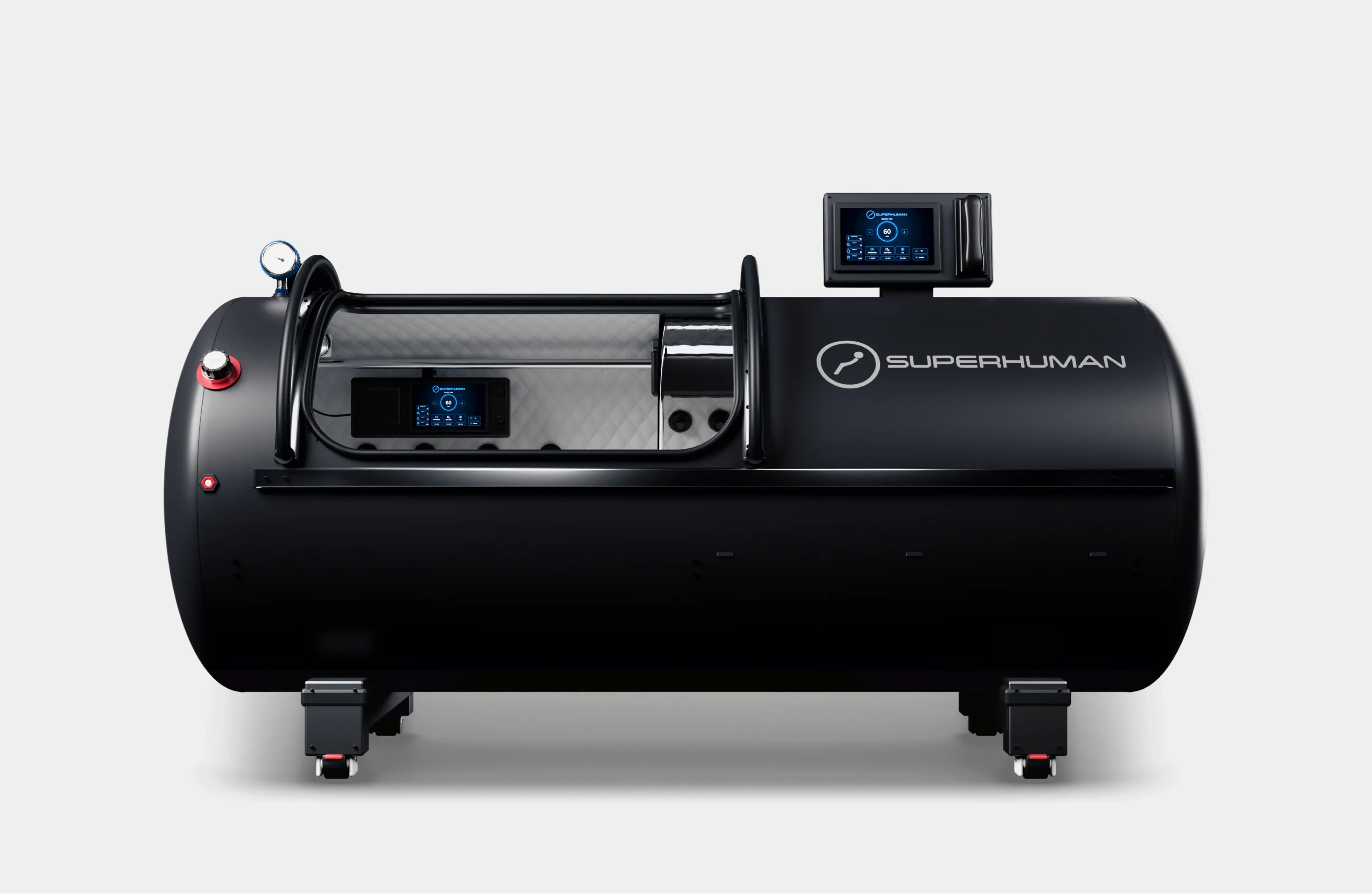
Superhuman L1: a lying-down hard-shell chamber at 2.0 ATA, built and shipped in 3 to 5 weeks
Superhuman L1, $49,900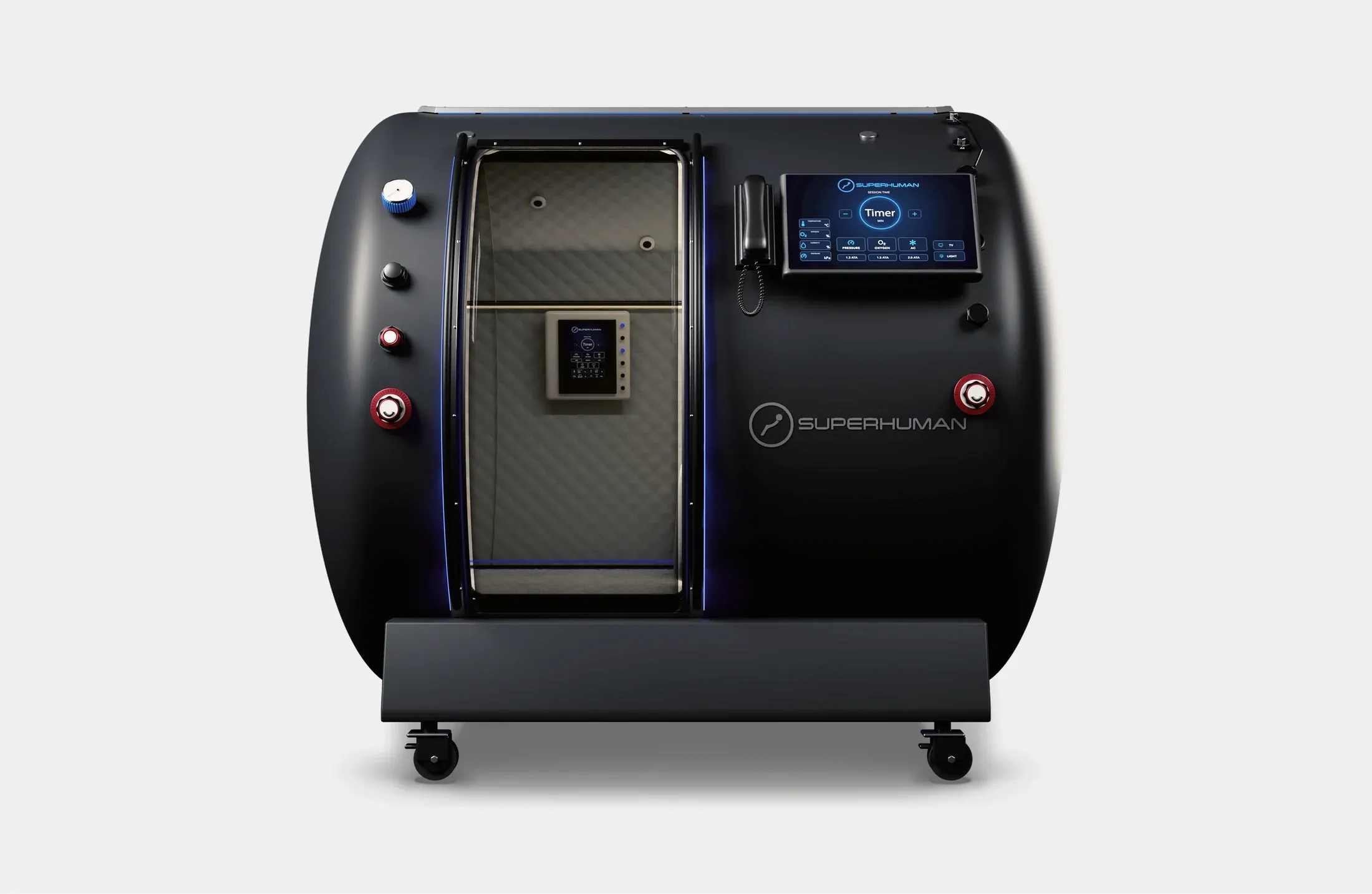
Superhuman T2: two seats at 2.0 ATA, with a 2-year limited warranty and lifetime remote support
Superhuman T2, $99,900Both prices are for the chamber. Shipping and installation are quoted with your build, so you see the full number before you commit. Every model and price is in the hyperbaric chambers for sale lineup.
FAQ
Hyperbaric oxygen therapy cost questions
How much does hyperbaric oxygen therapy cost?
Hyperbaric oxygen therapy costs a median $200 per session in a hard-shell chamber at 2.0 ATA or more, and $100 in a 1.3 to 1.5 ATA soft-shell chamber, at US non-hospital providers. Across all 491 published prices from 454 providers the median is $129. Superhuman Chambers read these prices on provider websites on 13 November 2026. The total depends on how many sessions you book: 40 sessions at $200 is $8,000.
How much is a hyperbaric chamber session?
A hyperbaric chamber session is a median $200 in a hard-shell chamber at 2.0 ATA or more (118 published prices), or $185 per 60 minutes. A soft-shell session at 1.3 to 1.5 ATA is a median $100 (208 prices). Ask each provider for the pressure and the minutes at pressure, because those two numbers explain most price gaps.
Why does a hard-shell session cost more than a soft-shell session?
Hard-shell chambers run at 2.0 ATA or more; soft-shell chambers stop at 1.3 to 1.5 ATA. At the median, a hard-shell session costs $100 more than a soft-shell session, about twice the price. The chambers also cost more to buy: Superhuman hard-shell models list from $49,900, against $14,900 for the S1 soft-shell chamber. See our hyperbaric chamber cost guide.
How much does a 10-pack of hyperbaric sessions cost?
The median 10-pack works out to $105 per session (245 providers), 16.7% below the same provider's single-session price. At hard-shell 2.0 ATA providers the median 10-pack discount is 15.0% (59 providers). Divide the pack price by the session count, and check expiry and refund terms before you commit.
Which states have the cheapest and the most expensive hyperbaric sessions?
Among the 11 states with enough published prices for a hard-shell median, Arizona and Nevada are the lowest at $150 a session and Texas is the highest large sample at $250 (13 prices). California is $222.50 (32 prices) and Florida is $200 (14 prices). Indiana shows $350, but from only 3 prices, so read it as indicative. The state map has every state.
What does a hyperbaric session cost at a hospital?
Medicare pays hospital outpatient departments $140.59 per 30-minute unit in 2026. A 90-minute session with the physician fee comes to $531.32, from published CMS rates (CMS). With Medicare Part B you typically pay 20% of the approved amount after the deductible (Medicare.gov), which is about $106 a session by our arithmetic. The Index prices on this page are non-hospital walk-in prices.
Why do so many hyperbaric providers not publish their prices?
Of 469 hard-shell providers we read, 266 (57%) publish no regular single-session price on their website. Among hard-shell 2.0 ATA providers, 110 of 228 (48%) publish none. Many sell packages or quote after a consultation. Ask for the single-session price, the pressure and the minutes at pressure before you book.
Does insurance pay for HBOT sessions?
Insurance pays only for a short list of indications, in an approved facility, usually with prior authorization. Medicare covers 15 indications under National Coverage Determination 20.29 (CMS). Wellness, recovery and performance sessions are paid out of pocket everywhere. Our insurance coverage guide lists what is covered and what a covered session pays.
How many sessions will I need?
The number of sessions is a decision for you and your clinician, not for a price page. For budgeting, providers commonly sell blocks of 10, 20 and 40 sessions. At $200 a session those blocks cost $2,000, $4,000 and $8,000.
Why is HBOT so expensive?
A session price carries the cost of the chamber, the room, trained staff for about an hour per person, insurance and maintenance. A hard-shell chamber alone costs a provider $30,000 to $200,000 or more, as our chamber cost guide shows. A single-seat chamber can also serve only one person per session, which limits how many sessions a provider sells in a day.
Can I use HSA or FSA money for hyperbaric sessions?
Sometimes. HSA and FSA rules depend on your plan and usually require a letter of medical necessity from a licensed provider. Ask the provider and your plan administrator before you book. For a chamber purchase, our HSA and FSA guide explains how the Truemed route works.
What does a session cost in your own hyperbaric chamber?
About $1.50 to $2 of electricity per session, after a one-time chamber purchase. Superhuman chambers for home use run from $14,900 for the soft-shell S1 to $99,900 for the two-person T2. Shipping and installation are quoted with your build. The cost calculator compares owning with paying per session.
How was the US Hyperbaric Index built?
We counted a location when the provider's own website shows a hyperbaric chamber on site: 3,463 verified locations across 50 states and DC. Prices are the regular walk-in price for one person and one session, read on provider websites on 13 November 2026. Intro offers, memberships, group prices and bundles are left out, and nothing is estimated or filled in. The map, the state table, the method and the data file are on the US Hyperbaric Index page.
Last updated: November 2026. Price data as of 13 November 2026. This page is educational and is not medical or financial advice. Session prices are published market figures and change by provider and by city. Any decision about care for a diagnosed condition belongs with your clinicians.


